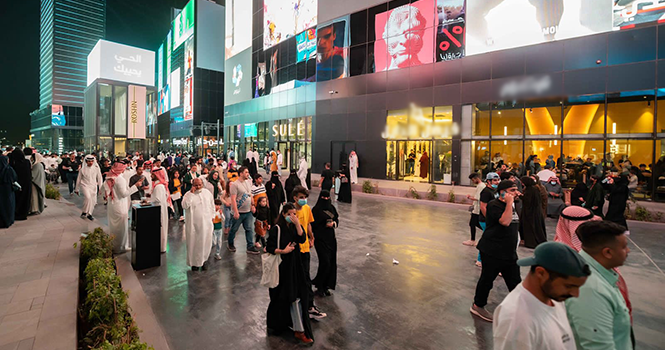
Saudi Arabia’s tourism sector recorded positive performance during 2025, particularly in total tourist numbers and spending. 
The total number of inbound tourists rose to 122.6 million, an increase of 5.8% compared with 2024. Tourism spending also increased to SAR 303.7 billion, recording 7.0% growth.
Domestic tourism recorded 93.3 million tourists, an increase of 8.3%, while the number of inbound tourists declined by 1.6% to 29.3 million.
Total inbound tourism spending reached SAR 176.6 billion, up 4.8%, compared with SAR 127.1 billion spent on domestic tourism (+10.2%).
Tourism Sector Performance During 2025
Item
Note
Total Number of Tourists
122.6 million (+5.8%)
Tourism Spending
SAR 303.7 billion (+7.0%)
Domestic Tourism
93.3 million tourists (+8.3%); spending SAR 127.1 billion (+10.2%)
Inbound Tourism
29.3 million tourists (-1.6%); spending SAR 176.6 billion (+4.8%)
Hospitality Facilities
597,000 licensed rooms (+25.4%), with the average daily rate declining (2.0%)
Comparison between Inbound Domestic Tourism
Domestic tourism accounted for the larger share of tourist numbers, while inbound tourism accounted for the larger share of tourism spending.
Inbound and Domestic Tourism
Item
Inbound Tourism
Domestic Tourism
YoY Change
Number of Tourists
29.3 mln
93.3 mln
Inbound (-1.6%)
Domestic (+8.3%)
Total Spending
SAR 176.6 bln
SAR 127.1 bln
Inbound (+4.8%)
Domestic (+10.2%)
Peak Month by Tourist Numbers
January 3.6 mln
March 9.3 mln
—
Peak Month by Spending
June: SAR 27.5 bln
July: SAR 15.4 bln
—
Performance of Inbound Tourism
Although the number of inbound tourists declined to 29.3 million in 2025, down 1.6% compared with 2024, their spending increased by 4.8% to SAR 176.6 billion.
Purpose of Inbound Visitors
Purpose
Overnight Visitors 2025 (mln)
YoY Change
Spending 2025 (SAR bln)
YoY Change
Religious purposes
14.1
(1%)
110.3
+ 18%
Leisure and holidays
7.0
(6%)
35.0
(4%)
Visiting friends and relatives
4.4
(27%)
12.7
(32%)
Business
2.3
+ 14%
15.8
(1%)
Others
1.5
(25%)
2.8
(25%)
Travel Channels for Inbound Tourists
Travel Channel
Number of Tourists (mln)
Share of Total
Total Spending (SAR bln)
Share of Total
Average Spending per Tourist (SAR)
By air
20.2
69%
143.1
81%
7096
By land
8.9
30%
32.2
18%
3617
By sea
0.2
1%
1.4
1%
6913
Tourism Spending Categories – Inbound Tourism
Item
Share of Inbound Spending
Visitor accommodation services
33%
Shopping
22%
Food and beverage services
13%
Local passenger transport
8%
Cultural, sports, and entertainment services
3%
Others
21%
Top Tourist-Sending Countries
Egypt ranked first among the countries sending tourists to the Kingdom, with 3.2 million tourists, followed by Pakistan with 2.8 million tourists. However, Pakistan ranked first in spending, which reached SAR 22 billion, as shown below:
Country
Tourists 2025 (mln)
Total Tourism Spending 2025 (SAR bln)
Egypt
3.2
15.9
Pakistan
2.8
22.0
India
2.0
17.8
Indonesia
2.0
13.3
Kuwait
1.8
2.7
Bahrain
1.4
1.4
Turkey
1.2
9.8
Yemen
1.2
7.0
Iraq
1.1
5.5
UAE
1.1
3.0
Geographic Distribution of Tourist-Origin Markets
Geographic Region
Number of Tourists (mln)
Spending (SAR bln)
Tourist Change Compared to 2024
Spending Change Compared to 2024
Share of Tourists
Share of Spending
Asia and the Pacific
10.5
82.9
+ 8.8%
+ 9.4%
36%
47%
Middle East and North Africa
8.8
49.7
+ 5.1%
(2.6%)
30%
28%
GCC
5.7
9.7
(28.7%)
(23.9%)
19%
6%
Europe
2.9
22.5
+ 17.8%
+ 20.6%
10%
13%
Africa
0.7
6.4
+ 16.4%
23.7%
3%
4%
The Americas
0.6
5.0
(2.0%)
+ 7.9%
2%
3%
Domestic Tourism Performance
The number of domestic tourists reached 93.3 million in 2025, an increase of 8.3% compared with 2024, while their spending reached SAR 127.1 billion, growing 10.2%.
Visits to friends and relatives, together with leisure and holidays, accounted for 73% of domestic overnight visitors, while spending on domestic tourism for religious purposes grew by 32%.
Purpose of Visit – Domestic Tourists
Purpose
Overnight Visitors 2025 (mln)
YoY Change
Spending 2025 (SAR bln)
YoY Change
Visiting friends and relatives
37.7
+ 25%
39.3
+ 2%
Leisure and holidays
30.2
(6%)
40.9
+ 11%
Religious purposes
13.8
+ 21%
17.3
+ 32%
Business
8.5
(4%)
20.8
+ 2%
Others
3.1
(9%)
8.8
+ 31%
Main Type of Accommodation – Domestic Tourism
Private residences accounted for the largest share of accommodation used by domestic tourists, while hotels maintained the highest average spending per tourist compared with private residences and apartments.
Accommodation Details – Domestic Tourism
Accommodation Type
Number of Tourists (mln)
Share of Tourists
Total Spending (SAR bln)
Share of Spending
Average Spending per Tourist (SAR)
Private residences
39.9
43%
48.6
38%
1218
Hotels
24.5
26%
39.5
31%
1615
Apartments
21.4
23%
32.0
25%
1493
Others
7.6
8%
7.0
6%
929
Main Means of Transport – Domestic Tourism
Means of Transportation
Number of Tourists (mln)
Share of Total
Total Spending (SAR bln)
Share of Total
Average Spending per Tourist (SAR)
By land
87.5
94%
104.8
83%
1198
By air
5.8
6%
22.2
17%
3851
By sea
—
—
—
—
512
Tourism Spending Categories – Domestic Tourism
Item
Share of Local Spending
Food and beverage services
32%
Local passenger transport
27%
Visitor accommodation services
23%
Shopping
10%
Cultural, sports, and entertainment services
4%
Others
4%
Main Regions in Domestic Visits and Spending
Makkah ranked first among domestic destinations in terms of overnight visitors during 2025, while Riyadh ranked first in total spending by domestic visitors.
Region
Domestic Overnight Visits (mln)
Domestic Visitor Spending (SAR bln)
Makkah
28.6
38.6
Riyadh
21.8
39.7
Eastern Province
13.0
14.6
Madinah
6.5
9.0
Hospitality Sector
The hospitality sector witnessed an expansion in the number of licensed facilities and rooms during 2025, alongside a slight decline in the average daily rate and revenue per available room.
Hospitality Sector
Metric
2025
YoY Change
Total licensed hospitality facilities
5937
+ 34.2%
Licensed hotels
2847
+ 31.6%
Licensed apartments and other facilities
3090
+36.6%
Total rooms in licensed facilities (‘000)
597
+25.4%
Overall occupancy rate
55.3%
+ 0.6%
Overall average daily rate (SAR)
385
(2%)
Hotel average daily rate (SAR)
449
(5.5%)
Apartments and other facilities average daily rate (SAR)
207
+ 1.5%
Key Tourism Economic Indicators
The tourism sector’s contribution to Saudi Arabia’s GDP increased in 2025 to nearly 5.2%, while the number of workers employed in the tourism sector rose by 6.2%.
Economic Indicator
Value
Change
Direct contribution to GDP (2025)
5.2%
+ 0.3%
Travel account surplus in the balance of payments
49.4
(1.6%)
Number of tourism employees (mln)
1.03
+ 6.2%
Saudi Arabia’s tourism sector recorded positive performance during 2025, particularly in total tourist numbers and spending.
The total number of inbound tourists rose to 122.6 million, an increase of 5.8% compared with 2024. Tourism spending also increased to SAR 303.7 billion, recording 7.0% growth.
Domestic tourism recorded 93.3 million tourists, an increase of 8.3%, while the number of inbound tourists declined by 1.6% to 29.3 million.
Total inbound tourism spending reached SAR 176.6 billion, up 4.8%, compared with SAR 127.1 billion spent on domestic tourism (+10.2%).
Tourism Sector Performance During 2025
Item
Note
Total Number of Tourists
122.6 million (+5.8%)
Tourism Spending
SAR 303.7 billion (+7.0%)
Domestic Tourism
93.3 million tourists (+8.3%); spending SAR 127.1 billion (+10.2%)
Inbound Tourism
29.3 million tourists (-1.6%); spending SAR 176.6 billion (+4.8%)
Hospitality Facilities
597,000 licensed rooms (+25.4%), with the average daily rate declining (2.0%)
Comparison between Inbound Domestic Tourism
Domestic tourism accounted for the larger share of tourist numbers, while inbound tourism accounted for the larger share of tourism spending.
Inbound and Domestic Tourism
Item
Inbound Tourism
Domestic Tourism
YoY Change
Number of Tourists
29.3 mln
93.3 mln
Inbound (-1.6%)
Domestic (+8.3%)
Total Spending
SAR 176.6 bln
SAR 127.1 bln
Inbound (+4.8%)
Domestic (+10.2%)
Peak Month by Tourist Numbers
January 3.6 mln
March 9.3 mln
—
Peak Month by Spending
June: SAR 27.5 bln
July: SAR 15.4 bln
—
Performance of Inbound Tourism
Although the number of inbound tourists declined to 29.3 million in 2025, down 1.6% compared with 2024, their spending increased by 4.8% to SAR 176.6 billion.
Purpose of Inbound Visitors
Purpose
Overnight Visitors 2025 (mln)
YoY Change
Spending 2025 (SAR bln)
YoY Change
Religious purposes
14.1
(1%)
110.3
+ 18%
Leisure and holidays
7.0
(6%)
35.0
(4%)
Visiting friends and relatives
4.4
(27%)
12.7
(32%)
Business
2.3
+ 14%
15.8
(1%)
Others
1.5
(25%)
2.8
(25%)
Travel Channels for Inbound Tourists
Travel Channel
Number of Tourists (mln)
Share of Total
Total Spending (SAR bln)
Share of Total
Average Spending per Tourist (SAR)
By air
20.2
69%
143.1
81%
7096
By land
8.9
30%
32.2
18%
3617
By sea
0.2
1%
1.4
1%
6913
Tourism Spending Categories – Inbound Tourism
Item
Share of Inbound Spending
Visitor accommodation services
33%
Shopping
22%
Food and beverage services
13%
Local passenger transport
8%
Cultural, sports, and entertainment services
3%
Others
21%
Top Tourist-Sending Countries
Egypt ranked first among the countries sending tourists to the Kingdom, with 3.2 million tourists, followed by Pakistan with 2.8 million tourists. However, Pakistan ranked first in spending, which reached SAR 22 billion, as shown below:
Country
Tourists 2025 (mln)
Total Tourism Spending 2025 (SAR bln)
Egypt
3.2
15.9
Pakistan
2.8
22.0
India
2.0
17.8
Indonesia
2.0
13.3
Kuwait
1.8
2.7
Bahrain
1.4
1.4
Turkey
1.2
9.8
Yemen
1.2
7.0
Iraq
1.1
5.5
UAE
1.1
3.0
Geographic Distribution of Tourist-Origin Markets
Geographic Region
Number of Tourists (mln)
Spending (SAR bln)
Tourist Change Compared to 2024
Spending Change Compared to 2024
Share of Tourists
Share of Spending
Asia and the Pacific
10.5
82.9
+ 8.8%
+ 9.4%
36%
47%
Middle East and North Africa
8.8
49.7
+ 5.1%
(2.6%)
30%
28%
GCC
5.7
9.7
(28.7%)
(23.9%)
19%
6%
Europe
2.9
22.5
+ 17.8%
+ 20.6%
10%
13%
Africa
0.7
6.4
+ 16.4%
23.7%
3%
4%
The Americas
0.6
5.0
(2.0%)
+ 7.9%
2%
3%
Domestic Tourism Performance
The number of domestic tourists reached 93.3 million in 2025, an increase of 8.3% compared with 2024, while their spending reached SAR 127.1 billion, growing 10.2%.
Visits to friends and relatives, together with leisure and holidays, accounted for 73% of domestic overnight visitors, while spending on domestic tourism for religious purposes grew by 32%.
Purpose of Visit – Domestic Tourists
Purpose
Overnight Visitors 2025 (mln)
YoY Change
Spending 2025 (SAR bln)
YoY Change
Visiting friends and relatives
37.7
+ 25%
39.3
+ 2%
Leisure and holidays
30.2
(6%)
40.9
+ 11%
Religious purposes
13.8
+ 21%
17.3
+ 32%
Business
8.5
(4%)
20.8
+ 2%
Others
3.1
(9%)
8.8
+ 31%
Main Type of Accommodation – Domestic Tourism
Private residences accounted for the largest share of accommodation used by domestic tourists, while hotels maintained the highest average spending per tourist compared with private residences and apartments.
Accommodation Details – Domestic Tourism
Accommodation Type
Number of Tourists (mln)
Share of Tourists
Total Spending (SAR bln)
Share of Spending
Average Spending per Tourist (SAR)
Private residences
39.9
43%
48.6
38%
1218
Hotels
24.5
26%
39.5
31%
1615
Apartments
21.4
23%
32.0
25%
1493
Others
7.6
8%
7.0
6%
929
Main Means of Transport – Domestic Tourism
Means of Transportation
Number of Tourists (mln)
Share of Total
Total Spending (SAR bln)
Share of Total
Average Spending per Tourist (SAR)
By land
87.5
94%
104.8
83%
1198
By air
5.8
6%
22.2
17%
3851
By sea
—
—
—
—
512
Tourism Spending Categories – Domestic Tourism
Item
Share of Local Spending
Food and beverage services
32%
Local passenger transport
27%
Visitor accommodation services
23%
Shopping
10%
Cultural, sports, and entertainment services
4%
Others
4%
Main Regions in Domestic Visits and Spending
Makkah ranked first among domestic destinations in terms of overnight visitors during 2025, while Riyadh ranked first in total spending by domestic visitors.
Region
Domestic Overnight Visits (mln)
Domestic Visitor Spending (SAR bln)
Makkah
28.6
38.6
Riyadh
21.8
39.7
Eastern Province
13.0
14.6
Madinah
6.5
9.0
Hospitality Sector
The hospitality sector witnessed an expansion in the number of licensed facilities and rooms during 2025, alongside a slight decline in the average daily rate and revenue per available room.
Hospitality Sector
Metric
2025
YoY Change
Total licensed hospitality facilities
5937
+ 34.2%
Licensed hotels
2847
+ 31.6%
Licensed apartments and other facilities
3090
+36.6%
Total rooms in licensed facilities (‘000)
597
+25.4%
Overall occupancy rate
55.3%
+ 0.6%
Overall average daily rate (SAR)
385
(2%)
Hotel average daily rate (SAR)
449
(5.5%)
Apartments and other facilities average daily rate (SAR)
207
+ 1.5%
Key Tourism Economic Indicators
The tourism sector’s contribution to Saudi Arabia’s GDP increased in 2025 to nearly 5.2%, while the number of workers employed in the tourism sector rose by 6.2%.
Economic Indicator
Value
Change
Direct contribution to GDP (2025)
5.2%
+ 0.3%
Travel account surplus in the balance of payments
49.4
(1.6%)
Number of tourism employees (mln)
1.03
+ 6.2%