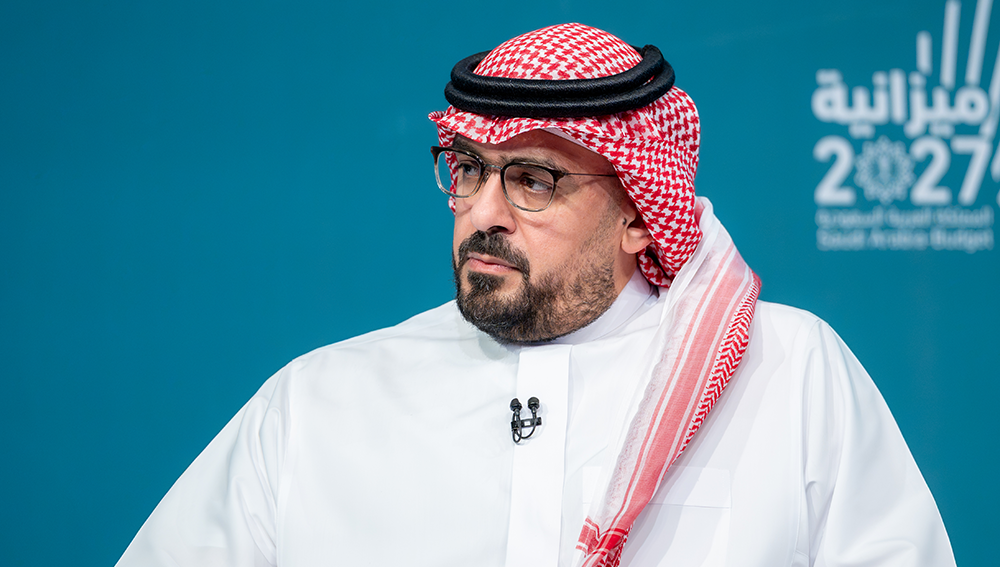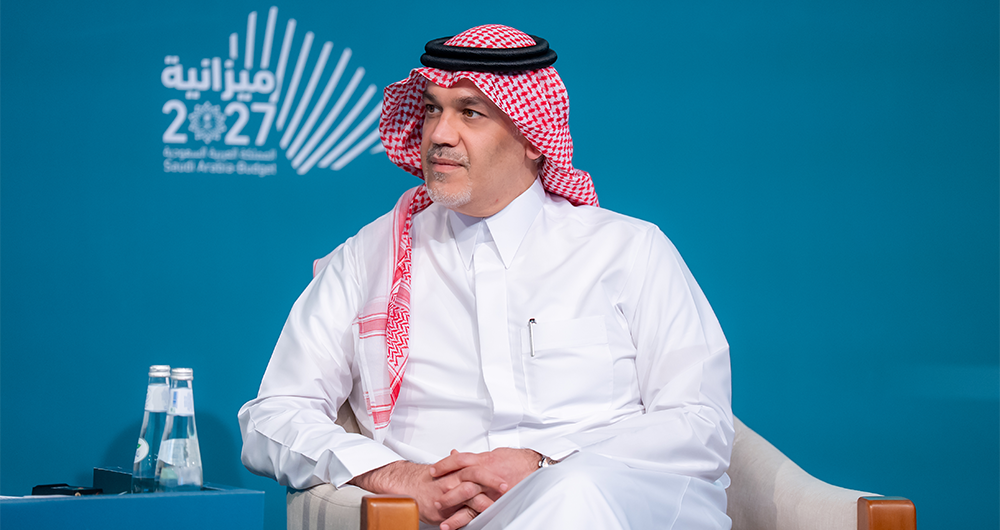
Fahad Al Saif,Investment Minister
Saudi Investment Minister Fahad Al-Saif said infrastructure investments in the Kingdom exceeded SAR 6 trillion over the past five years, with domestic investors accounting for more than 90%. Investments were led by major local companies, capital market-linked firms and small and medium-sized enterprises (SMEs). 
Speaking at the 2027 Budget Forum, Al-Saif said SMEs contributed 30% of total investments, adding that investment opportunities across sectors align with the ambitions of young Saudis and SMEs, and that these sectors are ready to accommodate investors.
Leadership directives focus on empowering investors and facilitating their journey in the Kingdom, particularly domestic investors, who are best positioned to attract foreign investment in the next phase, Al-Saif said.
Saudi Arabia offers diverse regional competitive advantages, including coastal areas and opportunities in tourism, logistics and technology. Its integrated financial market and technology, telecommunications and transportation ecosystems connect regions across the Kingdom.
Al-Saif said the special zone in King Abdullah Economic City houses the King Salman Automotive Cluster, the Kingdom’s largest automotive manufacturing complex, which has attracted more than SAR 80 billion in investments and is expected to draw further investors, including SMEs and those in innovation and technology.
The investment ecosystem is working to provide historical and forward-looking information, promote investment opportunities and convert them into actual deals and sustained investments, he said. Continued government spending on capital projects that serve the regions also helps attract investment.
Reforms implemented over the past five years, or since the launch of Saudi Vision 2030, have clarified the path for investors, Al-Saif said, expecting the Kingdom to evolve from an investment-attraction platform into a global capital-formation hub, enabling domestic investors to provide services and produce goods for the local market and export.
Saudi Arabia is not merely a transit point, but a destination and platform from which capital can be deployed to support investments within the Kingdom, he said.
Clear strategic direction is valuable to investors, financiers and opportunity owners, helping sustain opportunities, build supply chains and establish an investment base that supports investment and economic diversification and broadens income sources.
Fahad Al Saif,Investment Minister
Saudi Investment Minister Fahad Al-Saif said infrastructure investments in the Kingdom exceeded SAR 6 trillion over the past five years, with domestic investors accounting for more than 90%. Investments were led by major local companies, capital market-linked firms and small and medium-sized enterprises (SMEs).
Speaking at the 2027 Budget Forum, Al-Saif said SMEs contributed 30% of total investments, adding that investment opportunities across sectors align with the ambitions of young Saudis and SMEs, and that these sectors are ready to accommodate investors.
Leadership directives focus on empowering investors and facilitating their journey in the Kingdom, particularly domestic investors, who are best positioned to attract foreign investment in the next phase, Al-Saif said.
Saudi Arabia offers diverse regional competitive advantages, including coastal areas and opportunities in tourism, logistics and technology. Its integrated financial market and technology, telecommunications and transportation ecosystems connect regions across the Kingdom.
Al-Saif said the special zone in King Abdullah Economic City houses the King Salman Automotive Cluster, the Kingdom’s largest automotive manufacturing complex, which has attracted more than SAR 80 billion in investments and is expected to draw further investors, including SMEs and those in innovation and technology.
The investment ecosystem is working to provide historical and forward-looking information, promote investment opportunities and convert them into actual deals and sustained investments, he said. Continued government spending on capital projects that serve the regions also helps attract investment.
Reforms implemented over the past five years, or since the launch of Saudi Vision 2030, have clarified the path for investors, Al-Saif said, expecting the Kingdom to evolve from an investment-attraction platform into a global capital-formation hub, enabling domestic investors to provide services and produce goods for the local market and export.
Saudi Arabia is not merely a transit point, but a destination and platform from which capital can be deployed to support investments within the Kingdom, he said.
Clear strategic direction is valuable to investors, financiers and opportunity owners, helping sustain opportunities, build supply chains and establish an investment base that supports investment and economic diversification and broadens income sources.