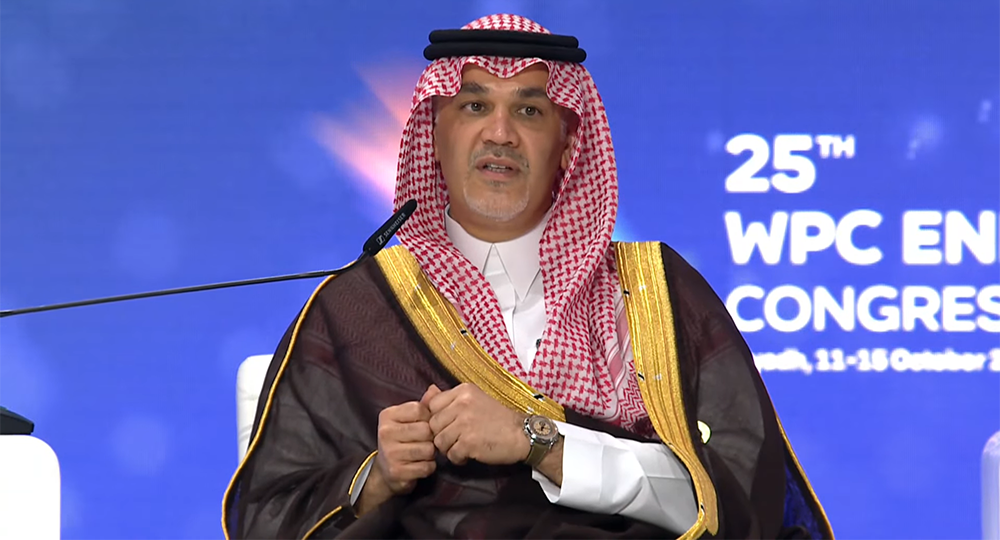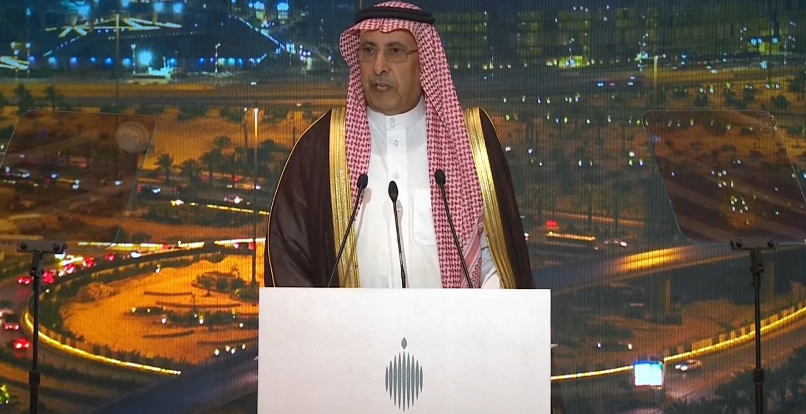
Ibrahim Al-Sultan, CEO of the Royal Commission for Riyadh City (RCRC)
Ibrahim Al-Sultan, CEO of the Royal Commission for Riyadh City (RCRC), said the capital is experiencing an exceptional phase of growth in its economy, population, and urban development. He noted that development efforts are focused on three main areas: roads, transportation, and traffic services. 
Speaking at the government press briefing, Al-Sultan said work is underway to develop 700 kilometers of major roads and 300 kilometers of intersections to improve traffic flow. He added that the two bridges being built parallel to the Hanging Bridge (Wadi Laban Bridge) are 42% complete.
He noted that Riyadh’s public transport network has served 500 million passengers since operations began, including 300 million passengers on the Riyadh Metro, among them 20 million school and university students.
Al-Sultan also said contracts had been signed to purchase 94 trains to expand the network and increase the total number of trains to 277. Efforts are also underway to improve the environment surrounding the rail network and preserve natural resources by expanding green spaces.
The Red Line will be extended to Diriyah through the addition of five new stations, increasing its capacity to 370,000 passengers per day, more than doubling its current capacity. Meanwhile, the Yellow Line’s capacity will rise from 130,000 to 188,000 passengers per day, according to the top official.
Regarding road projects, Al-Sultan said work is continuing to develop Al-Thumamah corridor, including improvements to 13 intersections, 10 tunnels, and 17 bridges.
He added that preparations are underway to construct several bridges along Takhassusi Road, alongside the start of work on a new bridge to improve connectivity between northern neighborhoods and King Salman Road.
Ibrahim Al-Sultan, CEO of the Royal Commission for Riyadh City (RCRC)
Ibrahim Al-Sultan, CEO of the Royal Commission for Riyadh City (RCRC), said the capital is experiencing an exceptional phase of growth in its economy, population, and urban development. He noted that development efforts are focused on three main areas: roads, transportation, and traffic services.
Speaking at the government press briefing, Al-Sultan said work is underway to develop 700 kilometers of major roads and 300 kilometers of intersections to improve traffic flow. He added that the two bridges being built parallel to the Hanging Bridge (Wadi Laban Bridge) are 42% complete.
He noted that Riyadh’s public transport network has served 500 million passengers since operations began, including 300 million passengers on the Riyadh Metro, among them 20 million school and university students.
Al-Sultan also said contracts had been signed to purchase 94 trains to expand the network and increase the total number of trains to 277. Efforts are also underway to improve the environment surrounding the rail network and preserve natural resources by expanding green spaces.
The Red Line will be extended to Diriyah through the addition of five new stations, increasing its capacity to 370,000 passengers per day, more than doubling its current capacity. Meanwhile, the Yellow Line’s capacity will rise from 130,000 to 188,000 passengers per day, according to the top official.
Regarding road projects, Al-Sultan said work is continuing to develop Al-Thumamah corridor, including improvements to 13 intersections, 10 tunnels, and 17 bridges.
He added that preparations are underway to construct several bridges along Takhassusi Road, alongside the start of work on a new bridge to improve connectivity between northern neighborhoods and King Salman Road.