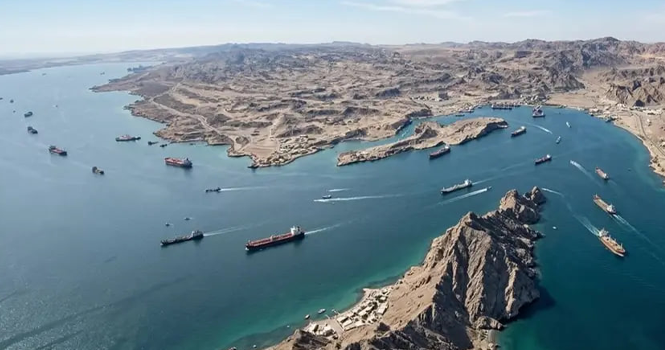
Jotaro Tamura, Chief Executive Officer of Mitsui O.S.K. Lines, the world’s largest tanker operator, warned that shipowners are unlikely to resume transits through the Strait of Hormuz for several weeks until they are convinced that the US-Iran agreement is effective.
Many shipping companies are expected to wait before resuming voyages through the strait, despite the US and Iran agreeing to reopen the strategic waterway, Tamura told the Financial Times.
“An agreement between the countries involved is not enough on its own. The agreement must prove effective and be reflected in actual conditions in the Strait of Hormuz before shipping companies can transit with confidence.”
Tamura also pointed to several unsuccessful attempts to reopen the waterway since the outbreak of the Middle East conflict in late February.
“Given what we have seen over the past two months, I think it is reasonable to assume that it could take at least two weeks, and possibly as long as a month,” he said.
Jotaro Tamura, Chief Executive Officer of Mitsui O.S.K. Lines, the world’s largest tanker operator, warned that shipowners are unlikely to resume transits through the Strait of Hormuz for several weeks until they are convinced that the US-Iran agreement is effective.
Many shipping companies are expected to wait before resuming voyages through the strait, despite the US and Iran agreeing to reopen the strategic waterway, Tamura told the Financial Times.
“An agreement between the countries involved is not enough on its own. The agreement must prove effective and be reflected in actual conditions in the Strait of Hormuz before shipping companies can transit with confidence.”
Tamura also pointed to several unsuccessful attempts to reopen the waterway since the outbreak of the Middle East conflict in late February.
“Given what we have seen over the past two months, I think it is reasonable to assume that it could take at least two weeks, and possibly as long as a month,” he said.