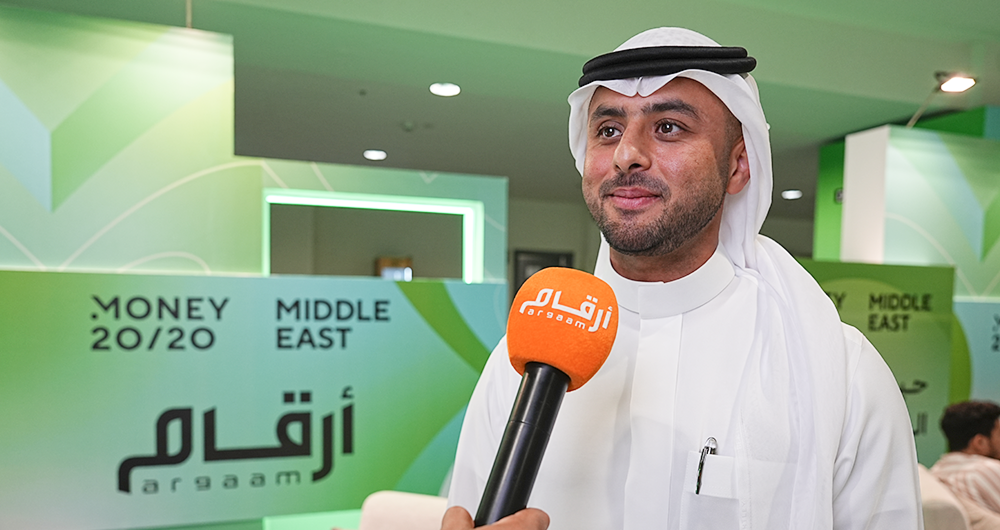
HungerStation CEO Ali Aldamanhori says Saudi Arabia’s food delivery market continues to grow strongly.
HungerStation has outperformed the Saudi food delivery market’s growth rate in the past period and its market share has reached its highest level in five years, said CEO Ali Aldamanhori. 
Speaking to Argaam on the sidelines of the Money 20/20 Middle East conference in Riyadh, Aldamanhori said the company’s quick-commerce business, which includes grocery stores and pharmacies, is currently growing by more than 100% year-on-year (YoY).
He noted that Saudi Arabia’s food delivery market continues to grow strongly, with orders rising 30.5% YoY in Q2 2026, citing data from the Transport General Authority (TGA).
Saudi Arabia’s food delivery market still has significant room for growth despite intensifying competition, he said, noting that delivery app use among the target population remains lower than in some developed markets in the sector.
In terms of market penetration, the CEO pointed out that the monthly use of delivery apps in South Korea, one of the sector’s more developed markets, exceeds 60% of the target population, while the rate in Saudi Arabia remains below that level, indicating further room to expand app adoption and drive growth.
The Saudi market has growth potential by increasing customer engagement and monthly order frequency, he said, noting a gap in orders per customer between Saudi Arabia and Gulf markets such as Kuwait.
Aldamanhori expects higher app penetration and increased monthly order frequency will enable Saudi Arabia’s food delivery market to grow twofold or threefold over the next three years.
On geographic distribution, he said Riyadh is currently the company’s largest market, followed by the Western and Eastern Regions. HungerStation operates in around 100 cities across the Kingdom and continues to expand into additional cities and regions.
He said that growth rates in cities and governorates outside the three main regions significantly exceed those in the core markets, reaching two to three times the growth rate recorded in the major cities.
On new competitors entering the market, Aldamanhori said increased competition contributes to market expansion and accelerates growth, despite posing a challenge to companies operating in the sector. He emphasized that HungerStation has continued to increase its market share in line with market growth.
The company’s strategy is centered on three key factors: expanding options for customers across restaurants, cafes, and stores; lowering service costs for customers through products such as the H Plus subscription program, and improving customer experience and reliability.
On margin improvement, the CEO said reducing delivery costs is one of the key drivers of profitability improvement amid higher costs of recruiting and equipping delivery couriers. The company relies on several drivers, including technology, artificial intelligence (AI), and improved order-dispatch mechanisms, to lower costs and enhance operational efficiency.
Aldamanhori explained that customer engagement with the HungerStation platform has nearly doubled compared with two years ago, supported by the company’s expansion in the range of services and products available through the app and its move beyond restaurant delivery.
The platform now delivers products from pharmacies, stores, and quick-commerce businesses, and has launched new financial products, including Mofawtar’s buy-now-pay-later service, which lets customers settle their orders at the end of the month.
HungerStation has also entered the restaurant and store financing business, leveraging its extensive data on stores’ performance and business volumes to help determine the financing needs of each store.
Financing restaurants and stores represents an additional source of income for HungerStation while providing financing solutions to businesses operating on the platform, helping diversify revenue sources and improve the company’s margins, he said.
As for the fastest-growing segments, Aldamanhori said that around 34% of restaurant and cafe orders in the market are currently placed through delivery apps, while the share of online orders in the grocery sector remains at around 9% to 10%.
The relatively low share of app-based grocery orders represents a significant growth opportunity, the CEO said, noting that raising the penetration rate to more than 20% of the total market could double the size of the grocery delivery business through apps.
HungerStation CEO Ali Aldamanhori says Saudi Arabia’s food delivery market continues to grow strongly.
HungerStation has outperformed the Saudi food delivery market’s growth rate in the past period and its market share has reached its highest level in five years, said CEO Ali Aldamanhori.
Speaking to Argaam on the sidelines of the Money 20/20 Middle East conference in Riyadh, Aldamanhori said the company’s quick-commerce business, which includes grocery stores and pharmacies, is currently growing by more than 100% year-on-year (YoY).
He noted that Saudi Arabia’s food delivery market continues to grow strongly, with orders rising 30.5% YoY in Q2 2026, citing data from the Transport General Authority (TGA).
Saudi Arabia’s food delivery market still has significant room for growth despite intensifying competition, he said, noting that delivery app use among the target population remains lower than in some developed markets in the sector.
In terms of market penetration, the CEO pointed out that the monthly use of delivery apps in South Korea, one of the sector’s more developed markets, exceeds 60% of the target population, while the rate in Saudi Arabia remains below that level, indicating further room to expand app adoption and drive growth.
The Saudi market has growth potential by increasing customer engagement and monthly order frequency, he said, noting a gap in orders per customer between Saudi Arabia and Gulf markets such as Kuwait.
Aldamanhori expects higher app penetration and increased monthly order frequency will enable Saudi Arabia’s food delivery market to grow twofold or threefold over the next three years.
On geographic distribution, he said Riyadh is currently the company’s largest market, followed by the Western and Eastern Regions. HungerStation operates in around 100 cities across the Kingdom and continues to expand into additional cities and regions.
He said that growth rates in cities and governorates outside the three main regions significantly exceed those in the core markets, reaching two to three times the growth rate recorded in the major cities.
On new competitors entering the market, Aldamanhori said increased competition contributes to market expansion and accelerates growth, despite posing a challenge to companies operating in the sector. He emphasized that HungerStation has continued to increase its market share in line with market growth.
The company’s strategy is centered on three key factors: expanding options for customers across restaurants, cafes, and stores; lowering service costs for customers through products such as the H Plus subscription program, and improving customer experience and reliability.
On margin improvement, the CEO said reducing delivery costs is one of the key drivers of profitability improvement amid higher costs of recruiting and equipping delivery couriers. The company relies on several drivers, including technology, artificial intelligence (AI), and improved order-dispatch mechanisms, to lower costs and enhance operational efficiency.
Aldamanhori explained that customer engagement with the HungerStation platform has nearly doubled compared with two years ago, supported by the company’s expansion in the range of services and products available through the app and its move beyond restaurant delivery.
The platform now delivers products from pharmacies, stores, and quick-commerce businesses, and has launched new financial products, including Mofawtar’s buy-now-pay-later service, which lets customers settle their orders at the end of the month.
HungerStation has also entered the restaurant and store financing business, leveraging its extensive data on stores’ performance and business volumes to help determine the financing needs of each store.
Financing restaurants and stores represents an additional source of income for HungerStation while providing financing solutions to businesses operating on the platform, helping diversify revenue sources and improve the company’s margins, he said.
As for the fastest-growing segments, Aldamanhori said that around 34% of restaurant and cafe orders in the market are currently placed through delivery apps, while the share of online orders in the grocery sector remains at around 9% to 10%.
The relatively low share of app-based grocery orders represents a significant growth opportunity, the CEO said, noting that raising the penetration rate to more than 20% of the total market could double the size of the grocery delivery business through apps.