✍️Islam Zween
In London, a buyer might pay up to 80% more than the price of a comparable residential unit in the building next door, for no reason other than that his building carries a heritage listing. In Paris, the price per square metre of a restored Haussmann-era apartment can approach $18,000, against restoration costs that do not exceed $2,200 per square metre. 
The gap here is not a developer’s profit margin. It is a verdict the market has issued: in these two cities, investors have learned to pay for history.
In Jeddah, the investment picture for historic properties remains under assessment — not only because of the current pressure on operating and capital returns, but because of the absence of market depth in what might loosely be called the “heritage property restoration sector.”
The volume of restored buildings actually trading still falls below the minimum required to form a reliable benchmark index — one on which pricing decisions or accurate market forecasts could be built.
This structural challenge in asset valuation and pricing efficiency is the central question and the foundation of our research paper, published this week by Argaam Intelligence, through which we seek to unpack the market mechanics of this promising sector in the Kingdom.
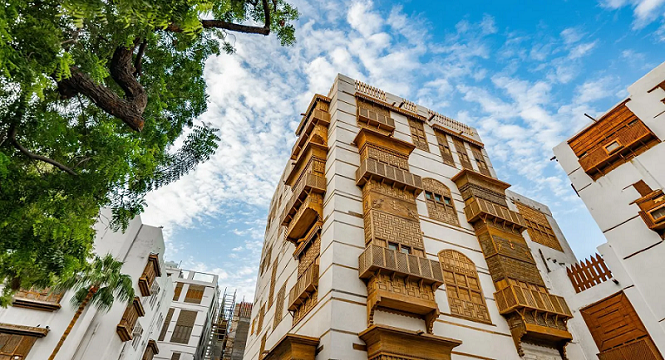
Saudi Arabia holds a heritage stock that cannot be added to, as does every country in the world. No amount of capital, and no degree of craftsmanship, produces another coral-stone merchant house in Jeddah. Fixed supply and the existence of demand are both preconditions for any price premium.
Real estate assets that lack reproducibility in the market — and, beyond that, lack effective capital demand — may shift out of the category of high-value “scarce assets” and into that of assets facing operational constraints that limit their owners’ flexibility.
But who pays this premium in such a distinctive sector?
Here lies the analytical dimension absent from most conventional readings of the market. The ceiling on an asset’s capital value is shaped by the nature of the investor and their strategic objective:
◉ Individual investment: the price ceiling rests on intangible value and personal preference.
◉ Commercial investment: governed by rental yield parameters and the viability of short- and medium-term cash flows.
◉ Sovereign investment: adopts an extended time horizon, where valuation is not subject to conventional pricing metrics but is measured against developmental, economic and social returns that span generations.
One Buyer Only, or the Beginning of a New Market?
In the construction and real estate sectors, scarcity does not create value by itself. A market has to learn to pay for the scarce thing first. Until it does, being unable to make more of something is simply a restriction on what an owner can do with it.
Saudi Arabia holds a stock of historic buildings that cannot be added to. No amount of money or skill produces another coral-stone merchant house in Jeddah.
Fixed supply is a precondition for a premium. Whether buyers actually pay it is a separate question.
Click here to read the article and full report
You Read It Here First in Argaam Weekend
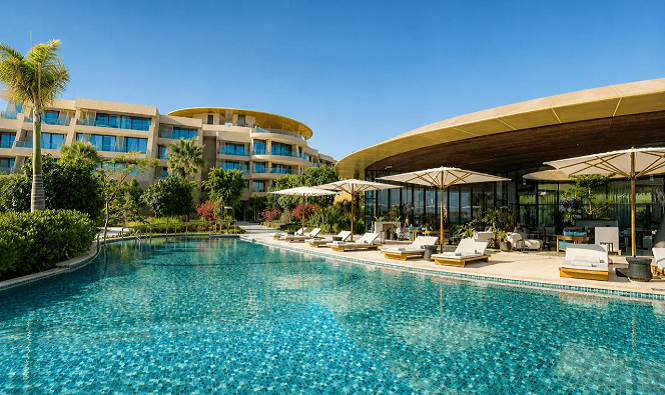
Rethinking Growth in Saudi Arabia’s Ultra-Luxury Hospitality
Efficiency in luxury hospitality expansion is a question of pricing before it is a question of supply. Regulation permits the building, but it does not guarantee the value of the room. That value is set by the investor and the discerning guest through repeated experience, out of which a market memory forms — one that prices the hotel’s ability to sustain its standard.
Hormuz and Yanbu: The Cost of the Journey
The Strait of Hormuz crisis showed that the market’s pricing of the risk premium does not rest on the actual capacity of the alternative — the pipeline and the port of Yanbu — but on how investors read that capacity. When insurance costs, freight rates and risk premiums rise during disruption, the market is not overreacting; it is pricing the true cost of delivering the barrel under prevailing conditions, and building a price memory in the process.
✍️Islam Zween
In London, a buyer might pay up to 80% more than the price of a comparable residential unit in the building next door, for no reason other than that his building carries a heritage listing. In Paris, the price per square metre of a restored Haussmann-era apartment can approach $18,000, against restoration costs that do not exceed $2,200 per square metre.
The gap here is not a developer’s profit margin. It is a verdict the market has issued: in these two cities, investors have learned to pay for history.
In Jeddah, the investment picture for historic properties remains under assessment — not only because of the current pressure on operating and capital returns, but because of the absence of market depth in what might loosely be called the “heritage property restoration sector.”
The volume of restored buildings actually trading still falls below the minimum required to form a reliable benchmark index — one on which pricing decisions or accurate market forecasts could be built.
This structural challenge in asset valuation and pricing efficiency is the central question and the foundation of our research paper, published this week by Argaam Intelligence, through which we seek to unpack the market mechanics of this promising sector in the Kingdom.
Saudi Arabia holds a heritage stock that cannot be added to, as does every country in the world. No amount of capital, and no degree of craftsmanship, produces another coral-stone merchant house in Jeddah. Fixed supply and the existence of demand are both preconditions for any price premium.
Real estate assets that lack reproducibility in the market — and, beyond that, lack effective capital demand — may shift out of the category of high-value “scarce assets” and into that of assets facing operational constraints that limit their owners’ flexibility.
But who pays this premium in such a distinctive sector?
Here lies the analytical dimension absent from most conventional readings of the market. The ceiling on an asset’s capital value is shaped by the nature of the investor and their strategic objective:
◉ Individual investment: the price ceiling rests on intangible value and personal preference.
◉ Commercial investment: governed by rental yield parameters and the viability of short- and medium-term cash flows.
◉ Sovereign investment: adopts an extended time horizon, where valuation is not subject to conventional pricing metrics but is measured against developmental, economic and social returns that span generations.
One Buyer Only, or the Beginning of a New Market?
In the construction and real estate sectors, scarcity does not create value by itself. A market has to learn to pay for the scarce thing first. Until it does, being unable to make more of something is simply a restriction on what an owner can do with it.
Saudi Arabia holds a stock of historic buildings that cannot be added to. No amount of money or skill produces another coral-stone merchant house in Jeddah.
Fixed supply is a precondition for a premium. Whether buyers actually pay it is a separate question.
Click here to read the article and full report
You Read It Here First in Argaam Weekend
Rethinking Growth in Saudi Arabia’s Ultra-Luxury Hospitality
Efficiency in luxury hospitality expansion is a question of pricing before it is a question of supply. Regulation permits the building, but it does not guarantee the value of the room. That value is set by the investor and the discerning guest through repeated experience, out of which a market memory forms — one that prices the hotel’s ability to sustain its standard.
Hormuz and Yanbu: The Cost of the Journey
The Strait of Hormuz crisis showed that the market’s pricing of the risk premium does not rest on the actual capacity of the alternative — the pipeline and the port of Yanbu — but on how investors read that capacity. When insurance costs, freight rates and risk premiums rise during disruption, the market is not overreacting; it is pricing the true cost of delivering the barrel under prevailing conditions, and building a price memory in the process.