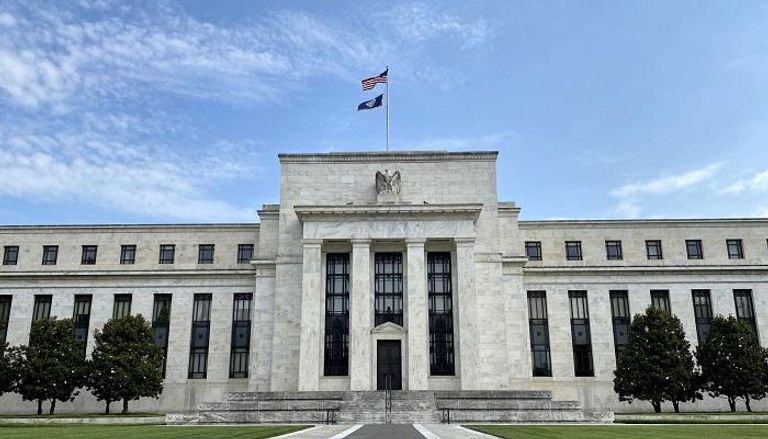
The Federal Reserve building in Washington, D.C., United States
US asset manager PGIM adopted an out-of-consensus view on the monetary policy path, expecting the Fed to raise interest rates 3 times this year before reversing course in 2027. 
In its semi-annual report issued last week, the company said that, until last April, it had expected interest-rate cuts this year, but revised its estimates in light of what it described as the “remarkable resilience of the US economy” and persistent inflationary pressures.
PGIM, which manages nearly $1.4 trillion in assets, said the oil price shock that helped fuel inflation has recently eased as some Middle East supplies returned to the market, but stressed that this development did not alter its core view.
The company expects this week’s Fed meeting to likely end with interest rates left unchanged within the current 3.5%-3.75% range, as policymakers are expected to face a growing challenge from what PGIM described as an “overheating economy.”
A team of analysts at the company said inflation remaining above the 2% target for more than five years is putting pressure on the credibility of monetary policy, which could push the Fed toward further tightening.
The Federal Reserve building in Washington, D.C., United States
US asset manager PGIM adopted an out-of-consensus view on the monetary policy path, expecting the Fed to raise interest rates 3 times this year before reversing course in 2027.
In its semi-annual report issued last week, the company said that, until last April, it had expected interest-rate cuts this year, but revised its estimates in light of what it described as the “remarkable resilience of the US economy” and persistent inflationary pressures.
PGIM, which manages nearly $1.4 trillion in assets, said the oil price shock that helped fuel inflation has recently eased as some Middle East supplies returned to the market, but stressed that this development did not alter its core view.
The company expects this week’s Fed meeting to likely end with interest rates left unchanged within the current 3.5%-3.75% range, as policymakers are expected to face a growing challenge from what PGIM described as an “overheating economy.”
A team of analysts at the company said inflation remaining above the 2% target for more than five years is putting pressure on the credibility of monetary policy, which could push the Fed toward further tightening.