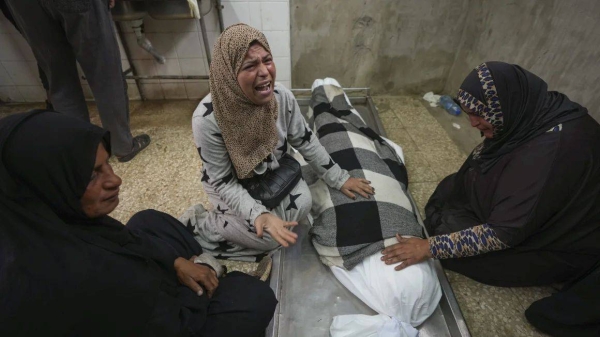
WASHINGTON — The United States has significantly expanded its military campaign against Iran over the past two weeks, broadening its strikes from naval and coastal defenses to military installations and critical infrastructure deeper inside the country after renewed fighting over the Strait of Hormuz.The latest campaign follows the collapse of a brief ceasefire reached in June after an interim agreement aimed at ending the conflict. Hostilities resumed when Iran launched attacks on commercial shipping in the Strait of Hormuz, prompting a new round of U.S. military operations.Initially, U.S. forces concentrated on degrading Iran’s naval capabilities and coastal defenses to reduce its ability to threaten one of the world’s most important maritime trade routes. In recent days, however, the campaign has widened to include bridges, transportation networks, communications facilities and military sites in southern and central Iran, as well as targets on the outskirts of Tehran.Despite the broader scope of the latest offensive, it remains less extensive than the opening phase of the war that began on Feb. 28, when the United States and Israel launched hundreds of strikes against Iranian military targets and senior leadership.According to Iran’s Health Ministry, 3,434 people have been killed since the conflict began, including 55 during the latest escalation. Iranian authorities said recent strikes also disrupted transportation and communications and damaged water infrastructure serving thousands of residents.The U.S. military has said the operations are intended to reduce Iran’s ability to threaten commercial shipping through the Strait of Hormuz. Iran, however, has continued attacks on vessels transiting the waterway and has also targeted Gulf countries hosting U.S. military bases.According to U.S. officials, the renewed campaign initially focused on Iran’s southern coastline, striking air defense systems, coastal radar installations, missile and drone production facilities, launch sites and small naval vessels. The operations targeted military assets across the provinces of Khuzestan, Bushehr and Hormozgan, including the strategic port city of Bandar Abbas and islands in the Gulf such as Qeshm, Abu Musa and Kish.As the campaign intensified, U.S. forces expanded their strikes to transportation and communications infrastructure around Bandar Abbas. Iranian state media reported damage to several bridges, a railway junction and communications facilities, while authorities acknowledged temporary disruptions to communications between the mainland and Gulf islands before services were restored.Other reported strikes targeted water infrastructure, including a desalination plant near Jask and an agricultural pumping station in Khuzestan, while electricity outages were reported in parts of southern Iran. Iranian officials also reported casualties following strikes near the Iraqi border and other civilian infrastructure.The Tehran area has so far seen limited strikes compared with the early stages of the war. Among the latest reported targets were the Khojir military complex, one of Iran’s principal missile production facilities, and a missile site outside the capital.President Donald Trump has warned that every Iranian attack on shipping in the Strait of Hormuz would be met with strikes on strategic infrastructure inside Iran.
Keep Up to Date with our Weekly Newsletter