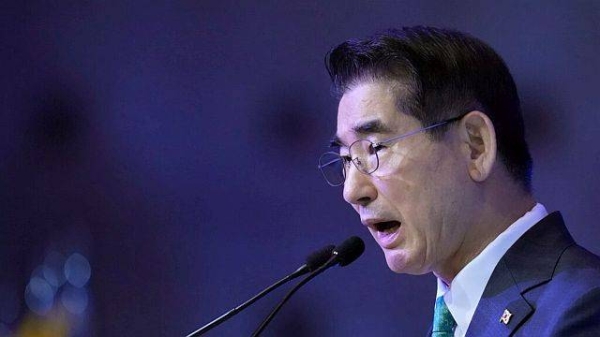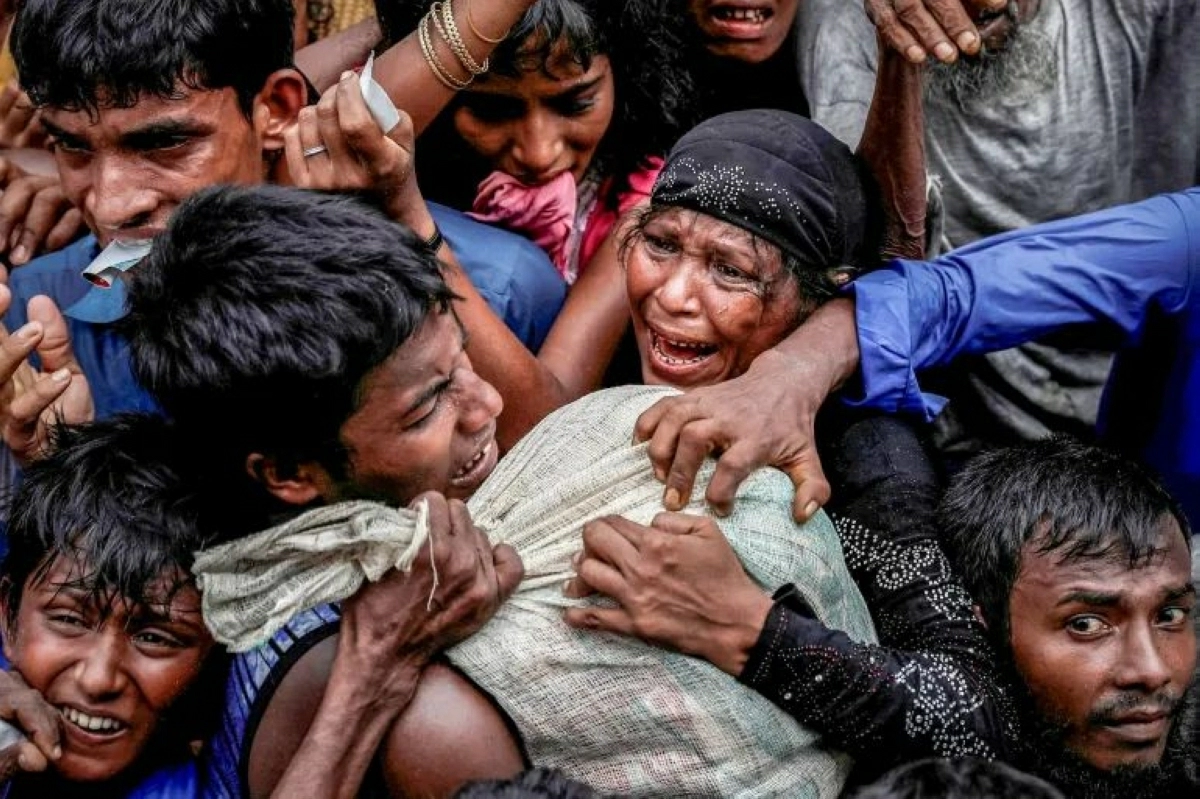
THE HAGUE — The UN’s highest court has found Myanmar guilty of “genocidal intent” in massacres that killed 10,000 people during its brutal crackdown on the country’s Muslim minority in 2017.The International Court of Justice (ICJ) at The Hague delivered its judgment on Thursday over the military crackdown that drove more than 730,000 mainly Muslim Rohingya to flee to neighboring Bangladesh.Myanmar’s soldiers killed and raped Rohingya, committed violence against children, and destroyed Rohingya villages and settlements, the top UN court said.They “killed thousands of Rohingya civilians, perpetrated widespread acts of sexual violence as well as acts of extreme violence against children, and attacked fleeing Rohingya as they sought to flee in large numbers to Bangladesh,” said ICJ President Yuji Iwasawa.The ICJ has not yet ruled whether Myanmar has committed the crime of genocide, in a landmark ruling that is expected to take around three hours to read out.The case was brought by the West African nation of The Gambia, which in 2019 accused Myanmar of seeking to destroy the Rohingya people. It asked the ICJ to rule that Myanmar has breached the 1948 Genocide Convention, order the nation to put an end to any illegal activities targeting the Rohingya and ensure those responsible for genocide are punished.The Gambia argued during the hearings that genocidal intent was clear from the “organised nature and execution” of the crackdown, its “extreme brutality”, the “pervasive sexual violence”, and the targeting of children.The Gambia’s justice minister said the country filed the case “after reviewing credible reports of the most brutal and vicious violence imaginable inflicted upon a vulnerable group that had been dehumanised and persecuted for many years.”The Gambia has the “full backing and support” of the 57-member Organisation of Islamic Cooperation for its efforts at the ICJ, said the minister, Dawda Jallow.”It is not about esoteric issues of international law, it is about real people, real stories and a real group of human beings,” added Jallow. “The Rohingya of Myanmar. They have been targeted for destruction.”Myanmar, meanwhile, has claimed its crackdown was in response to attacks by fighters from the Arakan Rohingya Salvation Army (ARSA) on police posts.The ICJ said that the “only reasonable inference” from evidence of widespread atrocities by Myanmar security forces is that they had the intent to destroy a “substantial part” of the Rohingya minority.It said Myanmar should have known that there was a risk of genocide when armed civilians participated in the military campaign. “Myanmar thus violated its obligation to prevent genocide,” it added.More than 1.3 million Rohingya remain displaced across South and Southeast Asia, including 1.2 million in sprawling refugee camps in Cox’s Bazar in Bangladesh, according to the United Nations.Conflict, shrinking humanitarian aid and dangerous sea crossings continue to leave many members of the community displaced and vulnerable.Survivors of the violence brought with them harrowing tales of gang rapes, mass executions, and cruelty towards families and children.Far from the squalor of the refugee camps, the panel of 15 judges has been weighing for seven years whether Myanmar’s actions constitute genocide.While the ICJ has no way of enforcing its decisions, a ruling that Myanmar committed genocide would heap more international pressure on its leader Min Aung Hlaing, who commanded the military during the Rohingya crackdown before ousting the elected government of Aung San Suu Kyi in a 2021 coup.The ICJ has only once before found that a genocide has taken place — the 1995 Srebrenica massacre in Bosnia.Genocide is notoriously difficult to prove in international law because the Convention requires proof of a specific “intent to destroy, in whole or in part, a national, ethnical, racial or religious group.”
Keep Up to Date with our Weekly Newsletter