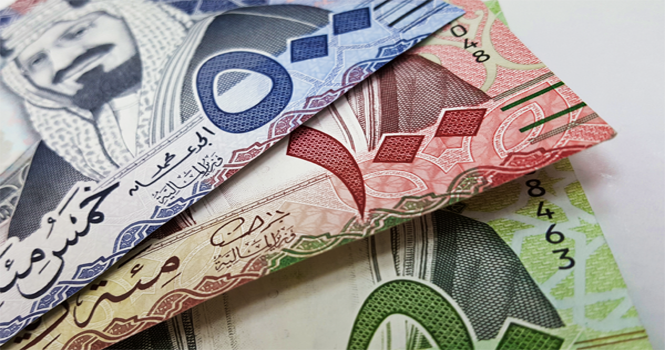
Saudi Arabian banknotes
The Financial Sector Development Program (FSDP)—one of the Saudi Vision 2030 realization programs—has operated across multiple pillars to strengthen the efficiency of financial institutions, develop capital markets, support fintech growth, promote savings and financial planning, and enable financial technology. 
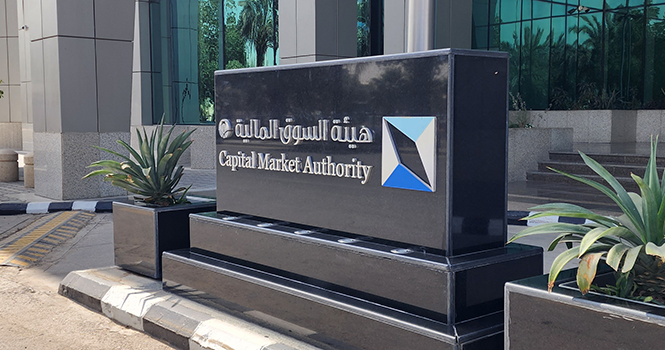
According to the annual report of Saudi Vision 2030, the financial sector has undergone a transition from traditional banking and simple transactions to a broader landscape encompassing banking, financial, investment, and insurance services. This transformation has been supported by the establishment of banks, capital markets, and finance companies. This comes in addition to the attraction of foreign financial institutions, and a regulatory framework led by the central bank (SAMA), the Insurance Authority (!A), and the Capital Market Authority (CMA).
The number of licensed banks in the Kingdom reached 39, with foreign banks accounting for around 61%, underscoring Saudi Arabia’s growing ability to attract international financial institutions.
Furthermore, banking sector assets expanded from SAR 2.63 trillion in 2019 to SAR 4.96 trillion by 2025-end.
Banking Sector Assets (SAR bln)
2019
2025
Change
Banking Sector Assets
2,631
4,958
+88%
Since the launch of Vision 2030, total credit extended by banks and finance companies increased from SAR 2.19 trillion in 2021 to SAR 3.59 trillion in 2025.
Credit Extended by Banks and Finance Companies (SAR bln)
Year
Value
2021
2,197.3
2022
2,424.5
2023
2,668.4
2024
3,051.8
2025
3,596.4
The Kingdom has implemented a series of reforms following a gradual approach to preserve governance gains in the capital market. These include broadening the investor base and integrating the Saudi market into global indices, such as allowing foreign investors to invest in Saudi-listed companies holding real estate assets in Makkah and Madinah, in line with regulatory controls.
Institutional ownership in the main equity market increased from 86.91% in 2016 to 95.37% in 2025.
Ownership in the Main Capital Market by Investor Type
Investor Type
2016
2025
Institutional Investors
86.91%
95.37 %
Non-Institutional Investors
13.09 %
4.93 %
According to the report, the rise in institutional ownership supports market stability and reduces the impact of speculative behavior and rumors.
In the insurance sector, significant progress has been achieved since the launch of Vision 2030, driven by policy reforms recognizing the sector’s role in economic growth and social stability. Key initiatives included digitizing insurance services to enhance customer experience and introducing regulations that supported the development of diverse insurance products. The establishment of the Insurance Authority (IA)—assuming supervisory responsibilities from SAMA—has further strengthened the regulatory environment.
These measures have supported sector growth, with insurance contributing more to GDP and supporting broader economic expansion. This is reflected in the declining share of health and motor insurance relative to growth in other segments.
Insurance Sector Details
2016
2025
Growth in Insurance Sector Contribution to GDP*
1.54%
2.01 %
Growth in Insurance Sector Contribution to Non-Oil GDP*
2.06 %
2.43 %
Growth in gross written premiums (SAR bln)**
36.85
65.17
*Q2 2025 data.
**Q3 2025 data.
The report concludes that these developments have collectively positioned Saudi Arabia as a regional and global financial hub, supported by a diversified financial sector, a wide range of services, and an attractive investment environment.
Saudi Arabian banknotes
The Financial Sector Development Program (FSDP)—one of the Saudi Vision 2030 realization programs—has operated across multiple pillars to strengthen the efficiency of financial institutions, develop capital markets, support fintech growth, promote savings and financial planning, and enable financial technology.
According to the annual report of Saudi Vision 2030, the financial sector has undergone a transition from traditional banking and simple transactions to a broader landscape encompassing banking, financial, investment, and insurance services. This transformation has been supported by the establishment of banks, capital markets, and finance companies. This comes in addition to the attraction of foreign financial institutions, and a regulatory framework led by the central bank (SAMA), the Insurance Authority (!A), and the Capital Market Authority (CMA).
The number of licensed banks in the Kingdom reached 39, with foreign banks accounting for around 61%, underscoring Saudi Arabia’s growing ability to attract international financial institutions.
Furthermore, banking sector assets expanded from SAR 2.63 trillion in 2019 to SAR 4.96 trillion by 2025-end.
Banking Sector Assets (SAR bln)
2019
2025
Change
Banking Sector Assets
2,631
4,958
+88%
Since the launch of Vision 2030, total credit extended by banks and finance companies increased from SAR 2.19 trillion in 2021 to SAR 3.59 trillion in 2025.
Credit Extended by Banks and Finance Companies (SAR bln)
Year
Value
2021
2,197.3
2022
2,424.5
2023
2,668.4
2024
3,051.8
2025
3,596.4
The Kingdom has implemented a series of reforms following a gradual approach to preserve governance gains in the capital market. These include broadening the investor base and integrating the Saudi market into global indices, such as allowing foreign investors to invest in Saudi-listed companies holding real estate assets in Makkah and Madinah, in line with regulatory controls.
Institutional ownership in the main equity market increased from 86.91% in 2016 to 95.37% in 2025.
Ownership in the Main Capital Market by Investor Type
Investor Type
2016
2025
Institutional Investors
86.91%
95.37 %
Non-Institutional Investors
13.09 %
4.93 %
According to the report, the rise in institutional ownership supports market stability and reduces the impact of speculative behavior and rumors.
In the insurance sector, significant progress has been achieved since the launch of Vision 2030, driven by policy reforms recognizing the sector’s role in economic growth and social stability. Key initiatives included digitizing insurance services to enhance customer experience and introducing regulations that supported the development of diverse insurance products. The establishment of the Insurance Authority (IA)—assuming supervisory responsibilities from SAMA—has further strengthened the regulatory environment.
These measures have supported sector growth, with insurance contributing more to GDP and supporting broader economic expansion. This is reflected in the declining share of health and motor insurance relative to growth in other segments.
Insurance Sector Details
2016
2025
Growth in Insurance Sector Contribution to GDP*
1.54%
2.01 %
Growth in Insurance Sector Contribution to Non-Oil GDP*
2.06 %
2.43 %
Growth in gross written premiums (SAR bln)**
36.85
65.17
*Q2 2025 data.
**Q3 2025 data.
The report concludes that these developments have collectively positioned Saudi Arabia as a regional and global financial hub, supported by a diversified financial sector, a wide range of services, and an attractive investment environment.