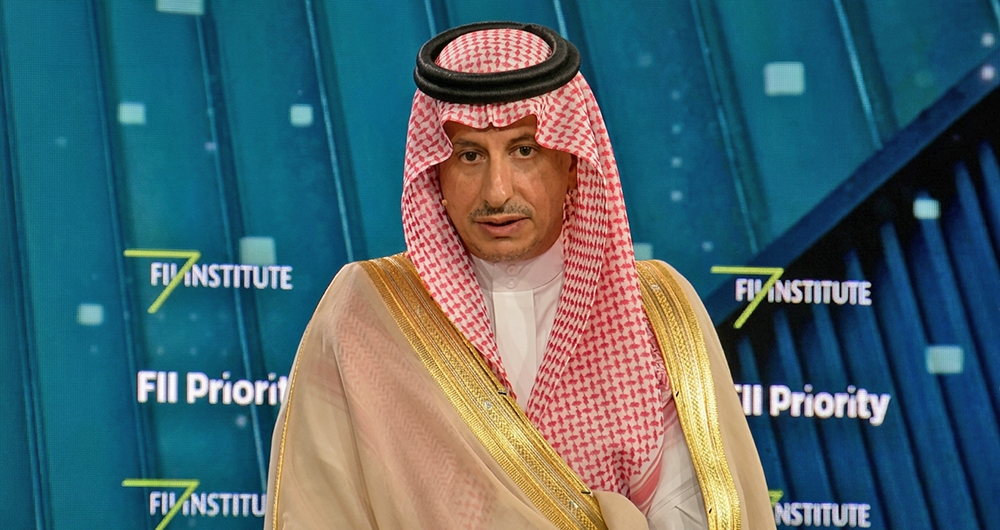
Minister of Tourism, Ahmed Al-Khatib
Saudi Arabia’s tourism sector declined by about 5%-6% in the first five months of 2026, a performance Tourism Minister Ahmed Al-Khatib described as good given current regional conditions. 
Speaking during a session at the PRIORITY Europe 2026 Summit organized by the FII Institute, he added that Saudi Arabia had hedged against the sector’s challenges thanks to travel related to Hajj and Umrah.
Tourism activity started the year strongly, with GCC countries recording growth of around 10% in the first quarter, he said. The sector was later affected by the conflict with Iran, flight suspensions, inflationary pressures, and difficulties securing aviation fuel, which pushed up travel costs.
Saudi Arabia and other Gulf states are recovering quickly from the disruption, Al-Khatib said, noting that airlines in the Kingdom and across the GCC have resumed full operations in recent weeks.
He added that the current period is typically a low season for tourism in the Gulf, where demand peaks during winter, unlike Europe, where the summer months mark the busiest travel season.
Domestic tourism has remained resilient, he said, with resorts at the Red Sea Project fully booked during the Eid Al-Fitr and Eid Al-Adha holidays.
Domestic travel has also outperformed last year, as many residents opted to holiday within the Kingdom instead of traveling abroad, Al-Khatib said.
Minister of Tourism, Ahmed Al-Khatib
Saudi Arabia’s tourism sector declined by about 5%-6% in the first five months of 2026, a performance Tourism Minister Ahmed Al-Khatib described as good given current regional conditions.
Speaking during a session at the PRIORITY Europe 2026 Summit organized by the FII Institute, he added that Saudi Arabia had hedged against the sector’s challenges thanks to travel related to Hajj and Umrah.
Tourism activity started the year strongly, with GCC countries recording growth of around 10% in the first quarter, he said. The sector was later affected by the conflict with Iran, flight suspensions, inflationary pressures, and difficulties securing aviation fuel, which pushed up travel costs.
Saudi Arabia and other Gulf states are recovering quickly from the disruption, Al-Khatib said, noting that airlines in the Kingdom and across the GCC have resumed full operations in recent weeks.
He added that the current period is typically a low season for tourism in the Gulf, where demand peaks during winter, unlike Europe, where the summer months mark the busiest travel season.
Domestic tourism has remained resilient, he said, with resorts at the Red Sea Project fully booked during the Eid Al-Fitr and Eid Al-Adha holidays.
Domestic travel has also outperformed last year, as many residents opted to holiday within the Kingdom instead of traveling abroad, Al-Khatib said.