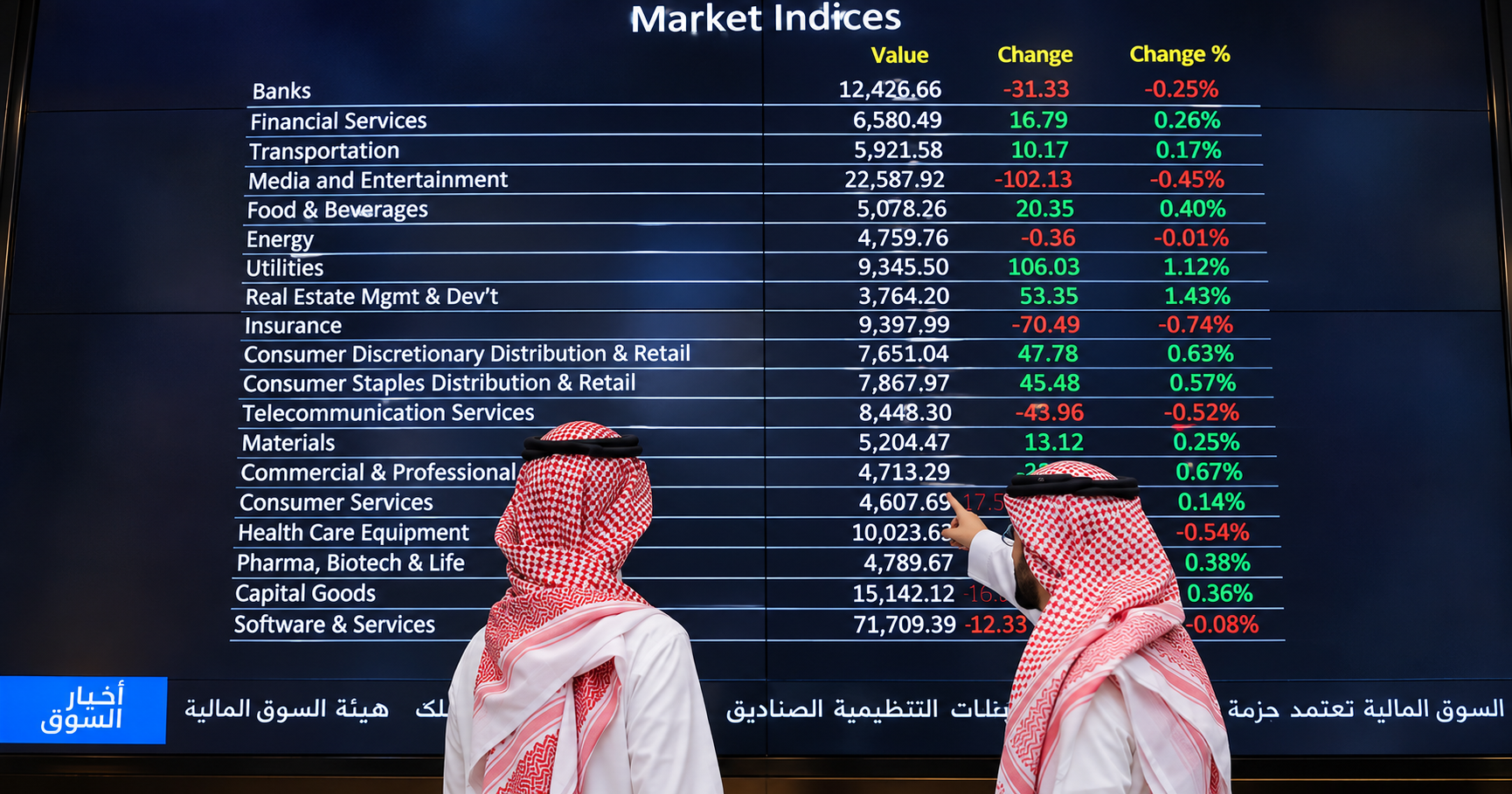
Saudi investors are watching the Tadawul trading screen.
Saudi individuals were net buyers of shares in September and October 2026, while foreign investors were net sellers and the Tadawul All Share Index (TASI) declined. 
Over those two months, they bought SAR5.53 billion more in shares than they sold. Between January and August, they had sold SAR26.09 billion more than they bought. The recent buying amounts to only about a fifth of that.
Over the first ten months of 2026, Saudi individuals therefore remain net sellers, by about SAR20.6 billion. Their recent buying has not yet changed that.
Domestic institutions have bought more consistently in months when the index declined. TASI declined in eight months of 2025, and domestic institutions were net sellers in all eight.
Between January and October 2026, it declined in seven, and they were net buyers in six.
Companies, part of the domestic institutions group, account for the biggest change. They were net buyers of SAR10.25 billion in the first ten months of 2026, compared with net sales of SAR12.26 billion in the same period of 2025.
Who buys in months when prices decline shapes how a market absorbs selling, including selling by foreign investors.
Saudi individual investors have historically accounted for a substantial share of trading activity on the Saudi Exchange, making their net purchases and sales an important indicator of domestic investor behaviour.
This year’s figures suggest that buying in declining months is coming increasingly from domestic institutions, and from companies in particular, rather than from individuals as a whole.
For funds and banks assessing the depth of local demand, that distinction matters more than any single month’s figures.
Companies led over the summer
The monthly figures show how domestic buying has passed between groups during the year.
In July and August, companies were the largest domestic net buyers, purchasing SAR4.23 billion more in shares than they sold, while Saudi individuals recorded net sales of SAR3.78 billion.
In September and October, individuals switched to net buying and overtook companies, which remained net buyers.
Domestic buying has therefore had more than one source this year: companies over the summer, with individuals joining them in the autumn.
The Saudi Exchange reports companies separately from mutual funds, government-related entities and institutionally managed portfolios.
Its monthly reports show how much companies bought and sold in aggregate, but not which companies were trading or why.
Inside the individuals’ figures
Among Saudi individuals, the overall figures combine groups that have moved in different directions.
Retail investors were net buyers of SAR1.82 billion between January and October 2026, while the other individual investor categories collectively recorded net sales of SAR22.38 billion.
The mix also changed between September and October. High-net-worth individuals were net buyers of SAR1.87 billion in September but became small net sellers in October, at SAR55 million.
Retail investors increased their net buying to SAR1.41 billion, from SAR1.15 billion, while individual professional investors bought SAR726 million more than they sold in October.
Retail buying in months when the index declines is not new. In 18 of the 22 months from January 2025 to October 2026, retail investors were either net buyers when the index decline or net sellers when it rose.
Foreign selling peaked in September
Foreign investors, excluding those from GCC countries, have not consistently been net sellers when the index declined.
Over the 22 months from January 2025 to October 2026, they were net buyers in nine of the 15 months in which TASI declined.
Foreign investors were net sellers in each month from July to October 2026, recording combined net sales of SAR8.09 billion. About 79% of that selling occurred in September and October.
What to watch
The more consequential question is whether corporate buying represents a lasting change in the sources of demand for Saudi equities.
The Exchange’s trading figures show how much companies buy, but not why. Disclosures of share buybacks could help establish how much of that demand comes from companies purchasing their own shares, rather than investing in other listed businesses.
The distinction matters when assessing how broad and durable corporate demand might be.
There is a similar gap in the data on individuals. Their net selling does not establish whether they are reducing their exposure to Saudi equities in favour of cash, investing in other domestic assets or moving money into overseas markets. Each would carry different implications for future demand.
What matters, ultimately, is whether institutions are becoming a more reliable source of buying when Saudi shares fall.
If that pattern persists, the market may become less dependent on individual investors to absorb selling pressure. That would be a more consequential development than any single month’s trading figures.
Editorial Note:
We publish without bylines. Our research is produced collectively — analysts, editors and data specialists working on the same questions — and the findings reflect the judgement of the team rather than of any individual.
This is a deliberate choice. It keeps the argument, rather than its author, as the thing a reader weighs.
Every figure here was computed by Argaam analysts from the sources cited, and is reproducible from them. The analysis and conclusions are the team’s own. Charts were rendered with AI assistance. Methodology and workbook available to subscribers; questions to intelligence@argaam.com.
Saudi investors are watching the Tadawul trading screen.
Saudi individuals were net buyers of shares in September and October 2026, while foreign investors were net sellers and the Tadawul All Share Index (TASI) declined.
Over those two months, they bought SAR5.53 billion more in shares than they sold. Between January and August, they had sold SAR26.09 billion more than they bought. The recent buying amounts to only about a fifth of that.
Over the first ten months of 2026, Saudi individuals therefore remain net sellers, by about SAR20.6 billion. Their recent buying has not yet changed that.
Domestic institutions have bought more consistently in months when the index declined. TASI declined in eight months of 2025, and domestic institutions were net sellers in all eight.
Between January and October 2026, it declined in seven, and they were net buyers in six.
Companies, part of the domestic institutions group, account for the biggest change. They were net buyers of SAR10.25 billion in the first ten months of 2026, compared with net sales of SAR12.26 billion in the same period of 2025.
Who buys in months when prices decline shapes how a market absorbs selling, including selling by foreign investors.
Saudi individual investors have historically accounted for a substantial share of trading activity on the Saudi Exchange, making their net purchases and sales an important indicator of domestic investor behaviour.
This year’s figures suggest that buying in declining months is coming increasingly from domestic institutions, and from companies in particular, rather than from individuals as a whole.
For funds and banks assessing the depth of local demand, that distinction matters more than any single month’s figures.
Companies led over the summer
The monthly figures show how domestic buying has passed between groups during the year.
In July and August, companies were the largest domestic net buyers, purchasing SAR4.23 billion more in shares than they sold, while Saudi individuals recorded net sales of SAR3.78 billion.
In September and October, individuals switched to net buying and overtook companies, which remained net buyers.
Domestic buying has therefore had more than one source this year: companies over the summer, with individuals joining them in the autumn.
The Saudi Exchange reports companies separately from mutual funds, government-related entities and institutionally managed portfolios.
Its monthly reports show how much companies bought and sold in aggregate, but not which companies were trading or why.
Inside the individuals’ figures
Among Saudi individuals, the overall figures combine groups that have moved in different directions.
Retail investors were net buyers of SAR1.82 billion between January and October 2026, while the other individual investor categories collectively recorded net sales of SAR22.38 billion.
The mix also changed between September and October. High-net-worth individuals were net buyers of SAR1.87 billion in September but became small net sellers in October, at SAR55 million.
Retail investors increased their net buying to SAR1.41 billion, from SAR1.15 billion, while individual professional investors bought SAR726 million more than they sold in October.
Retail buying in months when the index declines is not new. In 18 of the 22 months from January 2025 to October 2026, retail investors were either net buyers when the index decline or net sellers when it rose.
Foreign selling peaked in September
Foreign investors, excluding those from GCC countries, have not consistently been net sellers when the index declined.
Over the 22 months from January 2025 to October 2026, they were net buyers in nine of the 15 months in which TASI declined.
Foreign investors were net sellers in each month from July to October 2026, recording combined net sales of SAR8.09 billion. About 79% of that selling occurred in September and October.
What to watch
The more consequential question is whether corporate buying represents a lasting change in the sources of demand for Saudi equities.
The Exchange’s trading figures show how much companies buy, but not why. Disclosures of share buybacks could help establish how much of that demand comes from companies purchasing their own shares, rather than investing in other listed businesses.
The distinction matters when assessing how broad and durable corporate demand might be.
There is a similar gap in the data on individuals. Their net selling does not establish whether they are reducing their exposure to Saudi equities in favour of cash, investing in other domestic assets or moving money into overseas markets. Each would carry different implications for future demand.
What matters, ultimately, is whether institutions are becoming a more reliable source of buying when Saudi shares fall.
If that pattern persists, the market may become less dependent on individual investors to absorb selling pressure. That would be a more consequential development than any single month’s trading figures.
Editorial Note:
We publish without bylines. Our research is produced collectively — analysts, editors and data specialists working on the same questions — and the findings reflect the judgement of the team rather than of any individual.
This is a deliberate choice. It keeps the argument, rather than its author, as the thing a reader weighs.
Every figure here was computed by Argaam analysts from the sources cited, and is reproducible from them. The analysis and conclusions are the team’s own. Charts were rendered with AI assistance. Methodology and workbook available to subscribers; questions to intelligence@argaam.com.