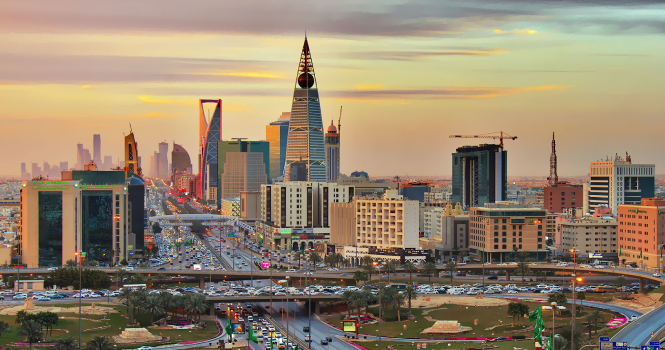
JLL, the real estate consulting and investment firm, has released its latest report on Saudi Arabia’s real estate market dynamics for the first quarter of 2026.
The report said the Kingdom’s property market has successfully navigated a slowdown in activity caused by geopolitical and economic uncertainty across the region in recent months.
Office Market
The report highlighted diverging rental trends across Saudi Arabia. In Riyadh, constrained supply and strong demand enabled the prime office segment to maintain exceptional performance despite broader market conditions. Vacancy rates stood at approximately 3.2% across all categories, while the King Abdullah Financial District (KAFD) continued to command the highest office rents in the capital.
In Jeddah, Grade A office vacancy stood at 6%. Rents declined by 3.8% as occupiers increasingly shifted toward newer developments, while Grade B office rents rose 2.5% as tenants sought to balance quality and cost considerations.
City
Office Spaces
Office Space (A)
Office Spaces (B)
Riyadh
+5.5%
+2.1%
+5.1%
Jeddah
—
(3.8%)
+2.5%
Dammam
—
+9.2%
+8.7%
Construction activity remained robust. Riyadh delivered approximately 179,400 square meters of office space during the first quarter, with a further 1.2 million square meters expected by year-end. While no office projects were completed in Jeddah during the quarter, Dammam is expected to add 129,640 square metres of new supply.
Retail Market
Vacancy rates in Riyadh’s super-regional shopping centers remained stable at 2.1%, highlighting continued retailer demand for prime retail space. Regional and community malls recorded vacancy rates of 9.7% and 10.4%, respectively.
Rental performance was mixed across the retail sector. Super-regional malls in Riyadh maintained stable rental levels, while rents in regional malls increased by 3.5%. In Jeddah, prime super-regional malls recorded rental growth of 13%.
Riyadh’s retail stock expanded to 4.7 million sqm following the delivery of 31,300 sqm during the first quarter. A further 896,700 sqm retail space are expected to enter the market over the remainder of 2026.
Retail Stock as of Q1 2026 (mln sqm)
City
Stock
Expected Additions in 2026
Riyadh
4.7
00.9
Jeddah
2.7
40.2
Hospitality Sector
Saudi Arabia’s hospitality sector delivered mixed results during the first quarter as regional geopolitical tensions weighed on international visitor numbers. However, strong domestic demand—particularly from Umrah pilgrims during Ramadan and leisure travel to destinations such as the Red Sea during the Eid Al-Fitr holiday—provided significant support to overall market activity.
Nationwide occupancy reached 66.3%, while the average daily rate (ADR) increased 3% to SAR 805.5. Revenue per available room (RevPAR), however, declined slightly by 1.3%.
Performance diverged across major cities. In Riyadh, softer demand resulted in occupancy falling by 13.5 percentage points to 52.2%, while RevPAR declined 9.5%, despite a 4.6% increase in ADR.
Jeddah recorded a stronger performance, with occupancy rising by 3.8 percentage points to 66.1%. Combined with a modest increase in room rates, this lifted RevPAR by 4.4%.
Meanwhile, Makkah and Madinah maintained stable performance. Occupancy reached 78.6% in Makkah and 81.3% in Madinah, supported by growth in average daily rates and broadly stable RevPAR performance.
Hospitality Sector Performance by City in Q1 2026
City
Occupancy
RevPAR)
Riyadh
52.2 %
(9.5%)
Jeddah
66.1 %
+4.4%
Makkah
78.6 %
—
Madinah
81.3 %
—
Hospitality supply continued to expand. Riyadh’s inventory rose to 49,400 rooms following the addition of 110 rooms during the quarter. Approximately 1,000 additional rooms are expected in Riyadh next year, alongside 1,500 rooms in Jeddah.
Hotel Supply in Saudi Arabia
City
Stock
New Rooms in Q1 2026
New Rooms in 2027
Riyadh
49,400
110
1,000
Jeddah
—
—
1,500
Makkah
—
1,700
—
Madinah
54,700
—
—
Residential Market
Saudi Arabia’s residential sector experienced a sharp contraction in transaction activity during the first quarter of 2026, reflecting the impact of regional geopolitical tensions, economic uncertainty and recent regulatory changes.
Transaction volumes fell significantly compared with the previous year. Riyadh recorded more than 8,600 residential transactions, representing a 54.4% year-on-year decline.
Residential Deals by City in Q1 2026
City
No. of Deals
YoY Change
Riyadh
8600
(54.4%)
Jeddah
3800
(51.8%)
Dammam
1400
(18.6%)
Khobar
702
(22.5%)
The report noted that the market is gradually transitioning away from speculation-driven price growth toward more sustainable, demand-led dynamics. In Riyadh, apartment prices fell 10.8%, while villa prices increased 2.6%.
Jeddah delivered stronger performance, with apartment and villa prices rising 4% and 3.8%, respectively, compared with a year earlier.
Despite weaker sales activity, the rental market in Riyadh and Jeddah continued to record moderate growth, supported by strong demand and limited vacancy levels.
Riyadh’s housing stock reached 2.19 million units during the first quarter. Jeddah is expected to add approximately 15,100 residential units by the end of the year, while Riyadh is forecast to deliver 20,700 units. Dammam Metropolitan Area is expected to add 7,900 units.
Housing Stock by City in Q1 2026
City
Type
Prices
Housing Stock (mln)
Expected Units by Year-end (‘000)
Dammam Metropolitan Area
—
—
0.74
7.9
Riyadh
Villas
+2.6%
2.19
20.7
Apartments
(10.8%)
Jeddah
Villas
+3.8%
1.24
15.1
Apartments
+4%
Industrial and Logistics Sector
Saudi Arabia’s industrial and logistics real estate market maintained strong momentum during the first quarter, with rental growth recorded across Riyadh, Jeddah and Dammam.
According to JLL, the market is operating close to full capacity, with occupancy rates exceeding 90% in both Riyadh and Jeddah.
Average rents across Riyadh’s key submarkets increased by 5.1% year-on-year, with the Taibah district recording the strongest growth at 9.6%.
Jeddah posted rental growth of 5.3%, with Jeddah Islamic Port—one of the Red Sea’s most important logistics hubs—recording the highest rents at SAR 470/sqm.
In Dammam Metropolitan Area, average rents increased by 9.9%, reinforcing the city’s strategic role as a stable logistics and industrial hub amid ongoing regional geopolitical uncertainty.
JLL, the real estate consulting and investment firm, has released its latest report on Saudi Arabia’s real estate market dynamics for the first quarter of 2026.
The report said the Kingdom’s property market has successfully navigated a slowdown in activity caused by geopolitical and economic uncertainty across the region in recent months.
Office Market
The report highlighted diverging rental trends across Saudi Arabia. In Riyadh, constrained supply and strong demand enabled the prime office segment to maintain exceptional performance despite broader market conditions. Vacancy rates stood at approximately 3.2% across all categories, while the King Abdullah Financial District (KAFD) continued to command the highest office rents in the capital.
In Jeddah, Grade A office vacancy stood at 6%. Rents declined by 3.8% as occupiers increasingly shifted toward newer developments, while Grade B office rents rose 2.5% as tenants sought to balance quality and cost considerations.
City
Office Spaces
Office Space (A)
Office Spaces (B)
Riyadh
+5.5%
+2.1%
+5.1%
Jeddah
—
(3.8%)
+2.5%
Dammam
—
+9.2%
+8.7%
Construction activity remained robust. Riyadh delivered approximately 179,400 square meters of office space during the first quarter, with a further 1.2 million square meters expected by year-end. While no office projects were completed in Jeddah during the quarter, Dammam is expected to add 129,640 square metres of new supply.
Retail Market
Vacancy rates in Riyadh’s super-regional shopping centers remained stable at 2.1%, highlighting continued retailer demand for prime retail space. Regional and community malls recorded vacancy rates of 9.7% and 10.4%, respectively.
Rental performance was mixed across the retail sector. Super-regional malls in Riyadh maintained stable rental levels, while rents in regional malls increased by 3.5%. In Jeddah, prime super-regional malls recorded rental growth of 13%.
Riyadh’s retail stock expanded to 4.7 million sqm following the delivery of 31,300 sqm during the first quarter. A further 896,700 sqm retail space are expected to enter the market over the remainder of 2026.
Retail Stock as of Q1 2026 (mln sqm)
City
Stock
Expected Additions in 2026
Riyadh
4.7
00.9
Jeddah
2.7
40.2
Hospitality Sector
Saudi Arabia’s hospitality sector delivered mixed results during the first quarter as regional geopolitical tensions weighed on international visitor numbers. However, strong domestic demand—particularly from Umrah pilgrims during Ramadan and leisure travel to destinations such as the Red Sea during the Eid Al-Fitr holiday—provided significant support to overall market activity.
Nationwide occupancy reached 66.3%, while the average daily rate (ADR) increased 3% to SAR 805.5. Revenue per available room (RevPAR), however, declined slightly by 1.3%.
Performance diverged across major cities. In Riyadh, softer demand resulted in occupancy falling by 13.5 percentage points to 52.2%, while RevPAR declined 9.5%, despite a 4.6% increase in ADR.
Jeddah recorded a stronger performance, with occupancy rising by 3.8 percentage points to 66.1%. Combined with a modest increase in room rates, this lifted RevPAR by 4.4%.
Meanwhile, Makkah and Madinah maintained stable performance. Occupancy reached 78.6% in Makkah and 81.3% in Madinah, supported by growth in average daily rates and broadly stable RevPAR performance.
Hospitality Sector Performance by City in Q1 2026
City
Occupancy
RevPAR)
Riyadh
52.2 %
(9.5%)
Jeddah
66.1 %
+4.4%
Makkah
78.6 %
—
Madinah
81.3 %
—
Hospitality supply continued to expand. Riyadh’s inventory rose to 49,400 rooms following the addition of 110 rooms during the quarter. Approximately 1,000 additional rooms are expected in Riyadh next year, alongside 1,500 rooms in Jeddah.
Hotel Supply in Saudi Arabia
City
Stock
New Rooms in Q1 2026
New Rooms in 2027
Riyadh
49,400
110
1,000
Jeddah
—
—
1,500
Makkah
—
1,700
—
Madinah
54,700
—
—
Residential Market
Saudi Arabia’s residential sector experienced a sharp contraction in transaction activity during the first quarter of 2026, reflecting the impact of regional geopolitical tensions, economic uncertainty and recent regulatory changes.
Transaction volumes fell significantly compared with the previous year. Riyadh recorded more than 8,600 residential transactions, representing a 54.4% year-on-year decline.
Residential Deals by City in Q1 2026
City
No. of Deals
YoY Change
Riyadh
8600
(54.4%)
Jeddah
3800
(51.8%)
Dammam
1400
(18.6%)
Khobar
702
(22.5%)
The report noted that the market is gradually transitioning away from speculation-driven price growth toward more sustainable, demand-led dynamics. In Riyadh, apartment prices fell 10.8%, while villa prices increased 2.6%.
Jeddah delivered stronger performance, with apartment and villa prices rising 4% and 3.8%, respectively, compared with a year earlier.
Despite weaker sales activity, the rental market in Riyadh and Jeddah continued to record moderate growth, supported by strong demand and limited vacancy levels.
Riyadh’s housing stock reached 2.19 million units during the first quarter. Jeddah is expected to add approximately 15,100 residential units by the end of the year, while Riyadh is forecast to deliver 20,700 units. Dammam Metropolitan Area is expected to add 7,900 units.
Housing Stock by City in Q1 2026
City
Type
Prices
Housing Stock (mln)
Expected Units by Year-end (‘000)
Dammam Metropolitan Area
—
—
0.74
7.9
Riyadh
Villas
+2.6%
2.19
20.7
Apartments
(10.8%)
Jeddah
Villas
+3.8%
1.24
15.1
Apartments
+4%
Industrial and Logistics Sector
Saudi Arabia’s industrial and logistics real estate market maintained strong momentum during the first quarter, with rental growth recorded across Riyadh, Jeddah and Dammam.
According to JLL, the market is operating close to full capacity, with occupancy rates exceeding 90% in both Riyadh and Jeddah.
Average rents across Riyadh’s key submarkets increased by 5.1% year-on-year, with the Taibah district recording the strongest growth at 9.6%.
Jeddah posted rental growth of 5.3%, with Jeddah Islamic Port—one of the Red Sea’s most important logistics hubs—recording the highest rents at SAR 470/sqm.
In Dammam Metropolitan Area, average rents increased by 9.9%, reinforcing the city’s strategic role as a stable logistics and industrial hub amid ongoing regional geopolitical uncertainty.