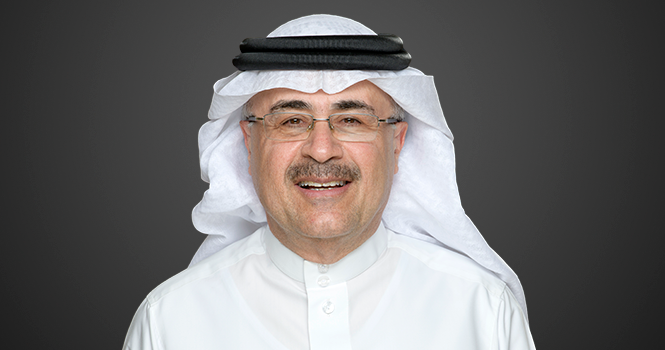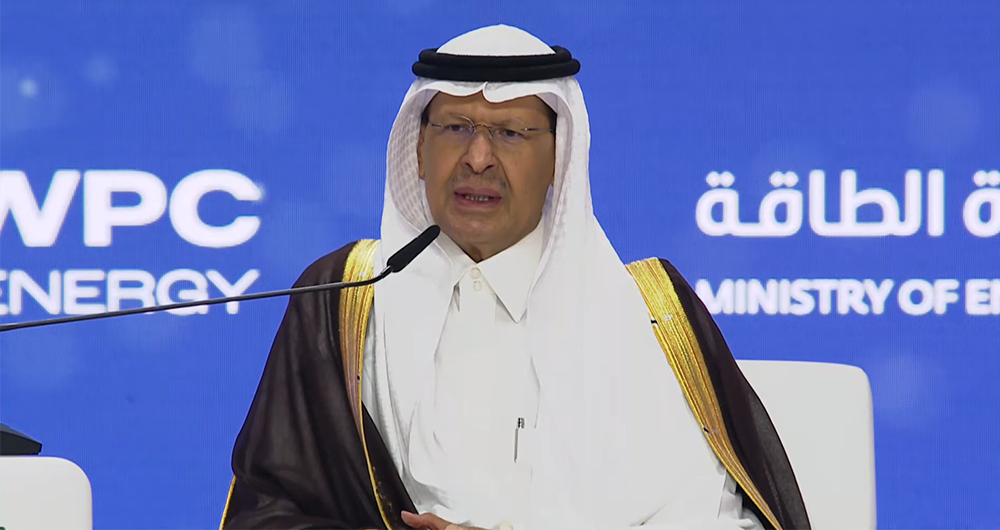
Prince Abdulaziz bin Salman, Minister of Energy
Saudi Arabia could increase its oil pipeline network’s capacity to 10 million barrels per day (bpd) within the next three years, Energy Minister Prince Abdulaziz bin Salman said. 
Additional investment could boost capacity by three million bpd, strengthening the Kingdom’s ability to diversify oil transportation routes, he said at a session of the World Petroleum Congress (WPC) in Riyadh.
The East-West pipeline has a maximum capacity of about seven million bpd, according to Saudi Ministry of Energy data. Stretching about 1,200 kilometers from eastern Saudi Arabia to Yanbu on the Red Sea coast, it allows crude to bypass the Strait of Hormuz.
Flows through the pipeline reached 5.8 million bpd at the beginning of this month.
Alongside the expansion, Saudi Arabia plans to upgrade the pipeline’s pumping capacity and use a gas pipeline to transport crude oil.
The government is working with Saudi Aramco to convert a gas pipeline for dual use, enabling it to transport 1.2 million barrels of oil per day for seven to eight weeks before resuming gas deliveries by May to meet summer demand, Prince Abdulaziz said.
Saudi Arabia is seeking international participation in the East-West pipeline expansion by increasing the number of owners, operators, designers and financiers, the minister said, noting that the aim is to make the pipeline an international asset with multiple stakeholders.
The more international participants the pipeline has, the greater its protection, he added.
Prince Abdulaziz bin Salman, Minister of Energy
Saudi Arabia could increase its oil pipeline network’s capacity to 10 million barrels per day (bpd) within the next three years, Energy Minister Prince Abdulaziz bin Salman said.
Additional investment could boost capacity by three million bpd, strengthening the Kingdom’s ability to diversify oil transportation routes, he said at a session of the World Petroleum Congress (WPC) in Riyadh.
The East-West pipeline has a maximum capacity of about seven million bpd, according to Saudi Ministry of Energy data. Stretching about 1,200 kilometers from eastern Saudi Arabia to Yanbu on the Red Sea coast, it allows crude to bypass the Strait of Hormuz.
Flows through the pipeline reached 5.8 million bpd at the beginning of this month.
Alongside the expansion, Saudi Arabia plans to upgrade the pipeline’s pumping capacity and use a gas pipeline to transport crude oil.
The government is working with Saudi Aramco to convert a gas pipeline for dual use, enabling it to transport 1.2 million barrels of oil per day for seven to eight weeks before resuming gas deliveries by May to meet summer demand, Prince Abdulaziz said.
Saudi Arabia is seeking international participation in the East-West pipeline expansion by increasing the number of owners, operators, designers and financiers, the minister said, noting that the aim is to make the pipeline an international asset with multiple stakeholders.
The more international participants the pipeline has, the greater its protection, he added.