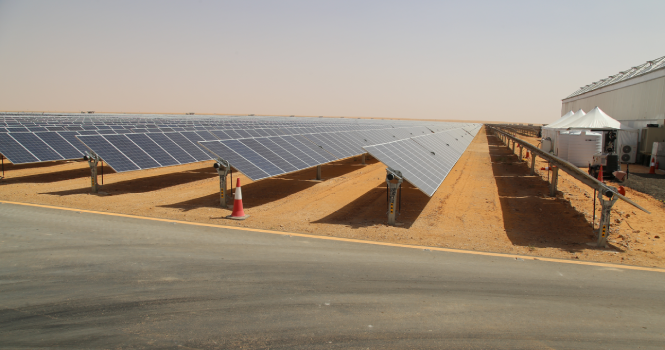
The Saudi Electricity Regulatory Authority (SERA) updated its rules for renewable energy generation (REG) for self-consumption, raising the maximum system capacity covered by the framework to 50 megawatts (MW).
The regulation governs renewable power systems installed at homes and other premises to meet consumers’ own electricity needs. It sets requirements for operation and maintenance, clarifies consumer rights and outlines how surplus electricity supplied to the grid is credited against bills.

Published in the official gazette Umm Al-Qura, the updated regulation brings the existing frameworks for renewable energy self-consumption and small-scale solar photovoltaic systems into a single document.
Grid-connected systems are divided into four categories, ranging from 1 kilowatt (kW) to 50 MW, with connection, licensing and metering requirements for each. The regulation also sets out requirements for off-grid systems.
Consumers connecting systems of up to 2 MW must use contractors or consultants accredited by the qualification committee established by the Ministry of Energy. Systems in the first and second categories require an accredited contractor, while those in the third category require an accredited consultant or contractor.
Eligible technologies include solar, wind, waste-to-energy and biofuels. Energy storage may also be integrated into eligible generation systems.
Surplus electricity methodology
Under the net-billing arrangements, consumers receive a monetary credit for surplus electricity exported to the grid.
Credits are carried forward to the next billing cycle and deducted from electricity charges for the same premises. They remain valid for 12 months from the date they are calculated, after which any unused balance expires.
Consumers may also apply net-billing credits across multiple electricity accounts held with the same service provider. If the connection agreement is terminated, the provider must pay any outstanding amount owed for surplus electricity within 60 days.
Connection procedures and fees
The regulation defines the responsibilities of service providers, consumers and accredited contractors or consultants for installing, connecting, operating and maintaining generation systems.
Service providers must submit their connection procedures to SERA for review before publishing them on their websites.
Application and Connection Fees
Category
System capacity
Application and connection fees
First
1–11 kW
Free
Second
Above 11 kW to 50 kW
SAR 700
Third
Above 50 kW to 2 MW
SAR 2,300
Fourth
Above 2 MW to 4 MW
SAR 16,500
Above 4 MW to 50 MW
SAR 35,000
The Saudi Electricity Regulatory Authority (SERA) updated its rules for renewable energy generation (REG) for self-consumption, raising the maximum system capacity covered by the framework to 50 megawatts (MW).
The regulation governs renewable power systems installed at homes and other premises to meet consumers’ own electricity needs. It sets requirements for operation and maintenance, clarifies consumer rights and outlines how surplus electricity supplied to the grid is credited against bills.
Published in the official gazette Umm Al-Qura, the updated regulation brings the existing frameworks for renewable energy self-consumption and small-scale solar photovoltaic systems into a single document.
Grid-connected systems are divided into four categories, ranging from 1 kilowatt (kW) to 50 MW, with connection, licensing and metering requirements for each. The regulation also sets out requirements for off-grid systems.
Consumers connecting systems of up to 2 MW must use contractors or consultants accredited by the qualification committee established by the Ministry of Energy. Systems in the first and second categories require an accredited contractor, while those in the third category require an accredited consultant or contractor.
Eligible technologies include solar, wind, waste-to-energy and biofuels. Energy storage may also be integrated into eligible generation systems.
Surplus electricity methodology
Under the net-billing arrangements, consumers receive a monetary credit for surplus electricity exported to the grid.
Credits are carried forward to the next billing cycle and deducted from electricity charges for the same premises. They remain valid for 12 months from the date they are calculated, after which any unused balance expires.
Consumers may also apply net-billing credits across multiple electricity accounts held with the same service provider. If the connection agreement is terminated, the provider must pay any outstanding amount owed for surplus electricity within 60 days.
Connection procedures and fees
The regulation defines the responsibilities of service providers, consumers and accredited contractors or consultants for installing, connecting, operating and maintaining generation systems.
Service providers must submit their connection procedures to SERA for review before publishing them on their websites.
Application and Connection Fees
Category
System capacity
Application and connection fees
First
1–11 kW
Free
Second
Above 11 kW to 50 kW
SAR 700
Third
Above 50 kW to 2 MW
SAR 2,300
Fourth
Above 2 MW to 4 MW
SAR 16,500
Above 4 MW to 50 MW
SAR 35,000