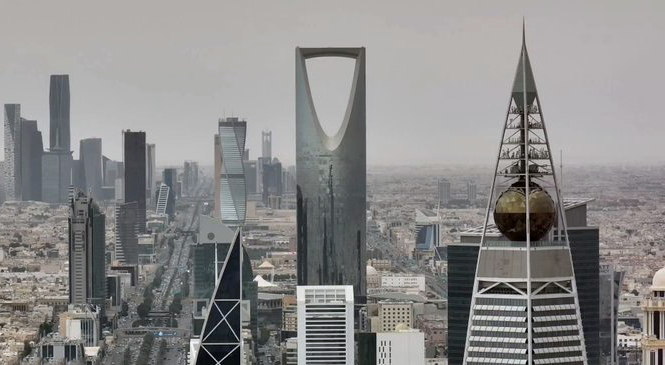
Riyadh city
Saudi Arabia’s 2027 Budget Statement outlined the key projects planned and targeted for 2027 in the investment sector. 
According to the statement, the key investment plans for 2027 include:
– Achieving SAR 137 billion in foreign direct investment (FDI) inflows in 2026, contributing to economic growth, the localization of goods and services, and job creation.
– Completing the update and approval of the National Investment Strategy (Second Edition) and launching it alongside more than 60 dedicated initiatives covering investment quality, competitiveness, and governance. These efforts aim to diversify income sources, attract domestic and foreign capital, and create direct and indirect jobs.
The key investment achievements in 2026, according to the Budget Statement, were as follows:
– Recording exceptional year-on-year growth in investment registrations through the third quarter of 2026, with registrations increasing by 115% to more than 26,000, compared with over 12,000 during the same period in 2025.
– Improving the Kingdom’s ranking by three places in the 2026 Kearney Foreign Direct Investment Confidence Index, reaching 10th globally among the economies most likely to attract investment, compared with 13th in 2025.
– Achieving its highest-ever ranking in the 2026 UNCTAD World Investment Report, climbing four places to 13th globally.
– Attracting more than 2,000 startups and registering 2,110 companies in 2026 through the Startup Saudi program. This was accompanied by efforts to strengthen international engagement and attract startups through regional and global events, including East Sush Tech Tokyo and LEAP, in partnership with enablers across the entrepreneurship ecosystem.
– Expanding the portfolio of special economic zones through the establishment of two zones connected to seaports, covering King Abdulaziz Port in Dammam and Al Khumrah in Jeddah, thereby enhancing supply chain resilience.
– Approving the regulatory framework for special economic zones to enhance their investment appeal, clarify authorities and responsibilities, accelerate licensing procedures, standardize regulatory processes, and enable the relevant entities to perform their duties more efficiently and flexibly.
Riyadh city
Saudi Arabia’s 2027 Budget Statement outlined the key projects planned and targeted for 2027 in the investment sector.
According to the statement, the key investment plans for 2027 include:
– Achieving SAR 137 billion in foreign direct investment (FDI) inflows in 2026, contributing to economic growth, the localization of goods and services, and job creation.
– Completing the update and approval of the National Investment Strategy (Second Edition) and launching it alongside more than 60 dedicated initiatives covering investment quality, competitiveness, and governance. These efforts aim to diversify income sources, attract domestic and foreign capital, and create direct and indirect jobs.
The key investment achievements in 2026, according to the Budget Statement, were as follows:
– Recording exceptional year-on-year growth in investment registrations through the third quarter of 2026, with registrations increasing by 115% to more than 26,000, compared with over 12,000 during the same period in 2025.
– Improving the Kingdom’s ranking by three places in the 2026 Kearney Foreign Direct Investment Confidence Index, reaching 10th globally among the economies most likely to attract investment, compared with 13th in 2025.
– Achieving its highest-ever ranking in the 2026 UNCTAD World Investment Report, climbing four places to 13th globally.
– Attracting more than 2,000 startups and registering 2,110 companies in 2026 through the Startup Saudi program. This was accompanied by efforts to strengthen international engagement and attract startups through regional and global events, including East Sush Tech Tokyo and LEAP, in partnership with enablers across the entrepreneurship ecosystem.
– Expanding the portfolio of special economic zones through the establishment of two zones connected to seaports, covering King Abdulaziz Port in Dammam and Al Khumrah in Jeddah, thereby enhancing supply chain resilience.
– Approving the regulatory framework for special economic zones to enhance their investment appeal, clarify authorities and responsibilities, accelerate licensing procedures, standardize regulatory processes, and enable the relevant entities to perform their duties more efficiently and flexibly.