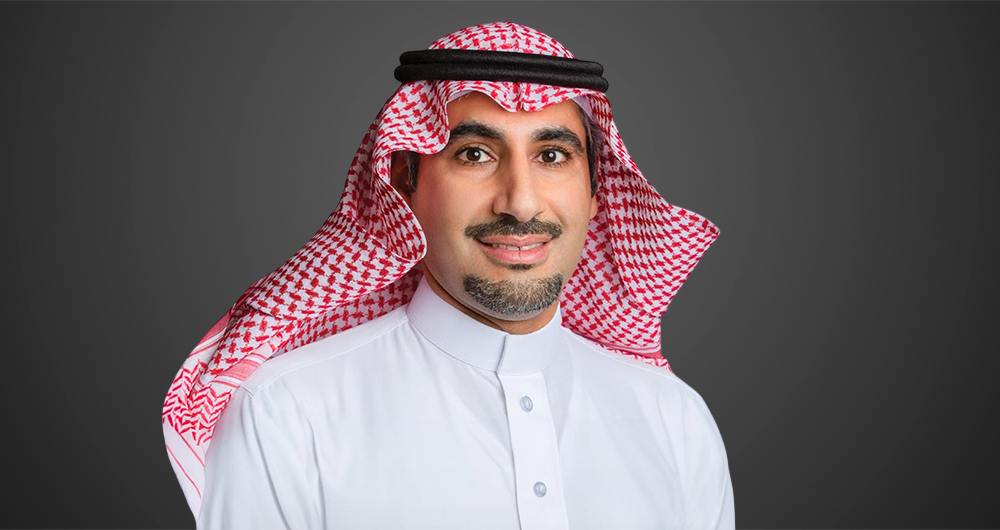
Chairman Abdulatif Ali Alseif says SAIB aims to achieve profitable, sustainable growth and maintain strong capital adequacy, liquidity, and asset quality.
The Saudi Investment Bank (SAIB) sees promising growth opportunities amid the Kingdom’s economic transformation and investment momentum, said Chairman Abdulatif Ali Alseif. 
He said corporate banking will remain a key growth target, particularly infrastructure and priority sector financing, which will support economic diversification.
In an interview with Argaam, Alseif added that opportunities remain in private banking, retail banking and the public sector, stressing that the bank aims to achieve profitable, sustainable growth and maintain strong capital adequacy, liquidity, and asset quality.
He said the bank delivered strong performance in H1 2026 and its full-year financial guidance remained unchanged when it announced its Q2 results.
Regarding the sale of the bank’s entire stake in American Express, Alseif said the transaction resulted from the termination of the shareholders’ agreement signed in 2018 in accordance with its terms, after the investment partnership reached an appropriate stage for exit. This allowed SAIB to redirect its resources toward other opportunities and priorities, he said.
The Chairman affirmed that American Express Saudi Arabia had been a successful investment for the bank throughout the partnership, as reflected in the returns generated.
The bank’s share of American Express Saudi Arabia’s profits amounted to about SAR 75 million in 2025, representing 50% of the company’s net profit.
He explained that SAIB will receive SAR 1.43 billion upon completion of the sale of its entire stake in American Express Saudi Arabia, plus deferred consideration reflecting its share of distributable profits generated from late 2025 until completion of the share transfer.
Alseif noted that the purchase consideration was determined under the mechanism agreed between the shareholders in the 2018 agreement, stressing that the proceeds will support and strengthen the bank’s financial position in line with its strategic direction and the interests of the bank and its shareholders.
The Chairman said the bank follows a disciplined approach to capital allocation and will continue to assess the optimal use of its resources to support strategic priorities, sustainable growth and creating long-term value for shareholders.
Ongoing review of investments
Regarding the potential divestment of other investments or stakes, Alseif said the bank reviews its investment portfolio periodically as part of its strategic assessment process, considering investment fit, financial performance, capital efficiency, and regulatory approvals where required.
He noted that the bank’s sale of a plot of land in 2025 was an example of this approach, generating a profit of SAR 535 million. The move was part of a strategy to monetize non-core assets and convert assets that do not directly contribute to operating activities into liquidity that can be deployed more efficiently.
Alseif added that the sale positively impacted the bank’s liquidity and financial position, providing additional resources to support core activities and finance growth opportunities, thereby enhancing returns on assets and equity.
SAR 117.3B loan and advances portfolio
Speaking on the banking sector’s performance, Alseif said the Saudi banking sector continues to demonstrate strength, supported by economic activity in the Kingdom and sustained demand for financing across a broad range of sectors. At the same time, he stressed the importance of maintaining discipline in liquidity management and earnings growth.
He added that SAIB recorded strong balance sheet growth momentum in H1 2026, with its loans and advances portfolio reaching SAR 117.3 billion, up 5% year-to-date, while customer deposits rose 11% to SAR 121.6 billion.
He explained that the financing portfolio grew about 8% year-on-year (YoY), while customer deposits increased more than 21% YoY, noting that financing growth spanned a broad range of businesses, led by corporate and private banking.
SAIB continues to participate in financing opportunities related to infrastructure projects and vital sectors of the Saudi economy, he said.
The Chairman stated that business growth was accompanied by maintained asset quality, with the non-performing assets ratio stable at 0.91%, while the coverage ratio stood at about 202%.
Alseif added that the bank is satisfied with the progress achieved in H1 2026 and remains focused on delivering profitable growth, maintaining strong liquidity, capital, as well as credit quality.
Capital adequacy ratio at 20.2%
Alseif said strengthening the bank’s capital base has provided a solid financial foundation to support its future growth and expansion plans. The common equity tier 1 (CET1) ratio stood at 19.7% at the end of Q2 2026, while the total capital adequacy ratio (CAR) reached 20.2%.
He added that the liquidity position remained strong, with the liquidity coverage ratio at 196.5% and the net stable funding ratio (NSFR) at 111.5%.
Dynamic interest rate management
Regarding the impact of the interest rate cycle on SAIB’s profitability and net financing margins, Alseif said interest rate expectations have changed significantly in recent months, with the prospects of further cuts becoming less clear.
He added that the bank does not base its strategy on a single interest rate scenario, but manages its balance sheet dynamically across a range of potential scenarios.
The Chairman explained that the impact on margins depends on the timing and extent of repricing on both sides of the balance sheet. Benchmark interest rates affect asset yields, while funding costs are linked to the deposit mix and repricing timing, in addition to wholesale funding instruments.
SAIB focuses on effectively managing asset pricing, the deposit mix, and funding costs to support margin resilience and earnings stability under different interest rate scenarios, he said.
SAR 1.05B net income in H1 2026
Alseif said that net income rose 3% YoY to SAR 1.05 billion, supported by growth in fee and other income, improved operating efficiency and continued strong credit quality.
He noted that the cost-to-income ratio improved to 39.5%, while the cost of risk remained low at 22 basis points (bps).
He explained that for the remainder of 2026, the bank will focus on disciplined growth in its financing portfolio, increasing fee and other income, managing funding and margins effectively, controlling costs and maintaining asset quality.
Capital increase supports expansion plans
On the capital increase, Alseif said the move aims to strengthen SAIB’s capital base and support its ability to achieve sustainable growth as part of its strategy.
He added that the capital increase provides greater flexibility to capitalize on future opportunities, support expansion in financing and investment activities, meet operational requirements and maintain strong capital adequacy levels.
The capital increase reflects the strength of the bank’s financial position and its confidence in its future business prospects, he said, adding that it will enhance value for shareholders, customers and stakeholders.
Executive transition ensures strategic continuity
Regarding the change in executive leadership, Alseif said the transition represents a carefully planned leadership change that will ensure business continuity and maintain the bank’s growth and strategic direction.
He explained that Faisal Al-Omran led an important phase of the bank’s development and growth for more than seven years as CEO, contributing to several achievements in cooperation with the board and executive management.
He added that Salman Al-Fagham’s appointment continues this path, noting that he has more than two decades of banking and financial experience and has held several leadership positions since joining the bank in 2006.
His institutional and leadership experience will support a smooth transition and continuity in implementing the bank’s strategy, with the next phase focused on enhancing operational efficiency and capitalizing on growth opportunities amid competition, technological advances and artificial intelligence, Alseif said.
Chairman Abdulatif Ali Alseif says SAIB aims to achieve profitable, sustainable growth and maintain strong capital adequacy, liquidity, and asset quality.
The Saudi Investment Bank (SAIB) sees promising growth opportunities amid the Kingdom’s economic transformation and investment momentum, said Chairman Abdulatif Ali Alseif.
He said corporate banking will remain a key growth target, particularly infrastructure and priority sector financing, which will support economic diversification.
In an interview with Argaam, Alseif added that opportunities remain in private banking, retail banking and the public sector, stressing that the bank aims to achieve profitable, sustainable growth and maintain strong capital adequacy, liquidity, and asset quality.
He said the bank delivered strong performance in H1 2026 and its full-year financial guidance remained unchanged when it announced its Q2 results.
Regarding the sale of the bank’s entire stake in American Express, Alseif said the transaction resulted from the termination of the shareholders’ agreement signed in 2018 in accordance with its terms, after the investment partnership reached an appropriate stage for exit. This allowed SAIB to redirect its resources toward other opportunities and priorities, he said.
The Chairman affirmed that American Express Saudi Arabia had been a successful investment for the bank throughout the partnership, as reflected in the returns generated.
The bank’s share of American Express Saudi Arabia’s profits amounted to about SAR 75 million in 2025, representing 50% of the company’s net profit.
He explained that SAIB will receive SAR 1.43 billion upon completion of the sale of its entire stake in American Express Saudi Arabia, plus deferred consideration reflecting its share of distributable profits generated from late 2025 until completion of the share transfer.
Alseif noted that the purchase consideration was determined under the mechanism agreed between the shareholders in the 2018 agreement, stressing that the proceeds will support and strengthen the bank’s financial position in line with its strategic direction and the interests of the bank and its shareholders.
The Chairman said the bank follows a disciplined approach to capital allocation and will continue to assess the optimal use of its resources to support strategic priorities, sustainable growth and creating long-term value for shareholders.
Ongoing review of investments
Regarding the potential divestment of other investments or stakes, Alseif said the bank reviews its investment portfolio periodically as part of its strategic assessment process, considering investment fit, financial performance, capital efficiency, and regulatory approvals where required.
He noted that the bank’s sale of a plot of land in 2025 was an example of this approach, generating a profit of SAR 535 million. The move was part of a strategy to monetize non-core assets and convert assets that do not directly contribute to operating activities into liquidity that can be deployed more efficiently.
Alseif added that the sale positively impacted the bank’s liquidity and financial position, providing additional resources to support core activities and finance growth opportunities, thereby enhancing returns on assets and equity.
SAR 117.3B loan and advances portfolio
Speaking on the banking sector’s performance, Alseif said the Saudi banking sector continues to demonstrate strength, supported by economic activity in the Kingdom and sustained demand for financing across a broad range of sectors. At the same time, he stressed the importance of maintaining discipline in liquidity management and earnings growth.
He added that SAIB recorded strong balance sheet growth momentum in H1 2026, with its loans and advances portfolio reaching SAR 117.3 billion, up 5% year-to-date, while customer deposits rose 11% to SAR 121.6 billion.
He explained that the financing portfolio grew about 8% year-on-year (YoY), while customer deposits increased more than 21% YoY, noting that financing growth spanned a broad range of businesses, led by corporate and private banking.
SAIB continues to participate in financing opportunities related to infrastructure projects and vital sectors of the Saudi economy, he said.
The Chairman stated that business growth was accompanied by maintained asset quality, with the non-performing assets ratio stable at 0.91%, while the coverage ratio stood at about 202%.
Alseif added that the bank is satisfied with the progress achieved in H1 2026 and remains focused on delivering profitable growth, maintaining strong liquidity, capital, as well as credit quality.
Capital adequacy ratio at 20.2%
Alseif said strengthening the bank’s capital base has provided a solid financial foundation to support its future growth and expansion plans. The common equity tier 1 (CET1) ratio stood at 19.7% at the end of Q2 2026, while the total capital adequacy ratio (CAR) reached 20.2%.
He added that the liquidity position remained strong, with the liquidity coverage ratio at 196.5% and the net stable funding ratio (NSFR) at 111.5%.
Dynamic interest rate management
Regarding the impact of the interest rate cycle on SAIB’s profitability and net financing margins, Alseif said interest rate expectations have changed significantly in recent months, with the prospects of further cuts becoming less clear.
He added that the bank does not base its strategy on a single interest rate scenario, but manages its balance sheet dynamically across a range of potential scenarios.
The Chairman explained that the impact on margins depends on the timing and extent of repricing on both sides of the balance sheet. Benchmark interest rates affect asset yields, while funding costs are linked to the deposit mix and repricing timing, in addition to wholesale funding instruments.
SAIB focuses on effectively managing asset pricing, the deposit mix, and funding costs to support margin resilience and earnings stability under different interest rate scenarios, he said.
SAR 1.05B net income in H1 2026
Alseif said that net income rose 3% YoY to SAR 1.05 billion, supported by growth in fee and other income, improved operating efficiency and continued strong credit quality.
He noted that the cost-to-income ratio improved to 39.5%, while the cost of risk remained low at 22 basis points (bps).
He explained that for the remainder of 2026, the bank will focus on disciplined growth in its financing portfolio, increasing fee and other income, managing funding and margins effectively, controlling costs and maintaining asset quality.
Capital increase supports expansion plans
On the capital increase, Alseif said the move aims to strengthen SAIB’s capital base and support its ability to achieve sustainable growth as part of its strategy.
He added that the capital increase provides greater flexibility to capitalize on future opportunities, support expansion in financing and investment activities, meet operational requirements and maintain strong capital adequacy levels.
The capital increase reflects the strength of the bank’s financial position and its confidence in its future business prospects, he said, adding that it will enhance value for shareholders, customers and stakeholders.
Executive transition ensures strategic continuity
Regarding the change in executive leadership, Alseif said the transition represents a carefully planned leadership change that will ensure business continuity and maintain the bank’s growth and strategic direction.
He explained that Faisal Al-Omran led an important phase of the bank’s development and growth for more than seven years as CEO, contributing to several achievements in cooperation with the board and executive management.
He added that Salman Al-Fagham’s appointment continues this path, noting that he has more than two decades of banking and financial experience and has held several leadership positions since joining the bank in 2006.
His institutional and leadership experience will support a smooth transition and continuity in implementing the bank’s strategy, with the next phase focused on enhancing operational efficiency and capitalizing on growth opportunities amid competition, technological advances and artificial intelligence, Alseif said.