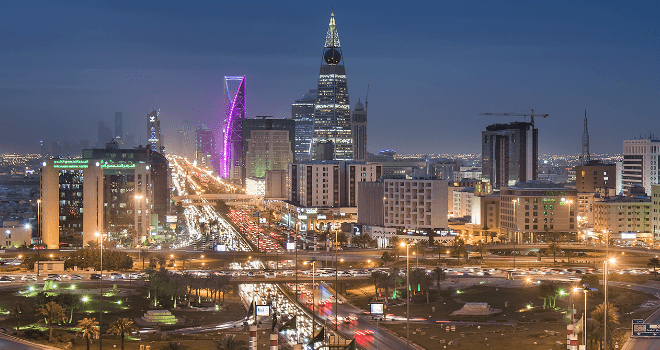
Knight Frank expects Riyadh’s retail supply to expand significantly by the end of the decade.
The total retail space in Riyadh could increase to around 6.2 million square meters by the end of 2029, compared with approximately 4.1 million square meters currently, Faisal Durrani, Partner and Head of Research for the Middle East and North Africa at Knight Frank said in an exclusive interview with Argaam. 
The addition of retail space on this scale represents one of the sector’s key challenges over the coming years, requiring retailers, mall operators, and developers to place greater emphasis on lifestyle destinations and experience-led developments.
Maintaining high footfall and occupancy rates amid the rapid expansion of retail projects and available space will require the development of lifestyle-focused retail concepts, alongside a stronger emphasis on affordable and mid-market retail and food and beverage offerings that align with consumers’ disposable income levels in the Kingdom, Durrani said.
He also indicated that Saudi Arabia’s retail sector has undergone a significant transformation under the Vision 2030 programs, noting that the Kingdom’s young demographics have fundamentally reshaped the types of retail offerings and concepts available to consumers.
Around 45% of Saudis are under the age of 25, and retailers should develop offerings better aligned with the expectations of the new generation of consumers.
Younger consumers place considerable importance on integrated shopping experiences, particularly concepts centered on food and beverage, edutainment, entertainment, and health and wellness.
Durrani said the rapid expansion of the middle class, coupled with strong economic growth over recent years, has increased disposable income, supporting the ongoing transformation of the Kingdom’s retail sector.
These factors have enhanced the resilience of the Saudi market and helped sustain robust consumer spending despite geopolitical tensions and uncertainty across global markets.
Maintaining this resilience in the coming years will largely depend on the ability of operators and developers to keep pace with evolving consumer preferences while offering products and services suited to consumers’ purchasing power, alongside the delivery of new retail space.
Knight Frank said Saudi Arabia’s retail and food and beverage sectors maintained strong momentum during the first half of 2026, backed by resilient consumer spending, stable inflation, and continued expansion of the non-oil economy.
In its latest report, the company said total consumer spending through point-of-sale transactions, cash withdrawals, and e-commerce purchases increased 6.8% year-on-year during the first quarter of 2026 to SAR 425 billion.
The report added that economic conditions remained supportive, with Saudi Arabia’s economy expanding 3% in the first quarter of 2026, driven by 2.9% growth in non-oil activities, while inflation remained stable at 1.8%, boosting consumer confidence despite rising geopolitical tensions in the region.
Saudi Retail Market Overview
Indicator
Period
Value
Total consumer spending
Q1 2026
SAR 425 billion
Spending through formal payment channels
2025
SAR 1.57 trillion
Saudi GDP growth
Q1 2026
3.0%
Non-oil activities growth
Q1 2026
2.9%
Inflation rate
Q1 2026
1.8%
The report highlighted the continued shift toward digital payments, with e-commerce spending rising 42% year-on-year (YoY) to SAR 98.4 billion, while point-of-sale spending increased 4.4% to SAR 189.7 billion. Cash withdrawals, meanwhile, declined 7% to SAR 136.8 billion.
Payment Channels (SAR bn)
Payment Channel
Q1 2026
YoY Change
Share of Total Spending
Point of Sale
189.7
+4.4%
44.6%
E-commerce
98.4
+42.0%
23.2%
Cash Withdrawals
136.8
)7.0%(
32.2%
Total
424.9
+6.8%
100%
Non-essential retail categories posted the strongest spending growth, with point-of-sale transactions for jewelry rising 47%, followed by clothing and accessories at 25.9% and telecommunications at 23%, reflecting sustained demand for lifestyle products, fashion, and premium consumer goods.
Fastest-growing retail categories by spending
Category
YoY Growth
Jewelry
47.0%
Clothing Accessories
25.9%
Telecommunications
23.0%
In the commercial real estate market, average rents for regional and super-regional shopping malls in Riyadh increased 1.2% YoY to SAR 2,650 per square meter, while occupancy remained stable at 91%. Occupancy stood at 88% in Jeddah and 94% in the Dammam metropolitan area.
The report said total retail supply reached around 4.2 million square meters in Riyadh, 3 million square meters in Jeddah, and 1.4 million square meters in the Dammam metropolitan area, with developers increasingly focusing on mixed-use projects and integrated destinations combining retail, hospitality, and entertainment.
It added that Riyadh’s lifestyle retail segment comprises around 485,000 square meters across 28 projects, with an occupancy rate of 96%. Food and beverage operators account for 76% of tenants, with more than 434 restaurants and cafés.
The report noted that Jeddah’s lifestyle retail segment currently totals approximately 291,000 square meters across 19 projects, with an additional 277,600 square meters expected to be delivered by 2029.
Retail Market Fundamentals
Region
Occupancy Rate
Total Supply
(million sq. m)
Riyadh
91%
4.2
Jeddah
88%
3.0
Dammam Metropolitan Area
94%
1.4
Lifestyle Retail Projects
Region
Number of Projects
Area
(000 sq. m)
Riyadh
28
485
Jeddah
19
291
Knight Frank expects Riyadh’s retail supply to expand significantly by the end of the decade.
The total retail space in Riyadh could increase to around 6.2 million square meters by the end of 2029, compared with approximately 4.1 million square meters currently, Faisal Durrani, Partner and Head of Research for the Middle East and North Africa at Knight Frank said in an exclusive interview with Argaam.
The addition of retail space on this scale represents one of the sector’s key challenges over the coming years, requiring retailers, mall operators, and developers to place greater emphasis on lifestyle destinations and experience-led developments.
Maintaining high footfall and occupancy rates amid the rapid expansion of retail projects and available space will require the development of lifestyle-focused retail concepts, alongside a stronger emphasis on affordable and mid-market retail and food and beverage offerings that align with consumers’ disposable income levels in the Kingdom, Durrani said.
He also indicated that Saudi Arabia’s retail sector has undergone a significant transformation under the Vision 2030 programs, noting that the Kingdom’s young demographics have fundamentally reshaped the types of retail offerings and concepts available to consumers.
Around 45% of Saudis are under the age of 25, and retailers should develop offerings better aligned with the expectations of the new generation of consumers.
Younger consumers place considerable importance on integrated shopping experiences, particularly concepts centered on food and beverage, edutainment, entertainment, and health and wellness.
Durrani said the rapid expansion of the middle class, coupled with strong economic growth over recent years, has increased disposable income, supporting the ongoing transformation of the Kingdom’s retail sector.
These factors have enhanced the resilience of the Saudi market and helped sustain robust consumer spending despite geopolitical tensions and uncertainty across global markets.
Maintaining this resilience in the coming years will largely depend on the ability of operators and developers to keep pace with evolving consumer preferences while offering products and services suited to consumers’ purchasing power, alongside the delivery of new retail space.
Knight Frank said Saudi Arabia’s retail and food and beverage sectors maintained strong momentum during the first half of 2026, backed by resilient consumer spending, stable inflation, and continued expansion of the non-oil economy.
In its latest report, the company said total consumer spending through point-of-sale transactions, cash withdrawals, and e-commerce purchases increased 6.8% year-on-year during the first quarter of 2026 to SAR 425 billion.
The report added that economic conditions remained supportive, with Saudi Arabia’s economy expanding 3% in the first quarter of 2026, driven by 2.9% growth in non-oil activities, while inflation remained stable at 1.8%, boosting consumer confidence despite rising geopolitical tensions in the region.
Saudi Retail Market Overview
Indicator
Period
Value
Total consumer spending
Q1 2026
SAR 425 billion
Spending through formal payment channels
2025
SAR 1.57 trillion
Saudi GDP growth
Q1 2026
3.0%
Non-oil activities growth
Q1 2026
2.9%
Inflation rate
Q1 2026
1.8%
The report highlighted the continued shift toward digital payments, with e-commerce spending rising 42% year-on-year (YoY) to SAR 98.4 billion, while point-of-sale spending increased 4.4% to SAR 189.7 billion. Cash withdrawals, meanwhile, declined 7% to SAR 136.8 billion.
Payment Channels (SAR bn)
Payment Channel
Q1 2026
YoY Change
Share of Total Spending
Point of Sale
189.7
+4.4%
44.6%
E-commerce
98.4
+42.0%
23.2%
Cash Withdrawals
136.8
)7.0%(
32.2%
Total
424.9
+6.8%
100%
Non-essential retail categories posted the strongest spending growth, with point-of-sale transactions for jewelry rising 47%, followed by clothing and accessories at 25.9% and telecommunications at 23%, reflecting sustained demand for lifestyle products, fashion, and premium consumer goods.
Fastest-growing retail categories by spending
Category
YoY Growth
Jewelry
47.0%
Clothing Accessories
25.9%
Telecommunications
23.0%
In the commercial real estate market, average rents for regional and super-regional shopping malls in Riyadh increased 1.2% YoY to SAR 2,650 per square meter, while occupancy remained stable at 91%. Occupancy stood at 88% in Jeddah and 94% in the Dammam metropolitan area.
The report said total retail supply reached around 4.2 million square meters in Riyadh, 3 million square meters in Jeddah, and 1.4 million square meters in the Dammam metropolitan area, with developers increasingly focusing on mixed-use projects and integrated destinations combining retail, hospitality, and entertainment.
It added that Riyadh’s lifestyle retail segment comprises around 485,000 square meters across 28 projects, with an occupancy rate of 96%. Food and beverage operators account for 76% of tenants, with more than 434 restaurants and cafés.
The report noted that Jeddah’s lifestyle retail segment currently totals approximately 291,000 square meters across 19 projects, with an additional 277,600 square meters expected to be delivered by 2029.
Retail Market Fundamentals
Region
Occupancy Rate
Total Supply
(million sq. m)
Riyadh
91%
4.2
Jeddah
88%
3.0
Dammam Metropolitan Area
94%
1.4
Lifestyle Retail Projects
Region
Number of Projects
Area
(000 sq. m)
Riyadh
28
485
Jeddah
19
291