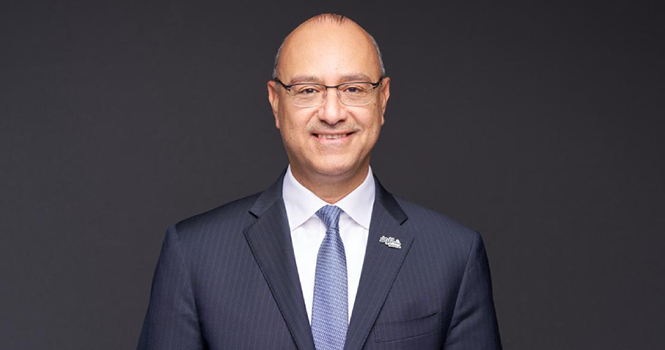
Sameh Mahmoud Hassan, CEO of Savola
Panda Retail Co. nearly tripled its e-commerce segment year-on-year (YoY) in Q1 2026, Savola Group CEO Sameh Mahmoud Hassan told Argaam in an exclusive interview. 
He expects store expansions and online growth to contribute positively to profitability as these investments mature.
New store expansion and e-commerce growth are strategically important for Panda’s long-term value creation, he said, noting that new stores typically go through a ramp-up phase of around two to three quarters before reaching optimal profitability.
The group carefully selects the locations of new outlets, he added.
Panda’s revenue dipped slight despite new store openings, Hassan said, noting that the performance reflected current market conditions rather than structural issues in the business.
The group remains focused on strengthening Panda’s operating performance and profitability, before pursuing future monetization initiatives, including a potential initial public offering, at the right time and under suitable conditions.
Commenting on first-quarter results, the CEO said the group’s 50% increase in net profit was supported by a one-off gain from the Sudan divestment, while underlying operating performance remained strong. Excluding the non-recurring impact, Savola posted net income of SAR 243 million, driven by improvements across its core operating segments.
“A meaningful portion of the growth is clearly supported by sustainable operational performance rather than purely transactional items,” he said.
Hassan said the food-processing segment recorded growth across key categories, with edible oils contributing around SAR 6 million, sugar adding about SAR 16 million and pasta contributing approximately SAR 11 million.
The performance reflected strong operational execution and the strength of the group’s diversified portfolio across products and markets, which continues to be a key advantage.
Hassan attributed lower net financing costs on debt to an improved financing structure and reduced leverage, noting that a key contributor was the deconsolidation of Türkiye following the formation of a joint venture, which removed relatively high-cost debt from the balance sheet.
He added that the group now has a stronger and more resilient balance sheet, giving it greater flexibility to support operations and future strategic initiatives.
On regional geopolitical developments, Hassan said resilience has been built into the group’s operating model through experience navigating multiple economic and geopolitical cycles.
He said the group’s primary exposure remains supply-chain continuity, particularly for key commodities, adding that risks are mitigated through strategic inventory levels, diversified sourcing and alternative supply routes when required.
Regarding second-quarter 2026 performance, Hassan said the group is unable to provide forecasts or forward-looking guidance in compliance with disclosure regulations set by the Capital Market Authority (CMA). However, the group continues to work diligently and efficiently to achieve the best possible results.
Savola’s net profit rose to SAR 284.5 million in the first quarter of 2026, compared with SAR 189.2 million in the year-earlier period, according to Argaam’s data.
Sameh Mahmoud Hassan, CEO of Savola
Panda Retail Co. nearly tripled its e-commerce segment year-on-year (YoY) in Q1 2026, Savola Group CEO Sameh Mahmoud Hassan told Argaam in an exclusive interview.
He expects store expansions and online growth to contribute positively to profitability as these investments mature.
New store expansion and e-commerce growth are strategically important for Panda’s long-term value creation, he said, noting that new stores typically go through a ramp-up phase of around two to three quarters before reaching optimal profitability.
The group carefully selects the locations of new outlets, he added.
Panda’s revenue dipped slight despite new store openings, Hassan said, noting that the performance reflected current market conditions rather than structural issues in the business.
The group remains focused on strengthening Panda’s operating performance and profitability, before pursuing future monetization initiatives, including a potential initial public offering, at the right time and under suitable conditions.
Commenting on first-quarter results, the CEO said the group’s 50% increase in net profit was supported by a one-off gain from the Sudan divestment, while underlying operating performance remained strong. Excluding the non-recurring impact, Savola posted net income of SAR 243 million, driven by improvements across its core operating segments.
“A meaningful portion of the growth is clearly supported by sustainable operational performance rather than purely transactional items,” he said.
Hassan said the food-processing segment recorded growth across key categories, with edible oils contributing around SAR 6 million, sugar adding about SAR 16 million and pasta contributing approximately SAR 11 million.
The performance reflected strong operational execution and the strength of the group’s diversified portfolio across products and markets, which continues to be a key advantage.
Hassan attributed lower net financing costs on debt to an improved financing structure and reduced leverage, noting that a key contributor was the deconsolidation of Türkiye following the formation of a joint venture, which removed relatively high-cost debt from the balance sheet.
He added that the group now has a stronger and more resilient balance sheet, giving it greater flexibility to support operations and future strategic initiatives.
On regional geopolitical developments, Hassan said resilience has been built into the group’s operating model through experience navigating multiple economic and geopolitical cycles.
He said the group’s primary exposure remains supply-chain continuity, particularly for key commodities, adding that risks are mitigated through strategic inventory levels, diversified sourcing and alternative supply routes when required.
Regarding second-quarter 2026 performance, Hassan said the group is unable to provide forecasts or forward-looking guidance in compliance with disclosure regulations set by the Capital Market Authority (CMA). However, the group continues to work diligently and efficiently to achieve the best possible results.
Savola’s net profit rose to SAR 284.5 million in the first quarter of 2026, compared with SAR 189.2 million in the year-earlier period, according to Argaam’s data.