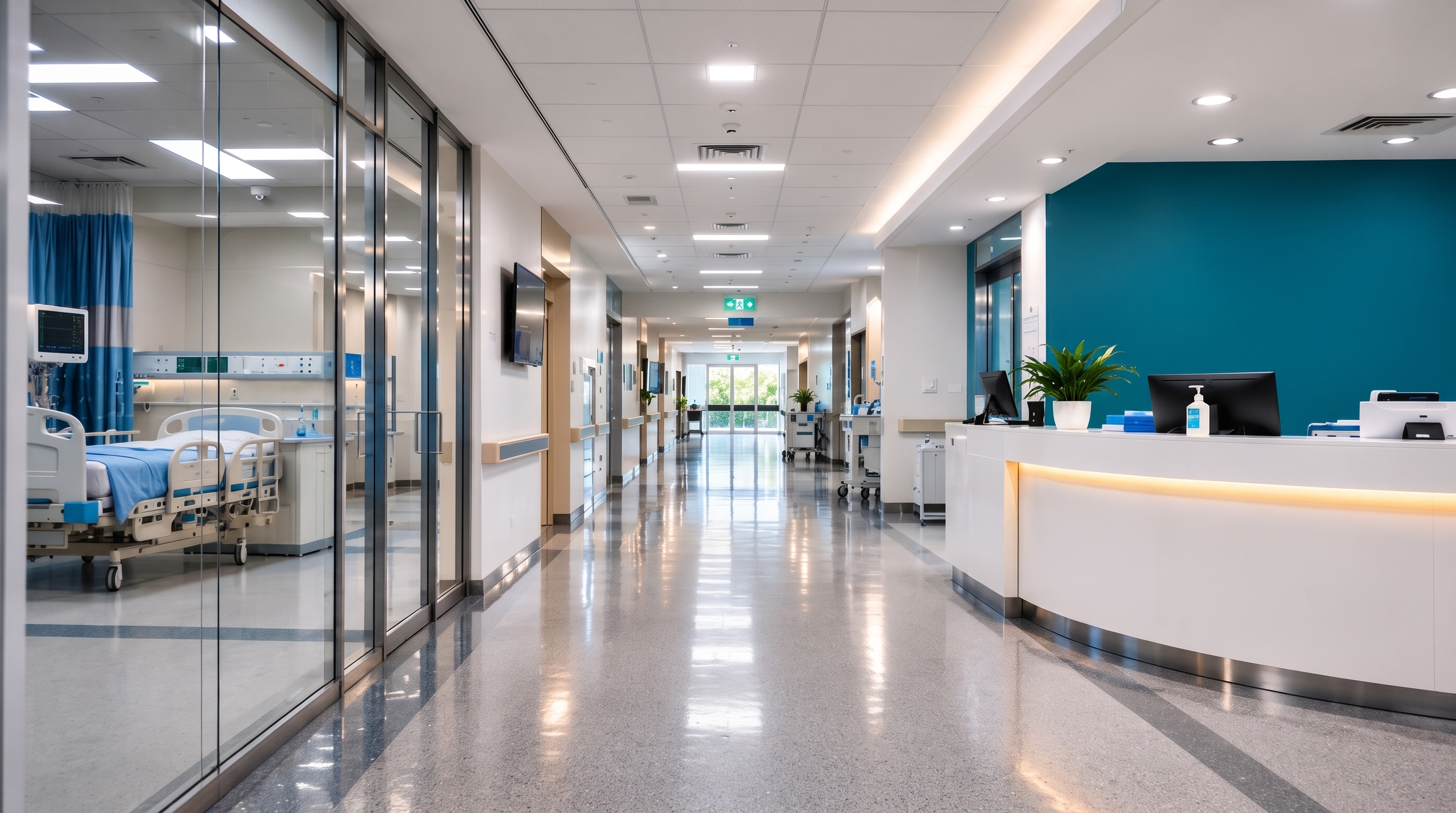
A hospital corridor with glass-fronted patient rooms and a nurses’ station.
Dallah Health‘s net profit for the third quarter of 2026 looks strong, at SAR436 million. Most of it, though, SAR356.6 million, came from a one-off gain on the sale of its stake in Al-Faqih hospital. 
Profit from its day-to-day business was SAR79.5 million, 29% lower than a year earlier on the same basis, and two of its hospitals in Riyadh account for almost all of that decline.
Dallah is one of Saudi Arabia’s leading private hospital groups. Listed on the Saudi Exchange, it runs hospitals in Riyadh, including Dallah Al Nakheel, Dallah Namar and Kingdom Hospital, and in the Eastern region, with about 1,900 beds and around four million patient visits a year, according to its own figures.
Its main listed peers are Dr Sulaiman Al Habib Medical Group, the largest by patient numbers, and Mouwasat. As Saudi Arabia expands the role of private providers in healthcare under Vision 2030, groups such as Dallah offer a useful gauge of how that shift is progressing.
The company estimates the two Riyadh hospitals reduced profit by about SAR31 million in the quarter, before additional provisions for bills that may not be collected. That is roughly the whole of the fall.
Each hospital is facing its own circumstances, according to management. At Dallah Namar, referrals of long-term care patients from the Ministry of Health are down by more than half.
At Kingdom Hospital, road works and infrastructure development in the surrounding area have made the hospital harder to reach, and outpatient visits there fell 9% in the third quarter from a year earlier. Management sees this as temporary and expects it to last until 2027.
Dallah’s results offer an early read on Saudi private healthcare as the sector grows. Patient numbers are rising, and care is shifting towards outpatient appointments, home care and telemedicine.
How quickly payments are collected, and how expansion is financed, will shape how much of that growth turns into profit and cash.
More visits, less revenue from each
Across the company, patient numbers are growing faster than revenue. In the first nine months of 2026, the number of patient visits rose 14.5%, but revenue rose only 8.5%. Excluding pharmaceutical distribution, average revenue per visit fell about 5%, from SAR1,078 to SAR1,024.
Management attributes the change mainly to the mix of patients. Long-term care cases, which generate the largest bills, now make up a smaller share of visits, while outpatient appointments, home care and telemedicine make up a larger one. The trend isn’t uniform: at Dallah Al Khobar, in the Eastern region, revenue per patient rose 12%.
Dallah doesn’t report inpatient and outpatient visits separately, and the figures can’t show how much of the decline reflects the mix of patients and how much reflects pricing.
Costs added to the pressure. In the third quarter, revenue rose 2.3% to SAR1.09 billion, while the cost of sales rose 4.3%.
Slower payments, higher debt
The pressure has also reached Dallah’s cash. Insurers are taking longer to pay: claims outstanding have risen to about two months of billings, from roughly one before.
Dallah set aside SAR18 million in the quarter for bills that may not be collected, about half of it reflecting updated assumptions about the wider economy. Management expects collections from insurers to return to normal by the end of 2026, and payments from the Ministry of Health by mid-2027.
Debt has grown with Dallah’s expansion. It added two hospitals in the Eastern region in March 2025, and its growth now comes mainly from there: outside the Eastern region, revenue for the first nine months of 2026 was flat.
Borrowings, excluding leases, rose from SAR1.9 billion at the end of 2024 to SAR3.1 billion in September 2026. Quarterly financing costs rose from about SAR25 million to SAR57 million over the same period.
The sale of the Al-Faqih stake is helping to reduce that debt. In May, Dallah disclosed a price of SAR498 million, against a book value of SAR102 million, with part of the price held in escrow, meaning kept by a third party until agreed conditions are met.
It received SAR467 million in cash when the sale completed in July, and used the proceeds to repay debt. Management expects this to lower financing costs by about SAR25 million in 2027. By September, the profit from Al-Faqih that Dallah no longer recognises came to about SAR8.5 million.
Shared pressure, a sharper fall
Dallah isn’t alone in facing pressure on margins. In the first nine months of 2026, gross margins narrowed at all three listed hospital groups, by between 1.0 and 1.7 percentage points, with Dallah at the lower end.
Earnings tell a different story. On Argaam’s measure of earnings per share before unusual items, earnings rose 5.6% at Sulaiman Al Habib and fell 2.0% at Mouwasat, but fell 18.5% at Dallah.
On Dallah’s own adjusted figures, the fall was 13.6%. The difference lies below gross profit. In the first nine months, Dallah’s provisions for bills that may not be collected rose by SAR19 million, its operating costs by SAR38 million and its financing costs by SAR34 million.
What to watch
Four things will show whether the pressure eases. The first is whether fourth-quarter revenue recovers from the third quarter’s SAR1.09 billion.
The second is whether average revenue per visit stops falling. The third is whether outpatient visits at Kingdom Hospital recover as the surrounding works progress.
The fourth is the pace of payments from insurers and the Ministry of Health, which affects both Dallah’s cash and the amounts it sets aside for bills that may not be collected.
Editorial Note:
We publish without bylines. Our research is produced collectively — analysts, editors and data specialists working on the same questions — and the findings reflect the judgement of the team rather than of any individual.
This is a deliberate choice. It keeps the argument, rather than its author, as the thing a reader weighs.
Every figure here was computed by Argaam analysts from the sources cited, and is reproducible from them. The analysis and conclusions are the team’s own. Charts were rendered with AI assistance. Methodology and workbook available to subscribers; questions to intelligence@argaam.com.
A hospital corridor with glass-fronted patient rooms and a nurses’ station.
Dallah Health‘s net profit for the third quarter of 2026 looks strong, at SAR436 million. Most of it, though, SAR356.6 million, came from a one-off gain on the sale of its stake in Al-Faqih hospital.
Profit from its day-to-day business was SAR79.5 million, 29% lower than a year earlier on the same basis, and two of its hospitals in Riyadh account for almost all of that decline.
Dallah is one of Saudi Arabia’s leading private hospital groups. Listed on the Saudi Exchange, it runs hospitals in Riyadh, including Dallah Al Nakheel, Dallah Namar and Kingdom Hospital, and in the Eastern region, with about 1,900 beds and around four million patient visits a year, according to its own figures.
Its main listed peers are Dr Sulaiman Al Habib Medical Group, the largest by patient numbers, and Mouwasat. As Saudi Arabia expands the role of private providers in healthcare under Vision 2030, groups such as Dallah offer a useful gauge of how that shift is progressing.
The company estimates the two Riyadh hospitals reduced profit by about SAR31 million in the quarter, before additional provisions for bills that may not be collected. That is roughly the whole of the fall.
Each hospital is facing its own circumstances, according to management. At Dallah Namar, referrals of long-term care patients from the Ministry of Health are down by more than half.
At Kingdom Hospital, road works and infrastructure development in the surrounding area have made the hospital harder to reach, and outpatient visits there fell 9% in the third quarter from a year earlier. Management sees this as temporary and expects it to last until 2027.
Dallah’s results offer an early read on Saudi private healthcare as the sector grows. Patient numbers are rising, and care is shifting towards outpatient appointments, home care and telemedicine.
How quickly payments are collected, and how expansion is financed, will shape how much of that growth turns into profit and cash.
More visits, less revenue from each
Across the company, patient numbers are growing faster than revenue. In the first nine months of 2026, the number of patient visits rose 14.5%, but revenue rose only 8.5%. Excluding pharmaceutical distribution, average revenue per visit fell about 5%, from SAR1,078 to SAR1,024.
Management attributes the change mainly to the mix of patients. Long-term care cases, which generate the largest bills, now make up a smaller share of visits, while outpatient appointments, home care and telemedicine make up a larger one. The trend isn’t uniform: at Dallah Al Khobar, in the Eastern region, revenue per patient rose 12%.
Dallah doesn’t report inpatient and outpatient visits separately, and the figures can’t show how much of the decline reflects the mix of patients and how much reflects pricing.
Costs added to the pressure. In the third quarter, revenue rose 2.3% to SAR1.09 billion, while the cost of sales rose 4.3%.
Slower payments, higher debt
The pressure has also reached Dallah’s cash. Insurers are taking longer to pay: claims outstanding have risen to about two months of billings, from roughly one before.
Dallah set aside SAR18 million in the quarter for bills that may not be collected, about half of it reflecting updated assumptions about the wider economy. Management expects collections from insurers to return to normal by the end of 2026, and payments from the Ministry of Health by mid-2027.
Debt has grown with Dallah’s expansion. It added two hospitals in the Eastern region in March 2025, and its growth now comes mainly from there: outside the Eastern region, revenue for the first nine months of 2026 was flat.
Borrowings, excluding leases, rose from SAR1.9 billion at the end of 2024 to SAR3.1 billion in September 2026. Quarterly financing costs rose from about SAR25 million to SAR57 million over the same period.
The sale of the Al-Faqih stake is helping to reduce that debt. In May, Dallah disclosed a price of SAR498 million, against a book value of SAR102 million, with part of the price held in escrow, meaning kept by a third party until agreed conditions are met.
It received SAR467 million in cash when the sale completed in July, and used the proceeds to repay debt. Management expects this to lower financing costs by about SAR25 million in 2027. By September, the profit from Al-Faqih that Dallah no longer recognises came to about SAR8.5 million.
Shared pressure, a sharper fall
Dallah isn’t alone in facing pressure on margins. In the first nine months of 2026, gross margins narrowed at all three listed hospital groups, by between 1.0 and 1.7 percentage points, with Dallah at the lower end.
Earnings tell a different story. On Argaam’s measure of earnings per share before unusual items, earnings rose 5.6% at Sulaiman Al Habib and fell 2.0% at Mouwasat, but fell 18.5% at Dallah.
On Dallah’s own adjusted figures, the fall was 13.6%. The difference lies below gross profit. In the first nine months, Dallah’s provisions for bills that may not be collected rose by SAR19 million, its operating costs by SAR38 million and its financing costs by SAR34 million.
What to watch
Four things will show whether the pressure eases. The first is whether fourth-quarter revenue recovers from the third quarter’s SAR1.09 billion.
The second is whether average revenue per visit stops falling. The third is whether outpatient visits at Kingdom Hospital recover as the surrounding works progress.
The fourth is the pace of payments from insurers and the Ministry of Health, which affects both Dallah’s cash and the amounts it sets aside for bills that may not be collected.
Editorial Note:
We publish without bylines. Our research is produced collectively — analysts, editors and data specialists working on the same questions — and the findings reflect the judgement of the team rather than of any individual.
This is a deliberate choice. It keeps the argument, rather than its author, as the thing a reader weighs.
Every figure here was computed by Argaam analysts from the sources cited, and is reproducible from them. The analysis and conclusions are the team’s own. Charts were rendered with AI assistance. Methodology and workbook available to subscribers; questions to intelligence@argaam.com.