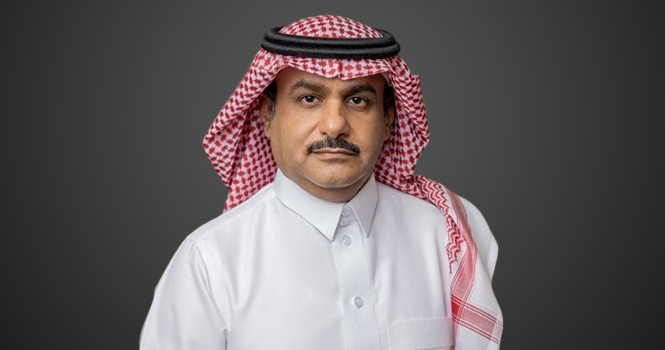
Ibrahim Al-Moammar, Vice Chairman of Al Moammar Information Systems Co. (MIS)
Ibrahim Al-Moammar, Vice Chairman of Al Moammar Information Systems Co. (MIS), said the company expects to secure new contract awards worth between SAR 1.5 billion and SAR 2 billion during the remainder of 2026 in the ICT sector, excluding data center projects. 
In an interview with Argaam, Al-Moammar said the company’s outstanding contract portfolio exceeds SAR 19 billion, noting that it continues to execute its projects according to established plans, with good progress in implementation.
Commenting on MIS financial performance in Q3 2026, Al-Moammar explained that growth in revenue and gross profit reflects improved operational performance and an expansion in the company’s business and market share, both in the data center sector and its core ICT operations.
He confirmed that the company’s gross profit margin in Q3 2026 was higher QoQ, both in its data center business and its core activities.
An assessment of profit margins is affected by the nature of the projects being executed and the company’s business mix, in addition to the accounting treatment of revenue under IFRS 15, which determines whether a company acts as a principal or an agent, according to the official.
He indicated that some software license supply activities are recorded on a net basis when the company acts as an agent, while data center project revenue is recorded at the gross project value when the company acts as a principal. This results in variations in profit margin ratios depending on the business mix.
Regarding the factors affecting net profit, Al-Moammar said the results were impacted by three main factors. The first was a decline of around SAR 10.2 million in the fair value of certain investments. He stressed that this represents a non-cash accounting loss and does not reflect realized operating losses or any deterioration in the performance of the investments concerned.
“We conduct quarterly valuations of our investments through an independent, specialized third party, using valuation models that take into account several factors, including market conditions and risk premiums,” Al-Moammar said.
The second factor was an increase in expected credit loss provisions for trade receivables and contract assets, driven by growth in the business portfolio and higher outstanding receivables, in addition to the company’s conservative approach to provisioning, he added.
Meanwhile, MIS does not expect significant increases or a sharp jump in provisions in Q4 2026, while some provisions could potentially be reversed. Their levels remain subject to continuous assessment based on developments in the business portfolio.
The third factor was higher financing costs, resulting from the expansion in project volumes and increased financing requirements, alongside higher interest rates, said Al-Moammar. He noted that some financing expenses are recurring in nature, while others are related to non-recurring factors.
Regarding the future outlook, Al-Moammar said the company expects its operational performance to continue improving in Q4 2026, with revenue and gross profit increasing QoQ. He added that the company also expects its business to continue growing in 2027 YoY, in terms of both revenue and profit margins.
On its future growth strategy, Al-Moammar said the company focuses on four main pillars. The first is achieving annual growth of between 15% and 20% in its core ICT business, while the second is targeting a 20% market share in data center construction.
The third pillar focuses on expanding data center management and operations, while the fourth involves continuing to pursue investment opportunities, establish subsidiaries, and expand investments that complement the company’s activities and growth strategy, he added.
Al-Moammar also noted that MIS has investments across several sectors and companies, including banking, insurance, Fintech, and data centers, as well as investments and partnerships in technology and artificial intelligence.
Regarding the company’s investment in Vision Bank, Al-Moammar explained that the bank has commenced operations and that procedures to increase its capital are underway. He noted that MIS is participating in the capital increase in proportion to its investment stake.
As regards cash dividends, Al-Moammar said MIS follows the dividend policy approved by the general assembly, explaining that the distributions announced during the current year relate to previous financial periods, in line with the established distribution mechanism.
The continuation of dividend payments is subject to board of directors’ decisions, taking into account cash liquidity, bank facilities, and the company’s overall financial position. He stressed that the company is keen to balance shareholder distributions with the funding requirements of business growth and expansion.
According to Argaam’s data, MIS profit declined to SAR 76.42 million in the first nine months of 2026, compared with SAR 91.23 million in the same period a year ago. Q3 profit also fell by more than 17% to around SAR 21 million.
Ibrahim Al-Moammar, Vice Chairman of Al Moammar Information Systems Co. (MIS)
Ibrahim Al-Moammar, Vice Chairman of Al Moammar Information Systems Co. (MIS), said the company expects to secure new contract awards worth between SAR 1.5 billion and SAR 2 billion during the remainder of 2026 in the ICT sector, excluding data center projects.
In an interview with Argaam, Al-Moammar said the company’s outstanding contract portfolio exceeds SAR 19 billion, noting that it continues to execute its projects according to established plans, with good progress in implementation.
Commenting on MIS financial performance in Q3 2026, Al-Moammar explained that growth in revenue and gross profit reflects improved operational performance and an expansion in the company’s business and market share, both in the data center sector and its core ICT operations.
He confirmed that the company’s gross profit margin in Q3 2026 was higher QoQ, both in its data center business and its core activities.
An assessment of profit margins is affected by the nature of the projects being executed and the company’s business mix, in addition to the accounting treatment of revenue under IFRS 15, which determines whether a company acts as a principal or an agent, according to the official.
He indicated that some software license supply activities are recorded on a net basis when the company acts as an agent, while data center project revenue is recorded at the gross project value when the company acts as a principal. This results in variations in profit margin ratios depending on the business mix.
Regarding the factors affecting net profit, Al-Moammar said the results were impacted by three main factors. The first was a decline of around SAR 10.2 million in the fair value of certain investments. He stressed that this represents a non-cash accounting loss and does not reflect realized operating losses or any deterioration in the performance of the investments concerned.
“We conduct quarterly valuations of our investments through an independent, specialized third party, using valuation models that take into account several factors, including market conditions and risk premiums,” Al-Moammar said.
The second factor was an increase in expected credit loss provisions for trade receivables and contract assets, driven by growth in the business portfolio and higher outstanding receivables, in addition to the company’s conservative approach to provisioning, he added.
Meanwhile, MIS does not expect significant increases or a sharp jump in provisions in Q4 2026, while some provisions could potentially be reversed. Their levels remain subject to continuous assessment based on developments in the business portfolio.
The third factor was higher financing costs, resulting from the expansion in project volumes and increased financing requirements, alongside higher interest rates, said Al-Moammar. He noted that some financing expenses are recurring in nature, while others are related to non-recurring factors.
Regarding the future outlook, Al-Moammar said the company expects its operational performance to continue improving in Q4 2026, with revenue and gross profit increasing QoQ. He added that the company also expects its business to continue growing in 2027 YoY, in terms of both revenue and profit margins.
On its future growth strategy, Al-Moammar said the company focuses on four main pillars. The first is achieving annual growth of between 15% and 20% in its core ICT business, while the second is targeting a 20% market share in data center construction.
The third pillar focuses on expanding data center management and operations, while the fourth involves continuing to pursue investment opportunities, establish subsidiaries, and expand investments that complement the company’s activities and growth strategy, he added.
Al-Moammar also noted that MIS has investments across several sectors and companies, including banking, insurance, Fintech, and data centers, as well as investments and partnerships in technology and artificial intelligence.
Regarding the company’s investment in Vision Bank, Al-Moammar explained that the bank has commenced operations and that procedures to increase its capital are underway. He noted that MIS is participating in the capital increase in proportion to its investment stake.
As regards cash dividends, Al-Moammar said MIS follows the dividend policy approved by the general assembly, explaining that the distributions announced during the current year relate to previous financial periods, in line with the established distribution mechanism.
The continuation of dividend payments is subject to board of directors’ decisions, taking into account cash liquidity, bank facilities, and the company’s overall financial position. He stressed that the company is keen to balance shareholder distributions with the funding requirements of business growth and expansion.
According to Argaam’s data, MIS profit declined to SAR 76.42 million in the first nine months of 2026, compared with SAR 91.23 million in the same period a year ago. Q3 profit also fell by more than 17% to around SAR 21 million.