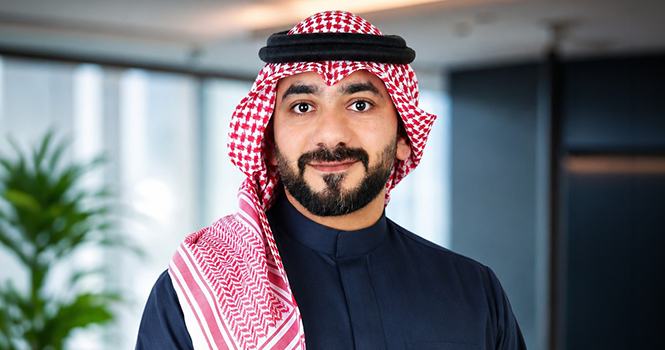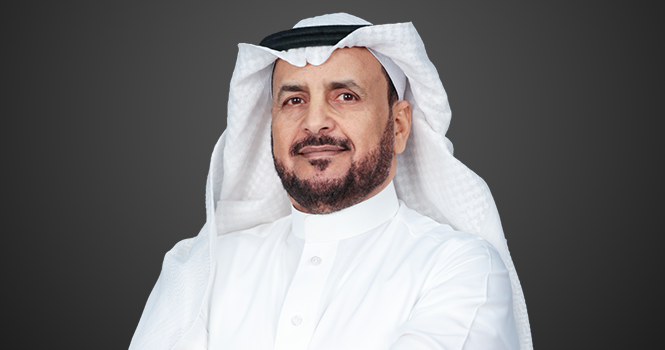
Omar Al-Dalbahi, CEO ofMutlaq Al-Ghowairi Company (MGC) 
Mutlaq Al-Ghowairi Company (MGC) delivered strong results in the first quarter of 2026, with contract revenue rising 59% to SAR 967 million and net profit increasing 85% to SAR 202 million, while EBITDA margin remained stable at 23%, CEO Omar Al-Dalbahi told Argaam.
Al Dalbahi said the company sees significant long-term opportunities across its core sectors, amid estimates that the value of EPC projects in Saudi Arabia will reach SAR 7.4 trillion between 2025 and 2030, including nearly SAR 3 trillion in the water, transport, and urban development sectors where the company operates.
He said MGC remains focused on executing large-scale, high-quality projects while maintaining disciplined project selection, improving execution efficiency, and controlling costs. He added that the company has historically distributed between 60% and 80% of annual net profit to shareholders.
Al Dalbahi also discussed details of the company’s initial public offering (IPO), business model, financial performance, market outlook, and strategic priorities in his interview with Argaam.
Here’s the full interview:
A: The decision to proceed with the IPO was made by the selling shareholders. That said, the offering represents a natural milestone in MGC nearly five-decade journey.
Since launching operations in 1977, the company has built a strong platform for delivering critical infrastructure projects across Saudi Arabia, particularly in the water, transport, and urban development sectors.
Q: What have been the most significant transformations at MGC since its establishment, and what differentiates the company from other contractors in Saudi Arabia?
A: MGC has been operating in Saudi Arabia since 1977 and has grown over nearly five decades alongside the expansion of the Kingdom’s infrastructure projects and development priorities, particularly in the water and transport sectors.
The company has evolved into a fully integrated contractor operating across engineering, procurement, construction, operations, and maintenance.
Over that period, the company strengthened its engineering and execution capabilities and expanded its expertise in technically complex projects, while also growing its operations and maintenance services, allowing it to continue managing and operating assets after project completion and deepen client relationships.
The company also operates with a workforce of more than 4,700 employees, including around 450 engineers, enabling it to execute multiple projects simultaneously across different regions of the Kingdom. It completed more than 80 projects over the past five years across the water, transport, and urban infrastructure sectors.
MGC follows a selective approach to project bidding, focusing on areas where it has strong execution capabilities. This has supported project quality, strengthened long-term relationships with government and private-sector clients, and contributed to recurring business and participation in major infrastructure projects.
The company is also expanding into adjacent sectors such as gas, leveraging its engineering and infrastructure expertise.
Although the IPO involves the sale of existing shares by current shareholders, the Al Ghowairi family will remain the company’s largest shareholder following the listing.
Q: Despite revenue growth over the past three years, net profit declined. What were the reasons behind this? Do you expect pressure on earnings to continue in 2026 and beyond?
A: That is an important question. For MGC, contract revenue is primarily linked to backlog execution. The more efficiently projects are executed, and the larger the value of projects under execution, the stronger the revenue growth. This was the key driver behind revenue growth over the past three years.
However, when assessing profitability, it is important to look beyond absolute net profit figures and consider margin performance. In 2023 and 2024, the company completed several projects that generated relatively high margins. As those projects were finalized, profitability gradually normalized toward historical levels.
This does not reflect operational weakness or deterioration in business fundamentals. On the contrary, the company reported an EBITDA margin of around 26% in 2025, broadly in line with its 15-year historical average of 28%, while remaining above peer averages. This reflects the strength of the business model, disciplined project execution, and prudent cost management.
As further evidence of the company’s strong financial momentum, we delivered robust results in the first three months of 2026, with contract revenue reaching SAR 967M, up 59% year-on-year, while net profit rose 85% to SAR 202 million compared with the same period last year.
More importantly, EBITDA margin remained strong at 23% in Q1 2026.
While we cannot comment on future guidance, our focus remains clear: continuing to execute high-quality, large-scale backlog projects, maintaining discipline in project selection, and protecting margins through execution efficiency and cost control.
Q: Could you give deep insight into the concept of backlog? Why is it important and relevant for construction companies?
A: From MGC’s perspective, backlog consists of the total value of awarded contracts, as amended from time to time, which the company has either commenced work or received notice to proceed, after deducting contract revenues already recognized from those contracts.
Practically, it represents revenues that are expected to be recognized over time as project execution progresses.
For engineering, procurement, and construction (EPC) companies such as MGC, backlog is a key metric for assessing revenue visibility and operational planning. It provides a clear indication of future activity levels and reflects the company’s ability to secure projects in a competitive market.
The company’s backlog stood at approximately SAR 10.6 billion as of March 31, 2026, comprising a mix of awarded projects across the water, transportation, and urban development sectors.
Approximately 94% of this backlog is expected to be executed over the next three years, providing near- and medium-term revenue visibility. More importantly, the backlog reflects a disciplined approach to project selection and consistent execution, supporting delivery efficiency and financial performance.
Q: What were the key factors supporting the company’s growth in recent years?
A: The company’s growth has been driven by a combination of structural demand and disciplined execution. Saudi Arabia is currently undergoing a major and sustained infrastructure investment cycle, particularly in the water, transportation, and urban development sectors, largely driven by Vision 2030, population growth, and urban expansion.
Secondly, the company maintains long-standing relationships with key public and private sector entities, including the Ministry of Transport and Logistics Services, Riyadh Municipality, Saudi Water Authority, National Water Co., and the Ministry of Environment, Water and Agriculture, which strengthens trust and supports recurring project awards.
Thirdly, the company adopts a disciplined project selection approach, focusing on opportunities aligned with its technical capabilities and those it can execute at high quality while maintaining targeted margins, which is clearly reflected in its backlog.
Q: Has MGC distributed dividends before? Does it intend to distribute dividends in the future?
A: Yes, MGC has historically distributed dividends to shareholders, with payouts typically representing around 60% to 80% of annual net profit.
As for future distributions, we cannot comment on any specific plans or expectations. Any future dividend distributions will depend on the company’s financial performance, prevailing market conditions, capital requirements, board recommendations, and shareholder approval.
What we can confirm is that the company enters this next phase from a position of financial strength. It operates with an asset-light business model, no outstanding bank debt, solid liquidity levels, and a sizeable backlog supporting future growth prospects.
This provides the company with financial flexibility to balance growth investments, disciplined capital management, and shareholder value creation.
Q: Looking ahead, how do you see the company’s key growth opportunities?
A: We see significant long-term opportunities across our core sectors, supported by a broad and well-funded infrastructure project pipeline under Vision 2030.
According to a market study conducted by Kearney, Saudi Arabia represents the largest EPC market in the GCC, with the total value of EPC projects estimated at around SAR 7.4 trillion during 2025–2030.
Of this total, approximately SAR 3 trillion is concentrated in the water, transportation, and urban development sectors, which are the company’s core operating sectors.
Water infrastructure remains a strategic priority, while the transportation and urban development sectors continue to benefit from large-scale national programs and long-term investment plans.
Collectively, these sectors provide sustained demand for EPC works, alongside growing demand for operations and maintenance services as new assets are developed and existing infrastructure is upgraded.
In addition, we continue to evaluate expansion opportunities in the energy infrastructure sector, particularly gas-related projects, where our engineering capabilities can be leveraged.
Omar Al-Dalbahi, CEO ofMutlaq Al-Ghowairi Company (MGC)
Mutlaq Al-Ghowairi Company (MGC) delivered strong results in the first quarter of 2026, with contract revenue rising 59% to SAR 967 million and net profit increasing 85% to SAR 202 million, while EBITDA margin remained stable at 23%, CEO Omar Al-Dalbahi told Argaam.
Al Dalbahi said the company sees significant long-term opportunities across its core sectors, amid estimates that the value of EPC projects in Saudi Arabia will reach SAR 7.4 trillion between 2025 and 2030, including nearly SAR 3 trillion in the water, transport, and urban development sectors where the company operates.
He said MGC remains focused on executing large-scale, high-quality projects while maintaining disciplined project selection, improving execution efficiency, and controlling costs. He added that the company has historically distributed between 60% and 80% of annual net profit to shareholders.
Al Dalbahi also discussed details of the company’s initial public offering (IPO), business model, financial performance, market outlook, and strategic priorities in his interview with Argaam.
Here’s the full interview:
A: The decision to proceed with the IPO was made by the selling shareholders. That said, the offering represents a natural milestone in MGC nearly five-decade journey.
Since launching operations in 1977, the company has built a strong platform for delivering critical infrastructure projects across Saudi Arabia, particularly in the water, transport, and urban development sectors.
Q: What have been the most significant transformations at MGC since its establishment, and what differentiates the company from other contractors in Saudi Arabia?
A: MGC has been operating in Saudi Arabia since 1977 and has grown over nearly five decades alongside the expansion of the Kingdom’s infrastructure projects and development priorities, particularly in the water and transport sectors.
The company has evolved into a fully integrated contractor operating across engineering, procurement, construction, operations, and maintenance.
Over that period, the company strengthened its engineering and execution capabilities and expanded its expertise in technically complex projects, while also growing its operations and maintenance services, allowing it to continue managing and operating assets after project completion and deepen client relationships.
The company also operates with a workforce of more than 4,700 employees, including around 450 engineers, enabling it to execute multiple projects simultaneously across different regions of the Kingdom. It completed more than 80 projects over the past five years across the water, transport, and urban infrastructure sectors.
MGC follows a selective approach to project bidding, focusing on areas where it has strong execution capabilities. This has supported project quality, strengthened long-term relationships with government and private-sector clients, and contributed to recurring business and participation in major infrastructure projects.
The company is also expanding into adjacent sectors such as gas, leveraging its engineering and infrastructure expertise.
Although the IPO involves the sale of existing shares by current shareholders, the Al Ghowairi family will remain the company’s largest shareholder following the listing.
Q: Despite revenue growth over the past three years, net profit declined. What were the reasons behind this? Do you expect pressure on earnings to continue in 2026 and beyond?
A: That is an important question. For MGC, contract revenue is primarily linked to backlog execution. The more efficiently projects are executed, and the larger the value of projects under execution, the stronger the revenue growth. This was the key driver behind revenue growth over the past three years.
However, when assessing profitability, it is important to look beyond absolute net profit figures and consider margin performance. In 2023 and 2024, the company completed several projects that generated relatively high margins. As those projects were finalized, profitability gradually normalized toward historical levels.
This does not reflect operational weakness or deterioration in business fundamentals. On the contrary, the company reported an EBITDA margin of around 26% in 2025, broadly in line with its 15-year historical average of 28%, while remaining above peer averages. This reflects the strength of the business model, disciplined project execution, and prudent cost management.
As further evidence of the company’s strong financial momentum, we delivered robust results in the first three months of 2026, with contract revenue reaching SAR 967M, up 59% year-on-year, while net profit rose 85% to SAR 202 million compared with the same period last year.
More importantly, EBITDA margin remained strong at 23% in Q1 2026.
While we cannot comment on future guidance, our focus remains clear: continuing to execute high-quality, large-scale backlog projects, maintaining discipline in project selection, and protecting margins through execution efficiency and cost control.
Q: Could you give deep insight into the concept of backlog? Why is it important and relevant for construction companies?
A: From MGC’s perspective, backlog consists of the total value of awarded contracts, as amended from time to time, which the company has either commenced work or received notice to proceed, after deducting contract revenues already recognized from those contracts.
Practically, it represents revenues that are expected to be recognized over time as project execution progresses.
For engineering, procurement, and construction (EPC) companies such as MGC, backlog is a key metric for assessing revenue visibility and operational planning. It provides a clear indication of future activity levels and reflects the company’s ability to secure projects in a competitive market.
The company’s backlog stood at approximately SAR 10.6 billion as of March 31, 2026, comprising a mix of awarded projects across the water, transportation, and urban development sectors.
Approximately 94% of this backlog is expected to be executed over the next three years, providing near- and medium-term revenue visibility. More importantly, the backlog reflects a disciplined approach to project selection and consistent execution, supporting delivery efficiency and financial performance.
Q: What were the key factors supporting the company’s growth in recent years?
A: The company’s growth has been driven by a combination of structural demand and disciplined execution. Saudi Arabia is currently undergoing a major and sustained infrastructure investment cycle, particularly in the water, transportation, and urban development sectors, largely driven by Vision 2030, population growth, and urban expansion.
Secondly, the company maintains long-standing relationships with key public and private sector entities, including the Ministry of Transport and Logistics Services, Riyadh Municipality, Saudi Water Authority, National Water Co., and the Ministry of Environment, Water and Agriculture, which strengthens trust and supports recurring project awards.
Thirdly, the company adopts a disciplined project selection approach, focusing on opportunities aligned with its technical capabilities and those it can execute at high quality while maintaining targeted margins, which is clearly reflected in its backlog.
Q: Has MGC distributed dividends before? Does it intend to distribute dividends in the future?
A: Yes, MGC has historically distributed dividends to shareholders, with payouts typically representing around 60% to 80% of annual net profit.
As for future distributions, we cannot comment on any specific plans or expectations. Any future dividend distributions will depend on the company’s financial performance, prevailing market conditions, capital requirements, board recommendations, and shareholder approval.
What we can confirm is that the company enters this next phase from a position of financial strength. It operates with an asset-light business model, no outstanding bank debt, solid liquidity levels, and a sizeable backlog supporting future growth prospects.
This provides the company with financial flexibility to balance growth investments, disciplined capital management, and shareholder value creation.
Q: Looking ahead, how do you see the company’s key growth opportunities?
A: We see significant long-term opportunities across our core sectors, supported by a broad and well-funded infrastructure project pipeline under Vision 2030.
According to a market study conducted by Kearney, Saudi Arabia represents the largest EPC market in the GCC, with the total value of EPC projects estimated at around SAR 7.4 trillion during 2025–2030.
Of this total, approximately SAR 3 trillion is concentrated in the water, transportation, and urban development sectors, which are the company’s core operating sectors.
Water infrastructure remains a strategic priority, while the transportation and urban development sectors continue to benefit from large-scale national programs and long-term investment plans.
Collectively, these sectors provide sustained demand for EPC works, alongside growing demand for operations and maintenance services as new assets are developed and existing infrastructure is upgraded.
In addition, we continue to evaluate expansion opportunities in the energy infrastructure sector, particularly gas-related projects, where our engineering capabilities can be leveraged.