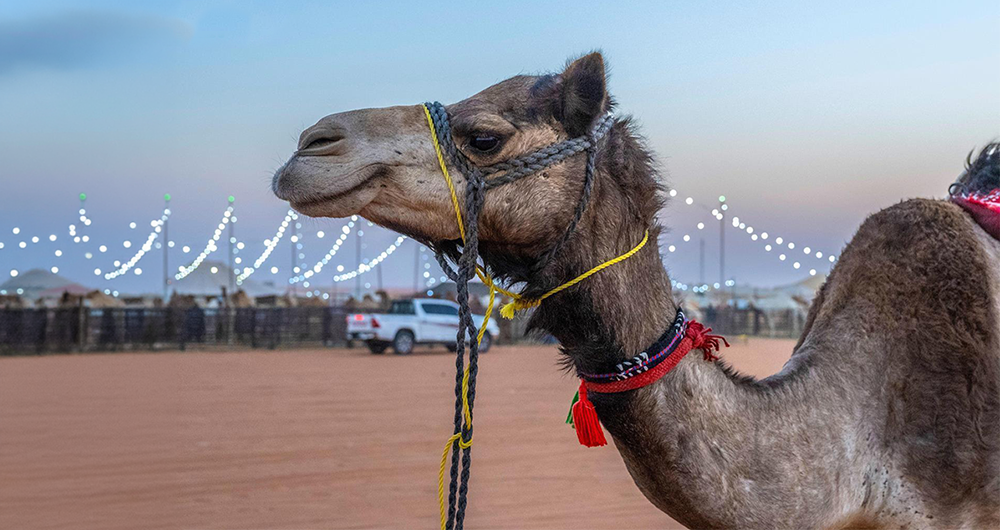
Saudi Arabia’s Minister of Environment, Water and Agriculture (MEWA) approved regulatory rules governing camel trading in the Kingdom, covering the sale, purchase, leasing and exchange of camels, with the aim of developing sector practices, protecting owners and market participants, and supporting the livestock sector and camel welfare.
The ministry said in a statement that the rules aim to establish proper standards and ensure compliance with applicable laws and regulations governing camel sales and trading, seeking to protect owners’ rights, prevent exploitation and ensure camel welfare.
The rules are part of the ministry’s efforts to develop the camel sector and strengthen its governance through an integrated regulatory framework for camel-related transactions.
They also seek to improve the documentation of ownership and commercial transactions and strengthen compliance with health and biosecurity requirements, supporting the sector’s sustainability and growth under applicable laws and regulations.
The rules regulate camel sales by setting requirements for valid contracts, including camel details and the purchase price. Sellers must complete ownership-transfer procedures, deliver camels in the agreed condition and disclose their health status and any related rights.
Buyers are responsible for payment and receipt of the camels, as well as veterinary care, examinations, vaccinations, transportation and registration.
The rules also regulate temporary camel auctions and require ownership transfers to follow applicable procedures. They prohibit the sale or display of camels showing signs of exhaustion or disease, or those that have not received approved vaccinations.
Camel, seller and buyer details, prices and payment methods must be documented, while auction operators must comply with livestock transportation rules and approved regulatory requirements.
Transporting camels without the ministry’s approval constitutes a violation subject to fines under the Agriculture Law and its implementing regulations.
For camel leasing, owners must be registered with the ministry and have an active basic camel registry. Lease contracts must be documented electronically.
Camel records must be updated when the animals are transferred or their details or location change. Contracts must specify the lease term and rental value, while health, biosecurity and vaccination requirements must be met.
Camels must be returned to their owner’s basic registry when the lease expires.
The rules also regulate camel exchanges by requiring contracts to be documented electronically and specifying the camels involved and the agreed consideration.
Ownership, identification numbers and other records must be verified and updated. Participants must also comply with health and biosecurity requirements and disclose any pre-existing rights associated with the camels.
Saudi Arabia’s Minister of Environment, Water and Agriculture (MEWA) approved regulatory rules governing camel trading in the Kingdom, covering the sale, purchase, leasing and exchange of camels, with the aim of developing sector practices, protecting owners and market participants, and supporting the livestock sector and camel welfare.
The ministry said in a statement that the rules aim to establish proper standards and ensure compliance with applicable laws and regulations governing camel sales and trading, seeking to protect owners’ rights, prevent exploitation and ensure camel welfare.
The rules are part of the ministry’s efforts to develop the camel sector and strengthen its governance through an integrated regulatory framework for camel-related transactions.
They also seek to improve the documentation of ownership and commercial transactions and strengthen compliance with health and biosecurity requirements, supporting the sector’s sustainability and growth under applicable laws and regulations.
The rules regulate camel sales by setting requirements for valid contracts, including camel details and the purchase price. Sellers must complete ownership-transfer procedures, deliver camels in the agreed condition and disclose their health status and any related rights.
Buyers are responsible for payment and receipt of the camels, as well as veterinary care, examinations, vaccinations, transportation and registration.
The rules also regulate temporary camel auctions and require ownership transfers to follow applicable procedures. They prohibit the sale or display of camels showing signs of exhaustion or disease, or those that have not received approved vaccinations.
Camel, seller and buyer details, prices and payment methods must be documented, while auction operators must comply with livestock transportation rules and approved regulatory requirements.
Transporting camels without the ministry’s approval constitutes a violation subject to fines under the Agriculture Law and its implementing regulations.
For camel leasing, owners must be registered with the ministry and have an active basic camel registry. Lease contracts must be documented electronically.
Camel records must be updated when the animals are transferred or their details or location change. Contracts must specify the lease term and rental value, while health, biosecurity and vaccination requirements must be met.
Camels must be returned to their owner’s basic registry when the lease expires.
The rules also regulate camel exchanges by requiring contracts to be documented electronically and specifying the camels involved and the agreed consideration.
Ownership, identification numbers and other records must be verified and updated. Participants must also comply with health and biosecurity requirements and disclose any pre-existing rights associated with the camels.