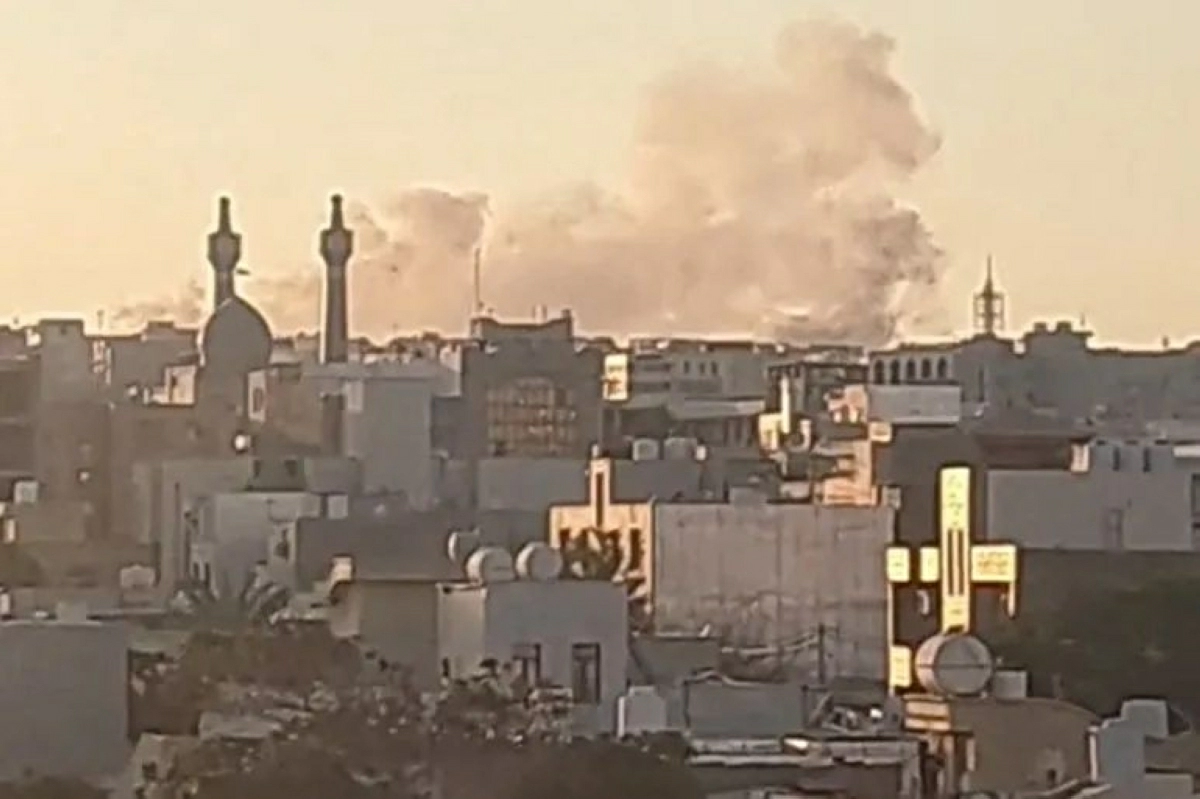
DUBAI — Iran launched new attacks on its Gulf neighbors on Wednesday, targeting an airbase that hosts US forces in Kuwait and carrying out several attacks on Bahrain after the US military hit what it said was a missile launch site.Kuwait said it activated its air defences to counter drone strikes – the first since early September – and Bahrain said it fended off an Iranian attack early on Wednesday, a day after the US attacked a missile launch site on Qeshm Island in the Strait of Hormuz.Iran’s army targeted Ali Al Salem Air Base in Kuwait with drones, state-run Press TV reported. The Kuwaiti Army’s General Staff said any explosions heard were caused by air defense systems intercepting incoming attacks.Neighboring Bahrain, which is home to the US Fifth Fleet and has faced repeated Iranian attacks over the past week, also sounded air raid sirens early Wednesday, with the military saying it had intercepted “a number of Iranian aerial attacks”.Just hours earlier, US fighter jets carried out a “self-defense” strike against an Iranian missile launch site on Qeshm Island using “precision munitions,” according to an American military official.The strike “was in response to IRGC aggression targeting American personnel and assets,” the official said, noting that CENTCOM remains “highly vigilant and fully postured to protect Americans across the region.”Iranian state media reported that an area on the outskirts of a city on Qeshm Island had been targeted in an “enemy attack.” Ahmad Nafisi, the deputy governor of Hormozgan province for political and security affairs, said the strike caused no damage to vital infrastructure, commercial or residential areas.Iran’s widening attacks come as Tehran warns it will not accept a prolonged stalemate in its war with the US, while President Donald Trump has signaled a preference for maintaining crippling economic pressure on the Islamic Republic rather than resuming full-scale hostilities. Iran has also threatened to expand the war significantly and warned that it will not wait for another US attack before striking.Tuesday’s US strikes appear similar to others in recent weeks around the Strait of Hormuz, which US officials have also characterized as defensive, rather than marking a significant escalation by American forces.The US Central Command (CENTCOM) said on Wednesday that the US military will treat ships that receive cargo at sea from vessels loaded in Iran as attempting to evade its blockade of Iranian ports and could take action against them.The US naval blockade on Iran-related oil exports was first imposed on April 13 and lifted in June after Washington reached a draft understanding with Tehran. It was reimposed on July 14 after the agreement collapsed.“Any ship that receives cargo via a ship-to-ship transfer with a vessel subject to the blockade and carrying cargo loaded at an Iranian port or coastline may be considered to be evading the blockade, even if it has not entered Iranian ports or the Iranian coastline,” CENTCOM said in an update.“Such ships may be stopped, boarded, diverted, captured, or directed to proceed to the Iranian port where the cargo originated.”A third US aircraft carrier strike group recently entered CENTCOM’s area of responsibility, where it is expected to — at least temporarily — join ongoing operations that include enforcing a blockade of Iranian ports and conducting escort operations for commercial ships willing to transit the Strait.Attacks on oil and gas tankers transiting the Strait of Hormuz have surged in recent weeks. On Wednesday, the United Arab Emirates’ state-owned ADNOC energy company said one of its vessels had been attacked while transiting the waterway the previous evening, leaving 11 crew members injured and one missing.“Today’s developments should serve as an important reminder of the inherent instability of the current situation,” Hamidreza Azizi, an Iran analyst at Crisis Group, wrote on X. “Some within the Trump administration – and perhaps even Trump himself – may believe that Washington can maintain economic pressure and the naval blockade against Iran indefinitely while avoiding another full-scale war. But the developments of the past 24 hours demonstrate how difficult it is to sustain such an arrangement.”There is little indication of an imminent diplomatic agreement to end the conflict, and Trump has warned he could resume full combat operations if Tehran refuses to accept the US administration’s demands.Meanwhile, the US State Department reiterated its security warning to American citizens in Saudi Arabia and Bahrain on Wednesday, after both countries came under attack from Iran and its allies.The department reissued alerts last sent in late October calling for “heightened vigilance” in both countries because of attacks by Iran and the Houthis in Yemen.
Keep Up to Date with our Weekly Newsletter