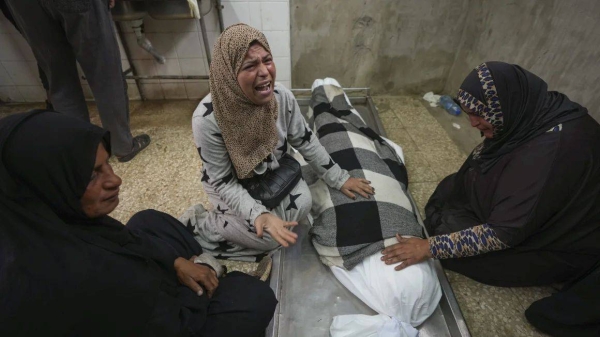
DUBAI — Iran is planning a maritime “exclusion zone” near the Strait of Hormuz aimed at vessels it believes are attempting to transit the waterway, further escalating tensions with the United States and threatening global shipping and energy supplies.The restricted area will be formally announced in the coming days or weeks, state television reported on Sunday, quoting Mohsen Rezaei, Iran’s newly appointed head of the Supreme National Security Council, a day after the US military struck three Iranian oil tankers. According to Rezaei, the zone would begin near the line of the US Navy’s existing blockade and extend through the Strait of Hormuz into the Arabian Gulf.He warned that ships entering the designated area with the intention of crossing the Strait of Hormuz could be identified and placed on an Iranian sanctions list.Tehran’s move appears aimed at creating a countermeasure to the US naval blockade and increasing pressure on vessels using one of the world’s most important shipping routes.It is not clear where Iran defines the location of the US blockade, which is aimed at keeping Tehran from shipping out its oil. The US military has said over 20 warships are supporting the blockade, which as of Sunday had redirected 92 commercial ships and disabled three.The US has been introducing new measures to increase the economic pain on Iran after negotiations collapsed and no end to the intermittent fighting appears in sight.Meanwhile, Iran continues to attack some ships trying to transit the strait, which has become an important source of leverage for Tehran in the war that began Feb. 28 with US and Israeli strikes.Iran earlier Sunday said it struck an unmanned US vessel trying to enter the Strait of Hormuz, a claim that the US military dismissed as a “total lie.”The United States and Iran resumed attacks last week, following a month of relative calm, with the Strait of Hormuz and areas along Iran’s southern coast again being targeted. At least five people were killed earlier in the week during the US bombardment of a wedding ceremony, which reminded of a school that was hit in the war’s opening salvos.The Trump administration appears to have adopted a dual-prong approach to the conflict, responding militarily to attacks on the strait while going after foreign financial institutions that handle Iran’s money.Iran has found ways over the years to circumvent sanctions, and now the US blockade of its ports, and get its oil to buyers to help ease growing economic pressures.On the collapsed negotiations with the US, Rezaei on Sunday expressed wariness not only of the US but also of the mediators. The memorandum of understanding that the US and Iran signed in mid-June began to fall apart within days as each side accused the other of violations.“We had trusted our friends in Pakistan, Qatar or Oman, thinking that since they had stepped in as mediators, one of a mediator’s responsibilities is that if one side violates the agreement, they should stop them,” Rezaei said. “We are now pursuing diplomacy with guarantees.”On Sunday, US Energy Secretary Chris Wright said that on average, 9 million barrels of oil a day are getting through the strait, which should help to relieve pressure on energy prices. His estimate appeared to exceed average flows over the past 28 days through the strait, according to TankerTrackers.com and other sources.Wright told CNN that with oil also flowing through pipelines in the region, “we’re probably two-thirds or more of pre-conflict flows.”But those flows depend on the presence of the US Navy to help escort tankers and provide some protection against possible Iranian attack. Wright said he expected that other countries would eventually support the Navy’s efforts.
Keep Up to Date with our Weekly Newsletter