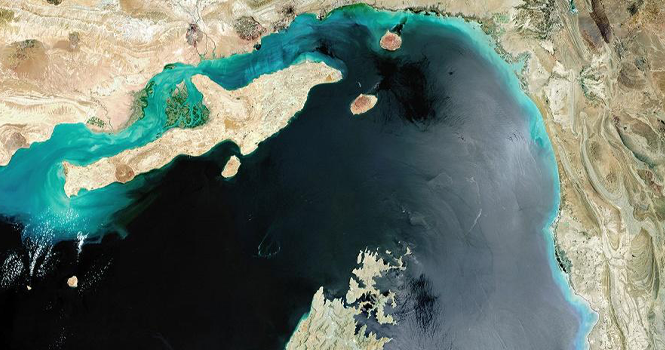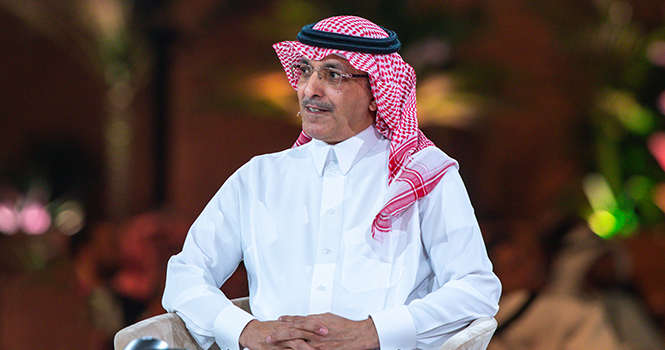
Finance Minister Mohammed Al-Jadaan said the reopening of the Strait of Hormuz is a positive development for markets, but any increase in production will not be immediate, as it will take time for producing countries to effectively ramp up supply.
Speaking at an IMF press conference in Washington, he explained that countries’ return to normal production and export levels will not be uniform, with some requiring significantly more time than others to restore output.
The minister stressed the need for concrete steps to ensure safe passage through the region and to convince insurers to resume offering coverage at reasonable rates, as well as for tanker owners to be willing to deploy vessels in the region.
The challenge for Gulf countries is not production capacity, but rather logistical factors and the guarantees markets need to ensure safe transit through Hormuz, Al-Jadaan said.
He added that oil buyers remain willing to pay a premium due to the current supply shortfall.
There is no agreement to end hostilities, but rather a ceasefire that will expire in the coming days, with hopes for an extension and de-escalation. Until then, Al-Jadaan expressed doubts about the willingness of insurers and tanker owners to fully respond, noting that more time will be needed.
The minister, in his capacity as chair of the IMF’s steering committee, said the global economy is facing uncertainty and ambiguity due to the Iran war, expressing hope that peace will be restored.
Finance Minister Mohammed Al-Jadaan said the reopening of the Strait of Hormuz is a positive development for markets, but any increase in production will not be immediate, as it will take time for producing countries to effectively ramp up supply.
Speaking at an IMF press conference in Washington, he explained that countries’ return to normal production and export levels will not be uniform, with some requiring significantly more time than others to restore output.
The minister stressed the need for concrete steps to ensure safe passage through the region and to convince insurers to resume offering coverage at reasonable rates, as well as for tanker owners to be willing to deploy vessels in the region.
The challenge for Gulf countries is not production capacity, but rather logistical factors and the guarantees markets need to ensure safe transit through Hormuz, Al-Jadaan said.
He added that oil buyers remain willing to pay a premium due to the current supply shortfall.
There is no agreement to end hostilities, but rather a ceasefire that will expire in the coming days, with hopes for an extension and de-escalation. Until then, Al-Jadaan expressed doubts about the willingness of insurers and tanker owners to fully respond, noting that more time will be needed.
The minister, in his capacity as chair of the IMF’s steering committee, said the global economy is facing uncertainty and ambiguity due to the Iran war, expressing hope that peace will be restored.