The Gulf fertilizer market is tightening sharply as the US–Iran conflict, which erupted in early March 2026, has disruptedoutput, supply chains and global trade routes. Shippingthrough the Strait of Hormuz and several production sites were almost disrupted. 
The Middle East suppliesaround 40–43% of seaborne urea, over 40% of sulfur and roughly 30% of ammonia, which means any disruption quickly feeds into global balances and food prices. Urea prices have already climbed more than 50% since the conflict began.
Data from Argus Media show urea jumped 65% in the month following the outbreak (Feb. 27–Mar. 26, 2026). Ammonia rose by about $155 per ton, while DAP gained roughly $145 per ton over the same period.
Analysts told Argaam the sector is being squeezed by both production outages and logistics bottlenecks, tightening supply and underpinning prices. Solid fertilizers are holding up better in exports than liquids, they said, with volatility likely to persist and company earnings set to diverge between stronger pricing and weaker volumes.
Noticeable Disruptions in Production
Marina Simonova, Head of Fertilizer Analytics at Argus Media, said that the fertilizer sector in the Gulf countries has been experiencing noticeable disruptions in production and supply chains since the start of the conflict. “Several production sites in Saudi Arabia, Qatar, and Iran have partially or fully halted operations due to safety concerns, infrastructure damage, and export difficulties,” she said.
The analyst added that many production facilities are primarily export-oriented, making them more vulnerable to logistical constraints—especially with the closure or restriction of transit through the Strait of Hormuz. Some shipments and vessels remain stranded since the beginning of the crisis.
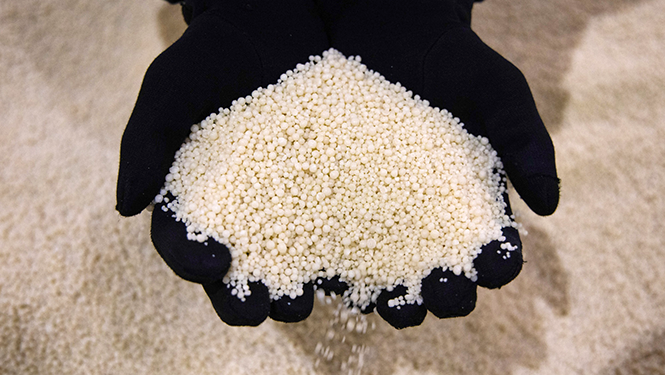
Meanwhile, Brennan Ito, Senior Equity Research Analyst at Riyad Capital, said it is difficult to assess the normal logistical situation in the Gulf. However, potential logistical constraints on liquid products appear stricter, giving solid fertilizers such as granular urea and Diammonium Phosphate (DAP) greater flexibility for land transport and re-export through the Red Sea—albeit at higher costs, which is relatively positive for Saudi Arabia.
Gas Shortages Pressure Fertilizer Production
Ammonia and urea production depend mainly on natural gas, which has been affected by damage to some energy facilities. This has led to feedstock shortages and negatively impacted operating rates. Disruptions in the energy sector have also affected sulfur availability, a key input for phosphate fertilizers, Simonova explained.
She noted that the region exports nearly 60 million tons annually out of total production of around 120 million tons. The Middle East accounts for about 50% of global sulfur exports and 34% of global urea trade.
For his part, Ito noted that under normal conditions, the Middle East—including Iran and Egypt—accounts for about 40% of global urea supply, 30% of ammonia, 25% of DAP/MAP and 50% of sulfur, with production heavily depending on oil and natural gas.
“Most chemical fertilizer producers in the region focus on nitrogen-based fertilizers, particularly urea, relying on the abundance of natural gas as a primary feedstock. In contrast, other countries such as China depend on anthracite coal to produce industrial nitrogen fertilizers,” Ito said.
He added that reports of damage to some facilities amid current geopolitical tensions may lead to constraints in primary supply, negatively impacting fertilizer production in the medium term and reducing overall availability.
Prices Fueled by Supply Pressures
Simonova indicated that sulfur and nitrogen fertilizer markets are experiencing tightening supply-demand balances, leading to strong price increases despite concerns over demand. She added that the phosphate market has been indirectly affected due to rising raw material costs.
“Reopening navigation through the Strait of Hormuz would help gradually restore supply chains. However, full recovery will take time to clear backlogged shipments, assess damages, and carry out repairs—likely requiring several weeks for operations to return to normal levels,” she said.
Ito added that the global market is currently tight, noting that China—being the world’s largest producer and consumer of urea—has also contributed to pressure through recent export restrictions, supporting prices in the short and medium term.
Slower oil production and drilling, along with potential infrastructure damage, could hinder the production of key fertilizer inputs, reducing output in affected countries and tightening supply over the medium term, Ito continued.
Prices Also Lifted by Seasonal Demand
According to Simonova, importing markets such as India, Bangladesh, and several African countries are the most affected. India faces a dual impact due to its reliance on LNG imports from Qatar and fertilizer imports from the Gulf, which will likely push it to increase imports amid rising prices.
The Argus report revealed that Indian urea plant operating rates have dropped to 70–75% due to gas shortages, increasing the country’s reliance on imports at a time of rising prices.
Simonova added that limited global alternatives and export restrictions imposed by some countries are worsening supply shortages, alongside signs of changing agricultural patterns toward crops that require less nitrogen fertilizer.
For his part, Ito stated that while prices could eventually return to previous levels in the long term, disruptions to the main fertilizer application season in Q2 2026 may delay some agricultural usage, potentially keeping prices elevated until 2027.
He also noted that a tender by Indian Potash Limited recorded urea prices exceeding $900 per ton (according to Bloomberg Green Markets as of April 15, 2026), reflecting strong market pressure driven by supply constraints and seasonal demand.
“Any disruption in the Strait of Hormuz during Q2 2026 or India’s monsoon season—combined with seasonal buying patterns and Chinese export restrictions—could directly impact urea demand at its peak season,” Ito stated.
He further said that the impact on DAP prices may be relatively lower, despite potential short-term increases, since phosphorus remains in the soil longer and can support crops for multiple growing cycles.
Too Early to Assess Impact on Corporate Profits
Regarding the impact on the performance and profitability of listed GCC fertilizer companies, Ito said that the key factor for Saudi producers is their ability to transport products overland to the Red Sea without major challenges—especially for liquid products such as anhydrous ammonia.
“It is still too early to accurately determine the overall impact on company profitability, given the multiple influencing factors. Some may offset others, such as higher prices against lower sales volumes,” he said.
The Gulf fertilizer market is tightening sharply as the US–Iran conflict, which erupted in early March 2026, has disruptedoutput, supply chains and global trade routes. Shippingthrough the Strait of Hormuz and several production sites were almost disrupted.
The Middle East suppliesaround 40–43% of seaborne urea, over 40% of sulfur and roughly 30% of ammonia, which means any disruption quickly feeds into global balances and food prices. Urea prices have already climbed more than 50% since the conflict began.
Data from Argus Media show urea jumped 65% in the month following the outbreak (Feb. 27–Mar. 26, 2026). Ammonia rose by about $155 per ton, while DAP gained roughly $145 per ton over the same period.
Analysts told Argaam the sector is being squeezed by both production outages and logistics bottlenecks, tightening supply and underpinning prices. Solid fertilizers are holding up better in exports than liquids, they said, with volatility likely to persist and company earnings set to diverge between stronger pricing and weaker volumes.
Noticeable Disruptions in Production
Marina Simonova, Head of Fertilizer Analytics at Argus Media, said that the fertilizer sector in the Gulf countries has been experiencing noticeable disruptions in production and supply chains since the start of the conflict. “Several production sites in Saudi Arabia, Qatar, and Iran have partially or fully halted operations due to safety concerns, infrastructure damage, and export difficulties,” she said.
The analyst added that many production facilities are primarily export-oriented, making them more vulnerable to logistical constraints—especially with the closure or restriction of transit through the Strait of Hormuz. Some shipments and vessels remain stranded since the beginning of the crisis.
Meanwhile, Brennan Ito, Senior Equity Research Analyst at Riyad Capital, said it is difficult to assess the normal logistical situation in the Gulf. However, potential logistical constraints on liquid products appear stricter, giving solid fertilizers such as granular urea and Diammonium Phosphate (DAP) greater flexibility for land transport and re-export through the Red Sea—albeit at higher costs, which is relatively positive for Saudi Arabia.
Gas Shortages Pressure Fertilizer Production
Ammonia and urea production depend mainly on natural gas, which has been affected by damage to some energy facilities. This has led to feedstock shortages and negatively impacted operating rates. Disruptions in the energy sector have also affected sulfur availability, a key input for phosphate fertilizers, Simonova explained.
She noted that the region exports nearly 60 million tons annually out of total production of around 120 million tons. The Middle East accounts for about 50% of global sulfur exports and 34% of global urea trade.
For his part, Ito noted that under normal conditions, the Middle East—including Iran and Egypt—accounts for about 40% of global urea supply, 30% of ammonia, 25% of DAP/MAP and 50% of sulfur, with production heavily depending on oil and natural gas.
“Most chemical fertilizer producers in the region focus on nitrogen-based fertilizers, particularly urea, relying on the abundance of natural gas as a primary feedstock. In contrast, other countries such as China depend on anthracite coal to produce industrial nitrogen fertilizers,” Ito said.
He added that reports of damage to some facilities amid current geopolitical tensions may lead to constraints in primary supply, negatively impacting fertilizer production in the medium term and reducing overall availability.
Prices Fueled by Supply Pressures
Simonova indicated that sulfur and nitrogen fertilizer markets are experiencing tightening supply-demand balances, leading to strong price increases despite concerns over demand. She added that the phosphate market has been indirectly affected due to rising raw material costs.
“Reopening navigation through the Strait of Hormuz would help gradually restore supply chains. However, full recovery will take time to clear backlogged shipments, assess damages, and carry out repairs—likely requiring several weeks for operations to return to normal levels,” she said.
Ito added that the global market is currently tight, noting that China—being the world’s largest producer and consumer of urea—has also contributed to pressure through recent export restrictions, supporting prices in the short and medium term.
Slower oil production and drilling, along with potential infrastructure damage, could hinder the production of key fertilizer inputs, reducing output in affected countries and tightening supply over the medium term, Ito continued.
Prices Also Lifted by Seasonal Demand
According to Simonova, importing markets such as India, Bangladesh, and several African countries are the most affected. India faces a dual impact due to its reliance on LNG imports from Qatar and fertilizer imports from the Gulf, which will likely push it to increase imports amid rising prices.
The Argus report revealed that Indian urea plant operating rates have dropped to 70–75% due to gas shortages, increasing the country’s reliance on imports at a time of rising prices.
Simonova added that limited global alternatives and export restrictions imposed by some countries are worsening supply shortages, alongside signs of changing agricultural patterns toward crops that require less nitrogen fertilizer.
For his part, Ito stated that while prices could eventually return to previous levels in the long term, disruptions to the main fertilizer application season in Q2 2026 may delay some agricultural usage, potentially keeping prices elevated until 2027.
He also noted that a tender by Indian Potash Limited recorded urea prices exceeding $900 per ton (according to Bloomberg Green Markets as of April 15, 2026), reflecting strong market pressure driven by supply constraints and seasonal demand.
“Any disruption in the Strait of Hormuz during Q2 2026 or India’s monsoon season—combined with seasonal buying patterns and Chinese export restrictions—could directly impact urea demand at its peak season,” Ito stated.
He further said that the impact on DAP prices may be relatively lower, despite potential short-term increases, since phosphorus remains in the soil longer and can support crops for multiple growing cycles.
Too Early to Assess Impact on Corporate Profits
Regarding the impact on the performance and profitability of listed GCC fertilizer companies, Ito said that the key factor for Saudi producers is their ability to transport products overland to the Red Sea without major challenges—especially for liquid products such as anhydrous ammonia.
“It is still too early to accurately determine the overall impact on company profitability, given the multiple influencing factors. Some may offset others, such as higher prices against lower sales volumes,” he said.