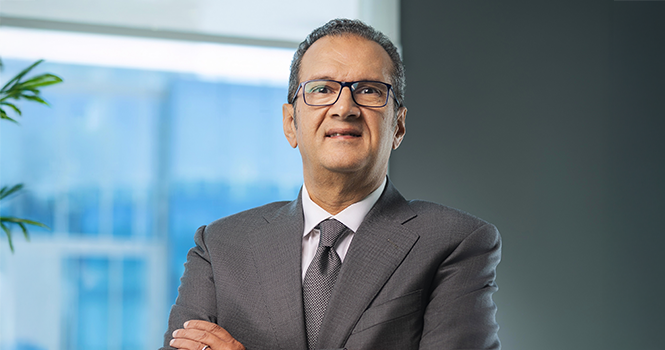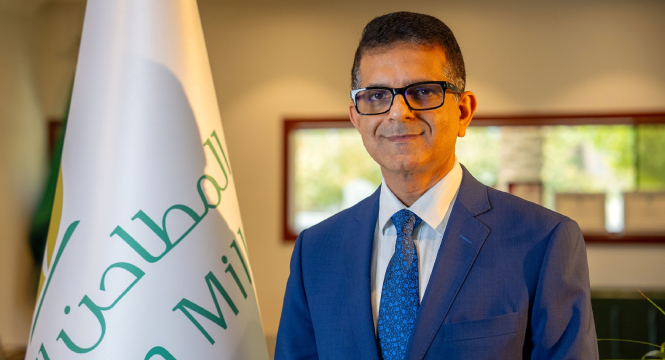
Rohit Chugh, CEO of Arabian Mills
Arabian Mills for Food Products Co.’s focus stretches beyond a single quarterly performance, to building a stronger and more efficient operating model that can support profitability and margins over the coming periods, CEORohit Chugh told Argaam. 
Market conditions and demand trends, however, continue to play a role, he noted.
The milling firm continues to develop its sales channels, enhance product mix, maintain cost discipline, and improve operational efficiency across its core activities, he said.
Arabian Mills net profit rose 33% year-on-year, backed by both operating and non-operating factors, the CEO said, adding that dividend decisions are not based solely on earnings growth, but also take into account cash flows, financing commitments, expansion plans and maintaining a sustainable financial position.
Here is the interview in detail:
Q: What were the main reasons behind the 33% increase in net profit, compared to only 19% growth in operating profit? And how much of the improvement was driven by lower financing costs or other expenses?
A: Arabian Mills delivered a strong performance during Q1 2026, with a net profit reaching SAR 84.89 million. The increase was supported by both operating and non-operating factors.
From an operating perspective, the company recorded growth across all business segments. The flour segment, which represents almost 60% of the business, recorded an increase in the revenues by 9.5%. This growth has been supported by a rise in B2B
transactions of more than 8.2% (in volume and sales), in addition to a strong growth in B2C revenues of 21.82%.
The company’s ongoing marketing and promotional efforts for smallpack products across different channels, particularly modern trade channels, offered support. In addition, Arabian Mills maintained effective control over cost of goods despite the increase in revenue. This reflects management’s focus on operational efficiency, supported by continuous improvement and cost discipline initiatives, which helped improve profit margins and support the growth in operating income.
In addition, bran sales increased by more than 14%, supported by higher market demand and improved pricing dynamics. Also, the feed segment continued to grow, in line with the company’s strategy to further develop and expand its feed operations in line with a higher demand in the market.
These factors jointly contributed to a 19.2% increase in operating profit. The stronger growth in net profit compared to operating profit was mainly supported by the decline in finance costs following the company’s early voluntary repayment of outstanding loans. This strategy of debt reduction, has started to translate into lower finance costs, which fell 18.69% during Q1 2026 compared to Q1 2025.
In addition, the company is optimizing its cash available by efficiently utilizing the excess cash in Shariah-compliant deposits that has resulted in a favorable increase in finance revenues.
The voluntary early payment initiative is expected to enhance profitability over the long term, and we are starting to see its positive impact on the bottom line. This reflects the effectiveness of the financial strategy.
Q: Do you expect operating margins to continue improving over the coming quarters, or did Q1 benefit from temporary factors?
A: Every quarter has its own dynamics, and Q1 performance was supported by several factors, including revenue growth across all segments, effective cost control, and improved operational efficiency.
While the company does not provide forward-looking guidance, Arabian Mills remains focused on sustaining its positive momentum by continuing to develop its sales channels, enhancing product mix, maintaining cost discipline, and improving operational efficiency across its core activities.
Our focus is not only on one quarter’s performance, but on building a stronger and more efficient operating model that can support profitability and margins over the coming periods, subject, of course, to market conditions and demand trends.
Q: Bran revenues recorded strong growth. Do you believe current demand and pricing levels are sustainable throughout 2026?
A: Bran remains an important revenue stream for Arabian Mills. It accounted for 23% of revenues in Q1 2026.
The market continues to provide opportunities, subject to demand and pricing dynamics. At the same time, as we previously communicated, our strategy includes further developing and expanding the feed segment. This means that a part of the bran produced may increasingly be utilized internally to support feed production, depending on demand, market conditions, and the best value-generation opportunity.
Therefore, we do not look at bran sales in isolation. Our focus is on optimizing the use of bran, whether through external sales or internal utilization in feed production, in a way that supports overall profitability and creates the best value for the company and its shareholders.
Regarding sustainability, pricing and demand levels will naturally depend on market dynamics. However, bran remains an important revenue stream, and we will continue managing it actively while balancing market opportunities with our feed growth strategy.
Q: What will be the impact of the early settlement of the Murabaha agreement on future financing expenses? And are there any additional plans to reduce leverage?
A: The early repayment of the Murabaha agreement started at the end of 2023 (November 2023) as part of the company’s financial strategy to reduce its debt.
Since then, Arabian Mills has voluntary repaid SAR 750 million, reducing the outstanding Murabaha balance by more than half. This helped the company to reduce the overall financing cost by the same amount.
This reduction led to 21% year-on-year (YoY) lower loan finance costs in Q1 2026, and was one of the key factors behind stronger profit growth versus operating profit during the quarter.
More importantly, this is not a short-term benefit. The early repayment was part of a broader financial strategy to strengthen our financial position, reduce financing costs, improve margins, and enhance profitability over the long term.
Going forward, the company will continue to assess its capital structure, cash flow position, financing commitments, and overall financial health. While we do not announce specific future repayment plans unless pre-evaluated and formally approved, we will continue to assess opportunities to optimize our financing structure.
If further voluntary early repayments are financially beneficial and support shareholder value, the company may consider them, while maintaining the right balance between growth, liquidity, and financial efficiency.
Q: Despite the growth in earnings and operating cash flows, the company’s cash dividends remain below investor expectations and lower than sector peers. What is the rationale behind the conservative dividend policy?
A: Dividend decisions are not based solely on earnings growth. They are assessed based on several company-specific factors, including financial performance, operating cash flows, financing obligations (including the level of debt), growth and expansion plans, and the need to maintain a sustainable financial position.
At Arabian Mills, we continue to evaluate our options with the objective of creating sustainable value for shareholders. This includes regularly reviewing liquidity levels, cash flow generation, capital requirements, and the overall financial position before making any dividend recommendation.
Our approach is to maintain the right balance between cash distributions to shareholders and retaining the necessary resources to support the company’s operational needs, expansion plans, and future growth.
Accordingly, dividend payout levels may vary depending on the company’s strategy, growth stage, and capital requirements. With respect to future dividends, any recommendation will be subject to the company’s financial position, liquidity, applicable approvals, and a comprehensive review by the board of directors, in a manner that serves the best interests of the company and its shareholders over the long term.
Q: The upcoming general assembly will vote on authorizing the board to distribute interim dividends on a semi-annual or quarterly basis during 2026. Does this indicate a potential shift toward more frequent dividend distributions going forward?
A: The proposed authorization is intended to provide the board with flexibility to consider interim dividends during 2026, whether on a semi-annual or quarterly basis, subject to the company’s financial position, liquidity, cash flow generation, and applicable regulatory approvals. It does not necessarily indicate a fixed shift toward more frequent distributions.
Arabian Mills will continue to evaluate its options to create sustainable value for shareholders, and, therefore, any interim dividend decision will be based on a comprehensive assessment at the relevant time.
Rohit Chugh, CEO of Arabian Mills
Arabian Mills for Food Products Co.’s focus stretches beyond a single quarterly performance, to building a stronger and more efficient operating model that can support profitability and margins over the coming periods, CEORohit Chugh told Argaam.
Market conditions and demand trends, however, continue to play a role, he noted.
The milling firm continues to develop its sales channels, enhance product mix, maintain cost discipline, and improve operational efficiency across its core activities, he said.
Arabian Mills net profit rose 33% year-on-year, backed by both operating and non-operating factors, the CEO said, adding that dividend decisions are not based solely on earnings growth, but also take into account cash flows, financing commitments, expansion plans and maintaining a sustainable financial position.
Here is the interview in detail:
Q: What were the main reasons behind the 33% increase in net profit, compared to only 19% growth in operating profit? And how much of the improvement was driven by lower financing costs or other expenses?
A: Arabian Mills delivered a strong performance during Q1 2026, with a net profit reaching SAR 84.89 million. The increase was supported by both operating and non-operating factors.
From an operating perspective, the company recorded growth across all business segments. The flour segment, which represents almost 60% of the business, recorded an increase in the revenues by 9.5%. This growth has been supported by a rise in B2B
transactions of more than 8.2% (in volume and sales), in addition to a strong growth in B2C revenues of 21.82%.
The company’s ongoing marketing and promotional efforts for smallpack products across different channels, particularly modern trade channels, offered support. In addition, Arabian Mills maintained effective control over cost of goods despite the increase in revenue. This reflects management’s focus on operational efficiency, supported by continuous improvement and cost discipline initiatives, which helped improve profit margins and support the growth in operating income.
In addition, bran sales increased by more than 14%, supported by higher market demand and improved pricing dynamics. Also, the feed segment continued to grow, in line with the company’s strategy to further develop and expand its feed operations in line with a higher demand in the market.
These factors jointly contributed to a 19.2% increase in operating profit. The stronger growth in net profit compared to operating profit was mainly supported by the decline in finance costs following the company’s early voluntary repayment of outstanding loans. This strategy of debt reduction, has started to translate into lower finance costs, which fell 18.69% during Q1 2026 compared to Q1 2025.
In addition, the company is optimizing its cash available by efficiently utilizing the excess cash in Shariah-compliant deposits that has resulted in a favorable increase in finance revenues.
The voluntary early payment initiative is expected to enhance profitability over the long term, and we are starting to see its positive impact on the bottom line. This reflects the effectiveness of the financial strategy.
Q: Do you expect operating margins to continue improving over the coming quarters, or did Q1 benefit from temporary factors?
A: Every quarter has its own dynamics, and Q1 performance was supported by several factors, including revenue growth across all segments, effective cost control, and improved operational efficiency.
While the company does not provide forward-looking guidance, Arabian Mills remains focused on sustaining its positive momentum by continuing to develop its sales channels, enhancing product mix, maintaining cost discipline, and improving operational efficiency across its core activities.
Our focus is not only on one quarter’s performance, but on building a stronger and more efficient operating model that can support profitability and margins over the coming periods, subject, of course, to market conditions and demand trends.
Q: Bran revenues recorded strong growth. Do you believe current demand and pricing levels are sustainable throughout 2026?
A: Bran remains an important revenue stream for Arabian Mills. It accounted for 23% of revenues in Q1 2026.
The market continues to provide opportunities, subject to demand and pricing dynamics. At the same time, as we previously communicated, our strategy includes further developing and expanding the feed segment. This means that a part of the bran produced may increasingly be utilized internally to support feed production, depending on demand, market conditions, and the best value-generation opportunity.
Therefore, we do not look at bran sales in isolation. Our focus is on optimizing the use of bran, whether through external sales or internal utilization in feed production, in a way that supports overall profitability and creates the best value for the company and its shareholders.
Regarding sustainability, pricing and demand levels will naturally depend on market dynamics. However, bran remains an important revenue stream, and we will continue managing it actively while balancing market opportunities with our feed growth strategy.
Q: What will be the impact of the early settlement of the Murabaha agreement on future financing expenses? And are there any additional plans to reduce leverage?
A: The early repayment of the Murabaha agreement started at the end of 2023 (November 2023) as part of the company’s financial strategy to reduce its debt.
Since then, Arabian Mills has voluntary repaid SAR 750 million, reducing the outstanding Murabaha balance by more than half. This helped the company to reduce the overall financing cost by the same amount.
This reduction led to 21% year-on-year (YoY) lower loan finance costs in Q1 2026, and was one of the key factors behind stronger profit growth versus operating profit during the quarter.
More importantly, this is not a short-term benefit. The early repayment was part of a broader financial strategy to strengthen our financial position, reduce financing costs, improve margins, and enhance profitability over the long term.
Going forward, the company will continue to assess its capital structure, cash flow position, financing commitments, and overall financial health. While we do not announce specific future repayment plans unless pre-evaluated and formally approved, we will continue to assess opportunities to optimize our financing structure.
If further voluntary early repayments are financially beneficial and support shareholder value, the company may consider them, while maintaining the right balance between growth, liquidity, and financial efficiency.
Q: Despite the growth in earnings and operating cash flows, the company’s cash dividends remain below investor expectations and lower than sector peers. What is the rationale behind the conservative dividend policy?
A: Dividend decisions are not based solely on earnings growth. They are assessed based on several company-specific factors, including financial performance, operating cash flows, financing obligations (including the level of debt), growth and expansion plans, and the need to maintain a sustainable financial position.
At Arabian Mills, we continue to evaluate our options with the objective of creating sustainable value for shareholders. This includes regularly reviewing liquidity levels, cash flow generation, capital requirements, and the overall financial position before making any dividend recommendation.
Our approach is to maintain the right balance between cash distributions to shareholders and retaining the necessary resources to support the company’s operational needs, expansion plans, and future growth.
Accordingly, dividend payout levels may vary depending on the company’s strategy, growth stage, and capital requirements. With respect to future dividends, any recommendation will be subject to the company’s financial position, liquidity, applicable approvals, and a comprehensive review by the board of directors, in a manner that serves the best interests of the company and its shareholders over the long term.
Q: The upcoming general assembly will vote on authorizing the board to distribute interim dividends on a semi-annual or quarterly basis during 2026. Does this indicate a potential shift toward more frequent dividend distributions going forward?
A: The proposed authorization is intended to provide the board with flexibility to consider interim dividends during 2026, whether on a semi-annual or quarterly basis, subject to the company’s financial position, liquidity, cash flow generation, and applicable regulatory approvals. It does not necessarily indicate a fixed shift toward more frequent distributions.
Arabian Mills will continue to evaluate its options to create sustainable value for shareholders, and, therefore, any interim dividend decision will be based on a comprehensive assessment at the relevant time.