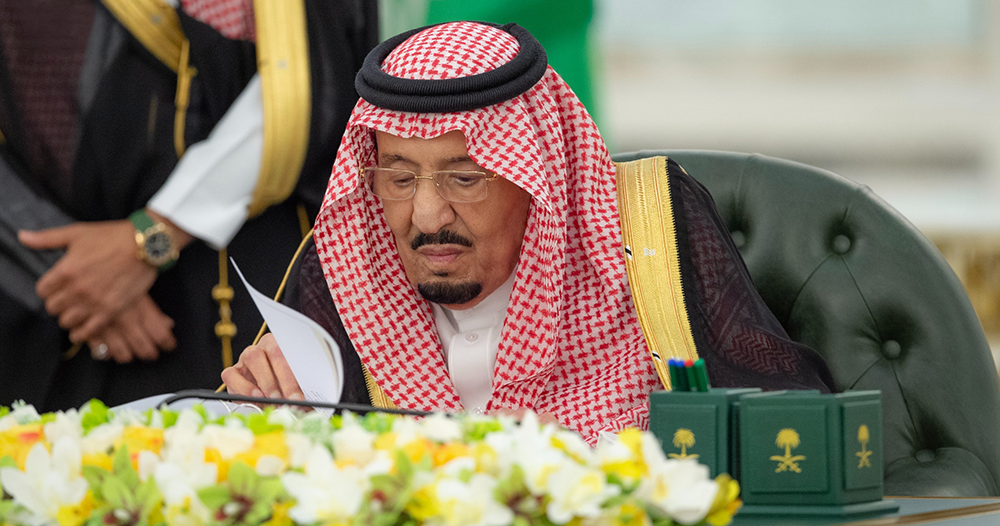
Custodian of the Two Holy Mosques King Salman bin Abdulaziz

The Cabinet, chaired by Custodian of the Two Holy Mosques King Salman bin Abdulaziz Al Saud, said no real estate transaction transferring ownership of land subject to the White Land and Vacant Properties Fees Law will be documented until payment of the due fees has been verified, according to the Saudi Press Agency (SPA).
Minister of Municipalities and Housing Majed Al-Hogail, said during the Cabinet session held today, Aug. 25, in Jeddah, said the Cabinet’s approval of the regulation governing the documentation of real estate transactions involving land subject to the fees ensures that the payment of outstanding fees is verified before ownership-transfer transactions are documented.
This is aimed at safeguarding the state’s rights, encouraging land development and increasing real estate supply, thereby enhancing the efficiency and balance of the real estate market.
According to data available with Argaam, the Ministry of Municipalities and Housing announced in August the geographic zones subject to white land fees in Riyadh, along with the applicable annual fee rates on white land, or groups of white land, located within those zones.
The first tier, classified as the highest priority, is subject to an annual fee of 10% of the land’s value. The second tier (high priority) carries an annual fee of 7.5% of the land’s value. The third tier (medium priority) is subject to an annual fee of 5% of the land’s value. The fourth tier (low priority) carries an annual fee of 2.5% of the land’s value. The fifth tier, which falls outside the priority zones, is not subject to an annual fee and is included in the total white land holdings of the taxpayer within the city limits.
White land fees apply to all owners, including real estate development companies, excluding state-owned properties. Land under development is granted a one-year period from the date the fee is imposed to complete development and have the invoice cancelled, with an additional extension possible in accordance with approved technical regulations. In Riyadh, the fees apply to residential, residential-commercial and commercial land.
In May, the Ministry of Municipalities also approved the executive regulations for vacant property fees as a regulatory tool that is activated when vacancy criteria are met. The regulations aim to improve the utilization of real estate assets, encourage the operation of vacant properties, increase real estate supply and enhance balance in the real estate market.
Under the regulations, the annual fee on vacant properties is determined based on market rent, capped at 5% of the building’s value. The fees apply to buildings located within urban boundaries that have remained vacant for six months during the reference year, whether consecutively or intermittently.
The geographical scope of application is determined by a ministerial decision based on indicators including vacancy rates, property prices, housing costs, and supply and demand.
Custodian of the Two Holy Mosques King Salman bin Abdulaziz
The Cabinet, chaired by Custodian of the Two Holy Mosques King Salman bin Abdulaziz Al Saud, said no real estate transaction transferring ownership of land subject to the White Land and Vacant Properties Fees Law will be documented until payment of the due fees has been verified, according to the Saudi Press Agency (SPA).
Minister of Municipalities and Housing Majed Al-Hogail, said during the Cabinet session held today, Aug. 25, in Jeddah, said the Cabinet’s approval of the regulation governing the documentation of real estate transactions involving land subject to the fees ensures that the payment of outstanding fees is verified before ownership-transfer transactions are documented.
This is aimed at safeguarding the state’s rights, encouraging land development and increasing real estate supply, thereby enhancing the efficiency and balance of the real estate market.
According to data available with Argaam, the Ministry of Municipalities and Housing announced in August the geographic zones subject to white land fees in Riyadh, along with the applicable annual fee rates on white land, or groups of white land, located within those zones.
The first tier, classified as the highest priority, is subject to an annual fee of 10% of the land’s value. The second tier (high priority) carries an annual fee of 7.5% of the land’s value. The third tier (medium priority) is subject to an annual fee of 5% of the land’s value. The fourth tier (low priority) carries an annual fee of 2.5% of the land’s value. The fifth tier, which falls outside the priority zones, is not subject to an annual fee and is included in the total white land holdings of the taxpayer within the city limits.
White land fees apply to all owners, including real estate development companies, excluding state-owned properties. Land under development is granted a one-year period from the date the fee is imposed to complete development and have the invoice cancelled, with an additional extension possible in accordance with approved technical regulations. In Riyadh, the fees apply to residential, residential-commercial and commercial land.
In May, the Ministry of Municipalities also approved the executive regulations for vacant property fees as a regulatory tool that is activated when vacancy criteria are met. The regulations aim to improve the utilization of real estate assets, encourage the operation of vacant properties, increase real estate supply and enhance balance in the real estate market.
Under the regulations, the annual fee on vacant properties is determined based on market rent, capped at 5% of the building’s value. The fees apply to buildings located within urban boundaries that have remained vacant for six months during the reference year, whether consecutively or intermittently.
The geographical scope of application is determined by a ministerial decision based on indicators including vacancy rates, property prices, housing costs, and supply and demand.