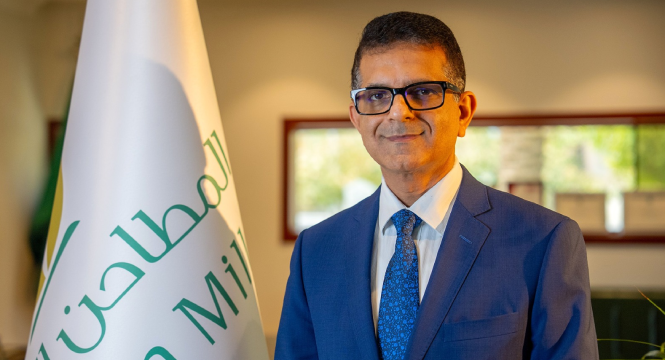
Rohit Chugh CEO of Arabian Mills
Arabian Mills for Food Products Co. (Arabian Mills) has reduced its outstanding loans from approximately SAR 1.5 billion in 2023 to around SAR 638 million currently through voluntary debt repayments, helping lower finance costs and improve profitability, said CEO Rohit Chugh. 
In an interview with Argaam, Chugh said finance costs fell from approximately SAR 120 million in 2023 to SAR 70 million in 2025, with a further decline to around SAR 44 million expected by the end of 2026.
He noted that the improved debt structure is strengthening the company’s financial flexibility and its ability to fund growth and expansion plans. Commenting on financial results, Chugh said Arabian Mills’ performance in the first nine months of 2026 reflected the success of its strategy to achieve sustainable growth, supported by business expansion, improved operating efficiency and stronger cost management. Revenue rose 4.18% to SAR 755 million in 9M 2026, driven by a 5.1% increase in flour segment revenue.
RFlour sales to the retail segment grew by a notable 29.9%, while sales to the business-to-business (B2B) segment increased by 2.7%, supported by expanded distribution channels, wider geographic coverage and new product launches catering to evolving consumer needs. Regarding the decline in bran revenue, Chugh explained that it did not reflect weaker demand but rather the redirection of part of the company’s bran output for use as a raw material in feed production. This approach optimizes production resources and supports expansion in segments experiencing growing demand. The strategy also helped drive a 13.7% increase in feed segment revenue during the period.
He added that revenue growth, coupled with continued improvements in operating efficiency and tighter control over costs and general and administrative expenses, supported profitability. Net profit climbed 15.8% to SAR 208.5 million, outpacing revenue growth compared with the same period last year.
As for Q3 2026, Chugh said the company maintained positive performance, with revenue rising 2.1% year-on-year (YoY), while net profit increased 3.3% to SAR 64.6 million, supported by continued business growth and improved cost management. On the operational front, Chugh said Arabian Mills continued to expand its distribution network by establishing warehouses in Jeddah and Khamis Mushait, alongside its existing warehouses in Riyadh, Hail and Jazan.
The expansion aims to strengthen geographic coverage, enhance product availability and reach a broader customer base across the Kingdom. The company also continues to introduce new products under its Master Mills brand, including cake mixes, semolina, pasta and gluten-free products, seeking to capitalize on changing consumer preferences and growing demand for healthier food options. Regarding government subsidies and product pricing, Chugh confirmed that Arabian Mills benefits from the support framework for the milling sector.
He noted that flour prices in the B2B segment are regulated, while the company enjoys greater pricing flexibility in the retail segment. As for the energy price increases scheduled for 2027, Chugh said the company had conducted a study to assess their potential impact on operations. While the increases are expected to affect costs, he does not anticipate a material impact on operating performance or net profit.
Regarding expansion projects, Chugh said Arabian Mills is proceeding with previously announced strategic projects involving total investments of approximately SAR 461 million, aimed at enhancing production and operating capabilities and supporting future growth. He added that the company intends to fund as much of these investments as possible through internally generated cash flows, while using available financing options when needed, balancing expansion plans with maintaining a strong financial position.
On dividends, Chugh Chugh emphasized that the company places great importance on shareholders’ expectations and remains committed to listening to their views and suggestions and taking them into consideration. He noted that Arabian Mills has taken several steps in recent years to strengthen profitability and its financial position, particularly by reducing debt and financing costs while pursuing expansion projects to support future growth.
He added that the company has followed an upward trend in dividend distributions over the past two years, with dividends per share rising from SAR 0.59 to SAR 1 for 2025. Arabian Mills continues to assess opportunities to enhance shareholder returns in line with its financial performance, cash flows and expansion plans, while balancing shareholders’ expectations with sustainable long-term growth.
Rohit Chugh CEO of Arabian Mills
Arabian Mills for Food Products Co. (Arabian Mills) has reduced its outstanding loans from approximately SAR 1.5 billion in 2023 to around SAR 638 million currently through voluntary debt repayments, helping lower finance costs and improve profitability, said CEO Rohit Chugh.
In an interview with Argaam, Chugh said finance costs fell from approximately SAR 120 million in 2023 to SAR 70 million in 2025, with a further decline to around SAR 44 million expected by the end of 2026.
He noted that the improved debt structure is strengthening the company’s financial flexibility and its ability to fund growth and expansion plans. Commenting on financial results, Chugh said Arabian Mills’ performance in the first nine months of 2026 reflected the success of its strategy to achieve sustainable growth, supported by business expansion, improved operating efficiency and stronger cost management. Revenue rose 4.18% to SAR 755 million in 9M 2026, driven by a 5.1% increase in flour segment revenue.
RFlour sales to the retail segment grew by a notable 29.9%, while sales to the business-to-business (B2B) segment increased by 2.7%, supported by expanded distribution channels, wider geographic coverage and new product launches catering to evolving consumer needs. Regarding the decline in bran revenue, Chugh explained that it did not reflect weaker demand but rather the redirection of part of the company’s bran output for use as a raw material in feed production. This approach optimizes production resources and supports expansion in segments experiencing growing demand. The strategy also helped drive a 13.7% increase in feed segment revenue during the period.
He added that revenue growth, coupled with continued improvements in operating efficiency and tighter control over costs and general and administrative expenses, supported profitability. Net profit climbed 15.8% to SAR 208.5 million, outpacing revenue growth compared with the same period last year.
As for Q3 2026, Chugh said the company maintained positive performance, with revenue rising 2.1% year-on-year (YoY), while net profit increased 3.3% to SAR 64.6 million, supported by continued business growth and improved cost management. On the operational front, Chugh said Arabian Mills continued to expand its distribution network by establishing warehouses in Jeddah and Khamis Mushait, alongside its existing warehouses in Riyadh, Hail and Jazan.
The expansion aims to strengthen geographic coverage, enhance product availability and reach a broader customer base across the Kingdom. The company also continues to introduce new products under its Master Mills brand, including cake mixes, semolina, pasta and gluten-free products, seeking to capitalize on changing consumer preferences and growing demand for healthier food options. Regarding government subsidies and product pricing, Chugh confirmed that Arabian Mills benefits from the support framework for the milling sector.
He noted that flour prices in the B2B segment are regulated, while the company enjoys greater pricing flexibility in the retail segment. As for the energy price increases scheduled for 2027, Chugh said the company had conducted a study to assess their potential impact on operations. While the increases are expected to affect costs, he does not anticipate a material impact on operating performance or net profit.
Regarding expansion projects, Chugh said Arabian Mills is proceeding with previously announced strategic projects involving total investments of approximately SAR 461 million, aimed at enhancing production and operating capabilities and supporting future growth. He added that the company intends to fund as much of these investments as possible through internally generated cash flows, while using available financing options when needed, balancing expansion plans with maintaining a strong financial position.
On dividends, Chugh Chugh emphasized that the company places great importance on shareholders’ expectations and remains committed to listening to their views and suggestions and taking them into consideration. He noted that Arabian Mills has taken several steps in recent years to strengthen profitability and its financial position, particularly by reducing debt and financing costs while pursuing expansion projects to support future growth.
He added that the company has followed an upward trend in dividend distributions over the past two years, with dividends per share rising from SAR 0.59 to SAR 1 for 2025. Arabian Mills continues to assess opportunities to enhance shareholder returns in line with its financial performance, cash flows and expansion plans, while balancing shareholders’ expectations with sustainable long-term growth.