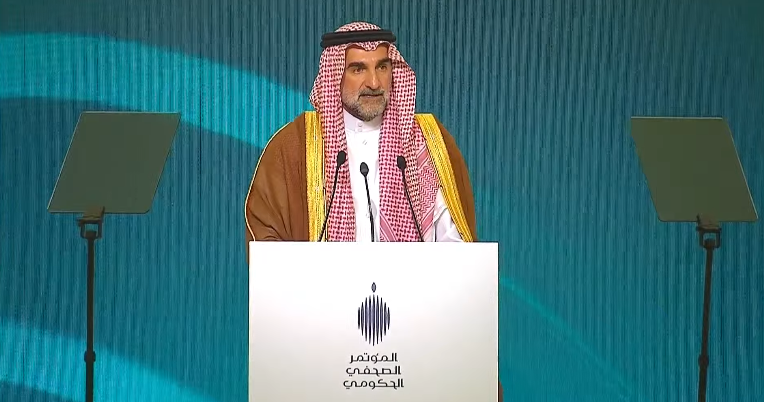
Yasir Al-Rumayyan, Governor of the Public Investment Fund (PIF), outlined the targets of six economic ecosystems under the fund’s new strategy during a press conference.
He said the urban development ecosystem under the Vision Portfolio will focus on improving quality of life by accelerating residential and commercial projects across the Kingdom.
The program is expected to support national goals, including raising Saudi homeownership to 70% through the development of up to 190,000 housing units by 2030, alongside the addition of around five million square metres of commercial space.
The ecosystem includes companies such as ROSHN, New Murabba, Jeddah Central and KAFD.
On advanced industries and innovation, Al Rumayyan said the ecosystem focuses on building the Kingdom’s future economy by developing emerging industrial clusters spanning electronics, AI, automotive, advanced mobility, pharmaceuticals, aviation, space and defense. The strategy aims to boost high-value, export-oriented production, raise productivity and create skilled jobs.
Targets include expanding data center capacity to 3,000 MW, with PIF contributing 1,800 MW, and supporting up to SAR 7 billion in locally manufactured pharmaceuticals. The fund also aims to produce 285,000 vehicles out of a national target of 500,000 by 2030.
This ecosystem includes firms such as HUMAIN (AI), Ceer (EVs), nupco and SAMI.
Al Rumayyan said the industrial and logistics ecosystem will focus on strengthening the Kingdom’s economic backbone by expanding core industries and logistics networks, while increasing mining output. The plan targets improvements in logistics performance, container throughput and mining’s contribution to GDP.
Key companies include Ma’aden, Saudi Iron and Steel Co. (Hadeed), and Bahri.
He added that the clean energy, renewables and water infrastructure ecosystem aims to reinforce Saudi Arabia’s leadership in energy by accelerating renewable deployment and diversifying energy sources. The program targets total renewable capacity of 100 GW, with PIF contributing 44.5 GW.
Companies within this ecosystem include Acwa, Saudi Energy, MARAFIQ, Tarshid and SIRC.
Yasir Al-Rumayyan, Governor of the Public Investment Fund (PIF), outlined the targets of six economic ecosystems under the fund’s new strategy during a press conference.
He said the urban development ecosystem under the Vision Portfolio will focus on improving quality of life by accelerating residential and commercial projects across the Kingdom.
The program is expected to support national goals, including raising Saudi homeownership to 70% through the development of up to 190,000 housing units by 2030, alongside the addition of around five million square metres of commercial space.
The ecosystem includes companies such as ROSHN, New Murabba, Jeddah Central and KAFD.
On advanced industries and innovation, Al Rumayyan said the ecosystem focuses on building the Kingdom’s future economy by developing emerging industrial clusters spanning electronics, AI, automotive, advanced mobility, pharmaceuticals, aviation, space and defense. The strategy aims to boost high-value, export-oriented production, raise productivity and create skilled jobs.
Targets include expanding data center capacity to 3,000 MW, with PIF contributing 1,800 MW, and supporting up to SAR 7 billion in locally manufactured pharmaceuticals. The fund also aims to produce 285,000 vehicles out of a national target of 500,000 by 2030.
This ecosystem includes firms such as HUMAIN (AI), Ceer (EVs), nupco and SAMI.
Al Rumayyan said the industrial and logistics ecosystem will focus on strengthening the Kingdom’s economic backbone by expanding core industries and logistics networks, while increasing mining output. The plan targets improvements in logistics performance, container throughput and mining’s contribution to GDP.
Key companies include Ma’aden, Saudi Iron and Steel Co. (Hadeed), and Bahri.
He added that the clean energy, renewables and water infrastructure ecosystem aims to reinforce Saudi Arabia’s leadership in energy by accelerating renewable deployment and diversifying energy sources. The program targets total renewable capacity of 100 GW, with PIF contributing 44.5 GW.
Companies within this ecosystem include Acwa, Saudi Energy, MARAFIQ, Tarshid and SIRC.