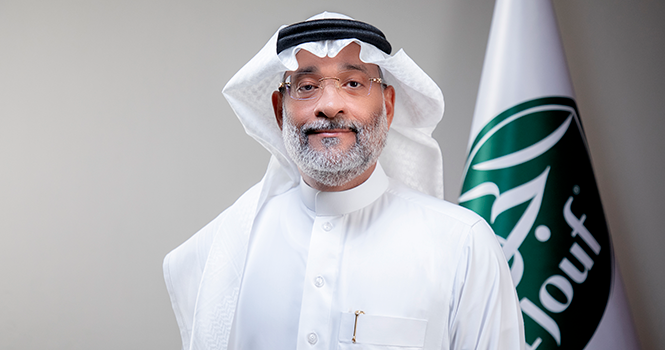
Mazen Badawood,CEO ofAl-Jouf Agricultural Development Co. (JADCO)
Al-Jouf Agricultural Development Co. (JADCO) expects a gradual improvement in demand and operating performance in Q2 2026 compared with the first quarter, supported by stable operations and stronger demand for some key products. 
In an interview with Argaam, CEO Mazen Badawood said the company is focused on improving supply chain efficiency and cost management, while benefiting from better operating conditions for its crops, in line with its strategy, which is expected to support profit margins in the coming periods.
He added that the company will remain focused on expanding operating segments and diversifying revenue streams. It will also maintain a conservative approach to risk management and closely monitoring market and climate developments to support sustainable performance and long-term shareholder value.
On financials, Badawood said the 94% year-on-year (YoY) drop in Q1 2026 profit was driven by several factors, including a SAR 25.4 million increase in the cost of agricultural inputs used in industrial products, due to adverse weather conditions during the 2025 farming season, which pushed up production costs.
Average selling prices for industrial products declined by SAR 18.7 million, reflecting competitive pressure from imported products, while olive oil sales were also hurt by the shift in the timing of Ramadan.
Despite this, the company recorded growth in frozen French fries sales compared with the same period last year, contributing positively by around SAR 8 million.
Al-Jouf Agricultural implemented efficiency and cost-control initiatives, reducing expenses by about SAR 3.5 million year-on-year, which partially offset the impact of higher costs and weaker pricing on overall results.
The company continues to execute its operational plans and efficiency programmes, aiming to strengthen performance, improve cost management, and deliver sustainable growth and shareholder value over the long term.
The industrial segment accounts for more than 96% of total sales, with agricultural sales — including wheat — making up the remainder, making the industrial segment the main revenue driver in Q1.
Badawood also noted that the shift in Ramadan timing weighed on sales volumes during the quarter, particularly for olive oil, adding that the company is working to recover sales, improve margins and return to growth in the coming quarters.
Mazen Badawood,CEO ofAl-Jouf Agricultural Development Co. (JADCO)
Al-Jouf Agricultural Development Co. (JADCO) expects a gradual improvement in demand and operating performance in Q2 2026 compared with the first quarter, supported by stable operations and stronger demand for some key products.
In an interview with Argaam, CEO Mazen Badawood said the company is focused on improving supply chain efficiency and cost management, while benefiting from better operating conditions for its crops, in line with its strategy, which is expected to support profit margins in the coming periods.
He added that the company will remain focused on expanding operating segments and diversifying revenue streams. It will also maintain a conservative approach to risk management and closely monitoring market and climate developments to support sustainable performance and long-term shareholder value.
On financials, Badawood said the 94% year-on-year (YoY) drop in Q1 2026 profit was driven by several factors, including a SAR 25.4 million increase in the cost of agricultural inputs used in industrial products, due to adverse weather conditions during the 2025 farming season, which pushed up production costs.
Average selling prices for industrial products declined by SAR 18.7 million, reflecting competitive pressure from imported products, while olive oil sales were also hurt by the shift in the timing of Ramadan.
Despite this, the company recorded growth in frozen French fries sales compared with the same period last year, contributing positively by around SAR 8 million.
Al-Jouf Agricultural implemented efficiency and cost-control initiatives, reducing expenses by about SAR 3.5 million year-on-year, which partially offset the impact of higher costs and weaker pricing on overall results.
The company continues to execute its operational plans and efficiency programmes, aiming to strengthen performance, improve cost management, and deliver sustainable growth and shareholder value over the long term.
The industrial segment accounts for more than 96% of total sales, with agricultural sales — including wheat — making up the remainder, making the industrial segment the main revenue driver in Q1.
Badawood also noted that the shift in Ramadan timing weighed on sales volumes during the quarter, particularly for olive oil, adding that the company is working to recover sales, improve margins and return to growth in the coming quarters.