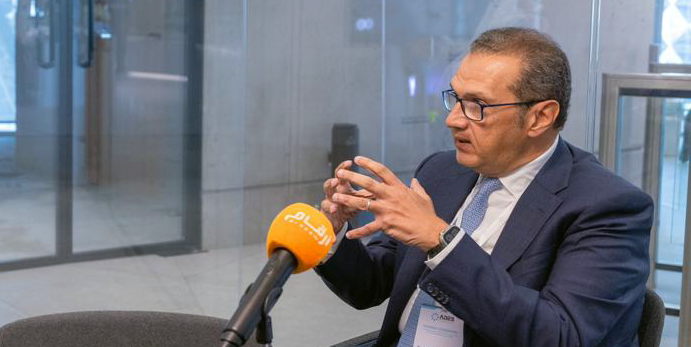
Mohammed Al-Khudair, CEO of National Company for Learnings and Education (NCLE)
Mohammed Al-Khudair, CEO of The National Company for Learning and Education (NCLE), said the expansion in building new schools and educational projects is putting pressure on profit margins, explaining why net profit growth has not kept pace with revenue growth. 
In an interview with Al Arabiya, Al-Khudair said the increase in costs associated with lease contracts for new projects and financing costs related to funding several expansion projects had contributed to revenue growth outpacing net profit growth.
He added that operating costs were not the reason profits had failed to grow at the same pace as revenue, noting that halting expansion would allow net profit to grow at a rate closer to revenue growth.
Regarding the criteria for investing in new schools, Al-Khudair said the company evaluates opportunities from both investment and strategic perspectives, explaining that some markets may take longer to reach the break-even point as the company seeks to capture a larger market share in developing areas and on the outskirts of cities.
The return on investment remains the decisive factor in investment decisions. Over the past few years, the company has expanded by building new schools, either by acquiring land and constructing schools on it or by leasing land and developing schools there. This model has delivered better returns as the company has gained greater operational experience, he said.
As regards the increase in the provision for expected credit losses, Al-Khudair said comparisons with the previous year were difficult because some accumulated provisions from earlier years had been reversed during that period, making a direct comparison between the two periods unfair. He also noted that year-on-year revenue growth is accompanied by an increase in accounts receivable.
On the dividend policy amid expansion and higher financing costs, the CEO said the company follows a policy of distributing 60%–70% of net income. He added that it had maintained this policy over the past few years despite having new projects under construction.
NCLE has increased its reliance on borrowing to finance projects, said the top official, noting that its strong financial position and healthy cash liquidity helped it continue funding expansion while maintaining cash distributions to shareholders.
According to Argaam’s data, NCLEs’ profit rose to SAR 170.1 million in FY 2025/26, compared with SAR 160.7 million a year earlier.
The fourth-quarter profit fell 68% to SAR 1.8 million, compared to SAR 5.7 million in the same period a year earlier.
The company’s board of directors has recommended a cash dividend at 25% of capital, or SAR 2.50 per share, for FY 2025/26.
Mohammed Al-Khudair, CEO of National Company for Learnings and Education (NCLE)
Mohammed Al-Khudair, CEO of The National Company for Learning and Education (NCLE), said the expansion in building new schools and educational projects is putting pressure on profit margins, explaining why net profit growth has not kept pace with revenue growth.
In an interview with Al Arabiya, Al-Khudair said the increase in costs associated with lease contracts for new projects and financing costs related to funding several expansion projects had contributed to revenue growth outpacing net profit growth.
He added that operating costs were not the reason profits had failed to grow at the same pace as revenue, noting that halting expansion would allow net profit to grow at a rate closer to revenue growth.
Regarding the criteria for investing in new schools, Al-Khudair said the company evaluates opportunities from both investment and strategic perspectives, explaining that some markets may take longer to reach the break-even point as the company seeks to capture a larger market share in developing areas and on the outskirts of cities.
The return on investment remains the decisive factor in investment decisions. Over the past few years, the company has expanded by building new schools, either by acquiring land and constructing schools on it or by leasing land and developing schools there. This model has delivered better returns as the company has gained greater operational experience, he said.
As regards the increase in the provision for expected credit losses, Al-Khudair said comparisons with the previous year were difficult because some accumulated provisions from earlier years had been reversed during that period, making a direct comparison between the two periods unfair. He also noted that year-on-year revenue growth is accompanied by an increase in accounts receivable.
On the dividend policy amid expansion and higher financing costs, the CEO said the company follows a policy of distributing 60%–70% of net income. He added that it had maintained this policy over the past few years despite having new projects under construction.
NCLE has increased its reliance on borrowing to finance projects, said the top official, noting that its strong financial position and healthy cash liquidity helped it continue funding expansion while maintaining cash distributions to shareholders.
According to Argaam’s data, NCLEs’ profit rose to SAR 170.1 million in FY 2025/26, compared with SAR 160.7 million a year earlier.
The fourth-quarter profit fell 68% to SAR 1.8 million, compared to SAR 5.7 million in the same period a year earlier.
The company’s board of directors has recommended a cash dividend at 25% of capital, or SAR 2.50 per share, for FY 2025/26.