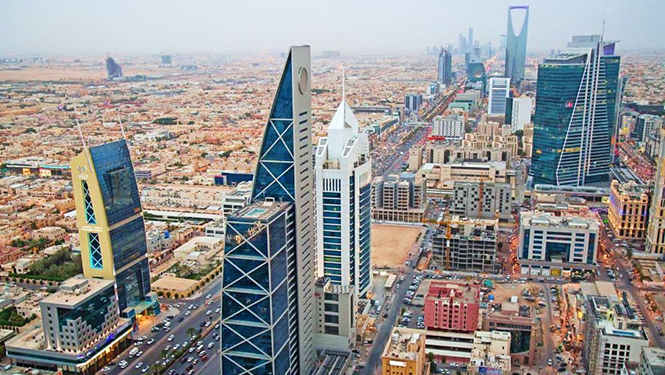
Riyadh city
The seasonally-adjusted Al Rajhi Capital Saudi Construction Index, compiled by SP Global, advanced to 55.2 points in July 2026, from 56.3 points in June. 
This release marks the public launch of the Al Rajhi Capital Saudi Construction Index, a new monthly survey of 200 construction companies that have been carefully selected to accurately represent the true structure of the Saudi Arabian construction sector.
Saudi construction companies recorded another strong expansion in business activity in July, extending the current period of growth to three months. The index remained well above the crucial 50.0 no-change value, with the latest reading the second-highest since the survey began in January. The stronger activity was linked to a continued recovery in new orders and the resumption of delayed projects across the construction sector.
July data showed the largest increase in total new business received by Saudi construction companies for five months, driven by faster growth across all major sectors. New orders in the residential construction sector expanded at a particularly strong pace, with the latest increase the largest since January. Survey respondents widely cited improving market conditions, a continued recovery in investor confidence, and the emergence of new tender opportunities linked to public infrastructure projects.
Al RajhiCapital Saudi Construction IndexPerformance YTD
Month
Index (Point)
Change (Points)
Change %
January 2026
54.7
—
—
February
54.9
+0.2
+0.4%
March
50.8
(4.1)
(7.5%)
April
48.5
(2.3)
(4.5%)
May
51.2
+2.7
+5.6%
June
56.3
+5.1
+10.0%
July
55.2
(1.1)
(2.0%)
All three main categories of construction activity recorded an increase in July, with infrastructure the best-performing segment. The latest rise in infrastructure activity was the strongest since the survey began in January, with the index at 56.9. Feedback from survey respondents indicated that government-backed infrastructure projects provided a solid foundation for growth in July, particularly in transport and utilities.
Residential building also expanded at a strong pace in July (index at 56.0), extending its current growth streak to three months. Many firms noted strong demand for urban housing projects, alongside an improvement in overall market conditions.
On the other hand, non-residential construction activity lost some momentum in July, although the rate of growth remained the second-fastest since February (index at 53.4).
Performance of Construction Activities – July 2026
Category
Index (Point)
Residential
56.0
Non-Residential
53.4
Infrastructure
56.9
Construction firms remained optimistic about the outlook for growth, with around 48% of survey respondents expecting business activity to increase over the next 12 months, while only 4% forecast a decline. This was the highest level of optimism since the survey began in January.
Construction firms widely commented on easing geopolitical tensions, a recovery in new contracts and a broad range of opportunities linked to Vision 2030 initiatives. An expansion in public-private partnerships was also cited as a factor supporting the growth outlook.
Riyadh city
The seasonally-adjusted Al Rajhi Capital Saudi Construction Index, compiled by SP Global, advanced to 55.2 points in July 2026, from 56.3 points in June.
This release marks the public launch of the Al Rajhi Capital Saudi Construction Index, a new monthly survey of 200 construction companies that have been carefully selected to accurately represent the true structure of the Saudi Arabian construction sector.
Saudi construction companies recorded another strong expansion in business activity in July, extending the current period of growth to three months. The index remained well above the crucial 50.0 no-change value, with the latest reading the second-highest since the survey began in January. The stronger activity was linked to a continued recovery in new orders and the resumption of delayed projects across the construction sector.
July data showed the largest increase in total new business received by Saudi construction companies for five months, driven by faster growth across all major sectors. New orders in the residential construction sector expanded at a particularly strong pace, with the latest increase the largest since January. Survey respondents widely cited improving market conditions, a continued recovery in investor confidence, and the emergence of new tender opportunities linked to public infrastructure projects.
Al RajhiCapital Saudi Construction IndexPerformance YTD
Month
Index (Point)
Change (Points)
Change %
January 2026
54.7
—
—
February
54.9
+0.2
+0.4%
March
50.8
(4.1)
(7.5%)
April
48.5
(2.3)
(4.5%)
May
51.2
+2.7
+5.6%
June
56.3
+5.1
+10.0%
July
55.2
(1.1)
(2.0%)
All three main categories of construction activity recorded an increase in July, with infrastructure the best-performing segment. The latest rise in infrastructure activity was the strongest since the survey began in January, with the index at 56.9. Feedback from survey respondents indicated that government-backed infrastructure projects provided a solid foundation for growth in July, particularly in transport and utilities.
Residential building also expanded at a strong pace in July (index at 56.0), extending its current growth streak to three months. Many firms noted strong demand for urban housing projects, alongside an improvement in overall market conditions.
On the other hand, non-residential construction activity lost some momentum in July, although the rate of growth remained the second-fastest since February (index at 53.4).
Performance of Construction Activities – July 2026
Category
Index (Point)
Residential
56.0
Non-Residential
53.4
Infrastructure
56.9
Construction firms remained optimistic about the outlook for growth, with around 48% of survey respondents expecting business activity to increase over the next 12 months, while only 4% forecast a decline. This was the highest level of optimism since the survey began in January.
Construction firms widely commented on easing geopolitical tensions, a recovery in new contracts and a broad range of opportunities linked to Vision 2030 initiatives. An expansion in public-private partnerships was also cited as a factor supporting the growth outlook.