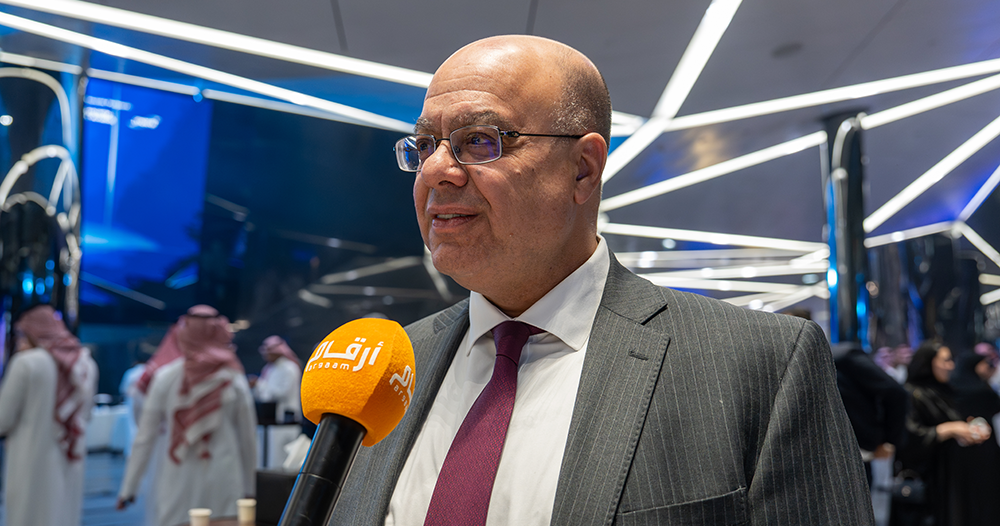
Amir Riad, Head of Investment Banking at BSF Capital

Amir Riad, Head of Investment Banking at BSF Capital, expects initial public offering (IPO) activity in the Saudi market to pick up in H2 2026, supported by a strong pipeline of listing-ready companies and improving market conditions.
In an interview with Argaam, Riad said the sukuk and debt capital markets are also expected to remain active, while mergers and acquisitions (MA) are likely to accelerate amid sustained investment activity.
He noted that investor appetite for IPOs remains strong, although the Saudi market has become more mature and selective in 2026 compared to previous years.
Riad said investors no longer judge an IPO’s success solely by its subscription coverage. Instead, they assess the company’s quality, strength, fair value and ability to deliver sustainable performance after listing.
Riad said subscription orders for the flynas’ IPO, which BSF Capital managed in 2025, exceeded SAR 409 billion, representing nearly 100-times coverage and attracting more than 2,050 investors.
He added that other IPOs managed by the company also generated strong demand, including Miahona Co., which was 170 times covered, Almajed Oud Co. at around 157 times, and Almoosa Health Co. at approximately 103 times.
Riad said these figures demonstrate that liquidity remains ample when a high-quality company is offered at an appropriate valuation.
Commenting on the valuation of companies seeking to go public, Riad said a gap between shareholders’ expectations and investors’ views is natural.
He noted that the financial advisor’s role is to determine a valuation that reflects the company’s intrinsic value, while accounting for the sustainability of its post-listing performance.
Riad explained that company valuation and IPO pricing are two distinct processes. Valuation serves as the starting point, while pricing results from a comprehensive process that includes preparing the financial valuation, developing the investment case, engaging with investors, gauging demand throughout the bookbuilding process, and ultimately determining the appropriate offer price.
Riad stressed that the objective is to achieve the most appropriate IPO price — not the highest one — adding that a company’s post-listing performance is the true measure of an IPO’s success.
He noted that disciplined pricing has supported the post-listing performance of several companies and encouraged strategic investors to increase their holdings in the secondary market.
Riad said post-listing share performance has become one of the key metrics investors use to evaluate IPO success, alongside share price stability and the quality of the long-term shareholder base, rather than focusing solely on subscription coverage.
He added that BSF Capital prioritizes attracting institutional and long-term investors when managing IPOs rather than focusing solely on the size of subscription orders, given their role in building a more stable shareholder base after listing.
As a result, Riad said, Rasan Information Technology Co.’s share price has climbed more than 224% since its listing, while Miahona has gained more than 158%, Almajed Oud about 55%, and Tamkeen Human Resources around 28% within months of listing.
On expanding foreign investor participation in the Saudi market, Riad said the move would deepen the investor base, improve pricing efficiency, enhance the quality of IPO order books, and boost liquidity in the secondary market.
However, he stressed that companies’ ability to benefit from greater foreign investor participation depends on their readiness in terms of corporate governance, disclosure standards, and the strength of their investment case — not merely on opening the market to foreign investors.
Riad said the Nomu-Parallel Market has proven over recent years to be a successful platform for high-growth companies and has increasingly become a stepping stone for firms planning to transfer to the Main Market (TASI).
However, it still faces challenges related to liquidity and limited research coverage.
He added that Nomu has gradually improved as disclosure standards continue to evolve.
BSF Capital managed the IPO of Armah Sports Co. and is currently working with the company on its transfer to TASI after it meets the regulatory requirements.
Regarding the listing of Special Purpose Acquisition Companies (SPACs) on Nomu, Riad said they could provide an additional funding channel, particularly for technology companies and businesses experiencing rapid growth.
He added that the success of SPACs depends on the quality of the sponsor, governance standards, the clarity of the transaction structure, and investor protection mechanisms.
Riad noted that the development of the Saudi capital market extends beyond SPACs.
It also includes regulatory initiatives that allow the direct listing of subsidiaries of companies already listed on the Main Market under specific requirements, thereby broadening financing options for companies, enhancing market competitiveness, and supporting greater product diversification.
On mergers and acquisitions (MA) activity, Riad expects dealmaking in Saudi Arabia to accelerate in 2026 and 2027, driven by the objectives of Saudi Vision 2030, investment portfolio restructuring, and growing interest from both local and international strategic investors.
He expects logistics, technology, food, healthcare, financial services, and education platforms to be among the sectors seeing the strongest MA activity over the coming period.
Riad added that BSF Capital has witnessed this momentum through its participation in a range of transactions spanning different stages of the investment cycle, including MA and strategic investments.
Regarding interest rates, Riad said higher borrowing costs have led to greater discipline in company valuations and in the timing of IPOs and long-term debt issuances. However, they have not altered the Saudi market’s underlying fundamentals, which continue to be supported by strong liquidity and an active investor base.
He concluded that companies with strong financial fundamentals and a compelling investment case remain well positioned to attract robust investor demand, regardless of the interest rate cycle.
Amir Riad, Head of Investment Banking at BSF Capital
Amir Riad, Head of Investment Banking at BSF Capital, expects initial public offering (IPO) activity in the Saudi market to pick up in H2 2026, supported by a strong pipeline of listing-ready companies and improving market conditions.
In an interview with Argaam, Riad said the sukuk and debt capital markets are also expected to remain active, while mergers and acquisitions (MA) are likely to accelerate amid sustained investment activity.
He noted that investor appetite for IPOs remains strong, although the Saudi market has become more mature and selective in 2026 compared to previous years.
Riad said investors no longer judge an IPO’s success solely by its subscription coverage. Instead, they assess the company’s quality, strength, fair value and ability to deliver sustainable performance after listing.
Riad said subscription orders for the flynas’ IPO, which BSF Capital managed in 2025, exceeded SAR 409 billion, representing nearly 100-times coverage and attracting more than 2,050 investors.
He added that other IPOs managed by the company also generated strong demand, including Miahona Co., which was 170 times covered, Almajed Oud Co. at around 157 times, and Almoosa Health Co. at approximately 103 times.
Riad said these figures demonstrate that liquidity remains ample when a high-quality company is offered at an appropriate valuation.
Commenting on the valuation of companies seeking to go public, Riad said a gap between shareholders’ expectations and investors’ views is natural.
He noted that the financial advisor’s role is to determine a valuation that reflects the company’s intrinsic value, while accounting for the sustainability of its post-listing performance.
Riad explained that company valuation and IPO pricing are two distinct processes. Valuation serves as the starting point, while pricing results from a comprehensive process that includes preparing the financial valuation, developing the investment case, engaging with investors, gauging demand throughout the bookbuilding process, and ultimately determining the appropriate offer price.
Riad stressed that the objective is to achieve the most appropriate IPO price — not the highest one — adding that a company’s post-listing performance is the true measure of an IPO’s success.
He noted that disciplined pricing has supported the post-listing performance of several companies and encouraged strategic investors to increase their holdings in the secondary market.
Riad said post-listing share performance has become one of the key metrics investors use to evaluate IPO success, alongside share price stability and the quality of the long-term shareholder base, rather than focusing solely on subscription coverage.
He added that BSF Capital prioritizes attracting institutional and long-term investors when managing IPOs rather than focusing solely on the size of subscription orders, given their role in building a more stable shareholder base after listing.
As a result, Riad said, Rasan Information Technology Co.’s share price has climbed more than 224% since its listing, while Miahona has gained more than 158%, Almajed Oud about 55%, and Tamkeen Human Resources around 28% within months of listing.
On expanding foreign investor participation in the Saudi market, Riad said the move would deepen the investor base, improve pricing efficiency, enhance the quality of IPO order books, and boost liquidity in the secondary market.
However, he stressed that companies’ ability to benefit from greater foreign investor participation depends on their readiness in terms of corporate governance, disclosure standards, and the strength of their investment case — not merely on opening the market to foreign investors.
Riad said the Nomu-Parallel Market has proven over recent years to be a successful platform for high-growth companies and has increasingly become a stepping stone for firms planning to transfer to the Main Market (TASI).
However, it still faces challenges related to liquidity and limited research coverage.
He added that Nomu has gradually improved as disclosure standards continue to evolve.
BSF Capital managed the IPO of Armah Sports Co. and is currently working with the company on its transfer to TASI after it meets the regulatory requirements.
Regarding the listing of Special Purpose Acquisition Companies (SPACs) on Nomu, Riad said they could provide an additional funding channel, particularly for technology companies and businesses experiencing rapid growth.
He added that the success of SPACs depends on the quality of the sponsor, governance standards, the clarity of the transaction structure, and investor protection mechanisms.
Riad noted that the development of the Saudi capital market extends beyond SPACs.
It also includes regulatory initiatives that allow the direct listing of subsidiaries of companies already listed on the Main Market under specific requirements, thereby broadening financing options for companies, enhancing market competitiveness, and supporting greater product diversification.
On mergers and acquisitions (MA) activity, Riad expects dealmaking in Saudi Arabia to accelerate in 2026 and 2027, driven by the objectives of Saudi Vision 2030, investment portfolio restructuring, and growing interest from both local and international strategic investors.
He expects logistics, technology, food, healthcare, financial services, and education platforms to be among the sectors seeing the strongest MA activity over the coming period.
Riad added that BSF Capital has witnessed this momentum through its participation in a range of transactions spanning different stages of the investment cycle, including MA and strategic investments.
Regarding interest rates, Riad said higher borrowing costs have led to greater discipline in company valuations and in the timing of IPOs and long-term debt issuances. However, they have not altered the Saudi market’s underlying fundamentals, which continue to be supported by strong liquidity and an active investor base.
He concluded that companies with strong financial fundamentals and a compelling investment case remain well positioned to attract robust investor demand, regardless of the interest rate cycle.