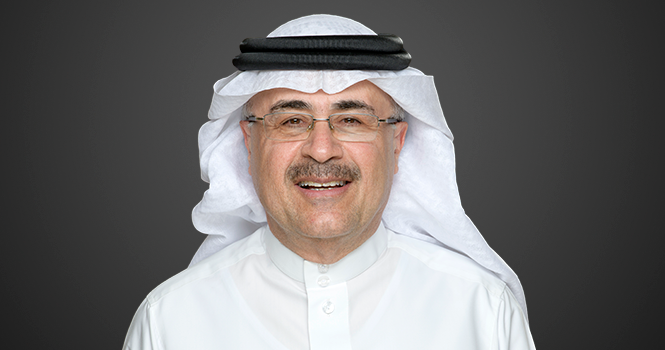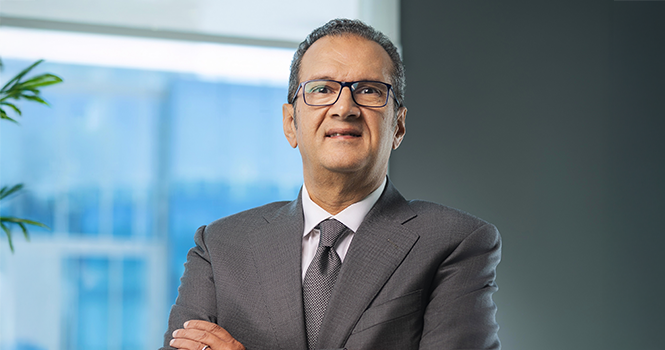
Mohamed Farouk, CEO ofADES Holding Co.
Mohamed Farouk, ADES Holding Co. Chief Executive Officer, unveiled that the ongoing tensions in the Middle East have increased uncertainty levels in global energy markets. However, overall sector conditions remain favorable, supported by strong market fundamentals and continued supply shortages in the jack-up offshore rigs market. 
In a company statement commenting on the financial results, Farouk said a return to normal conditions would further tighten supply and support demand for offshore drilling capacity.
ADES benefits from a naturally diversified operating base, particularly as international markets account for a growing share of its business following the acquisition of Shelf Drilling. Positive day-rate dynamics in some international markets also support operational resilience by balancing exposure across different geographic regions.
Farouk noted that during Q1 2026, a limited number of temporary operational suspensions were implemented in GCC countries in response to developments related to ongoing regional tensions and heightened geopolitical uncertainty. He said the company fully supported these precautionary measures, which prioritized the safety and security of personnel and assets.
Management believes these suspensions are temporary and short term in nature and, more importantly, are driven by current conditions and events rather than any weakness in demand. He added that the company continues to work closely with clients and relevant authorities to ensure operational readiness once conditions stabilize.
Current regional conditions and related temporary suspensions may have a greater impact on Q2 performance compared to Q1, the CEO expected, given that the effect in the first quarter was limited to only a few operating days.
Farouk stressed that the company remains confident in its previously announced 2026 EBITDA guidance range of SAR 4.50 billion to SAR 4.87 billion.
He said this confidence is supported by several factors, including continued international growth in Southeast Asia and West and Central Africa, strong backlog visibility, ongoing integration synergies and initial cost savings from the Shelf Drilling acquisition, disciplined cost management, supportive offshore drilling market fundamentals, and expectations that temporarily suspended operations will resume once conditions stabilize. He added that the group has already received notice to resume operations for one of the rigs recently suspended in GCC countries.
Regarding Q1 performance, Farouk said margins were affected during the quarter by the contribution from the lower-margin Shelf Drilling operations. However, the company remains confident in its ability to gradually improve profitability as integration progresses and operational and financial synergies are realized.
The company continued to execute its plans across its global platform at a strong pace in both core and international markets during Q1. These developments reflect strong demand across key offshore drilling markets and reaffirm the company’s strategy of building a geographically diversified platform focused on high-growth regions.
According to Argaam data, ADES Holding’s net profit rose 22% to SAR 236.4 million in Q1 2026, compared to SAR 194.2 million in the same period of 2025.
ADES announced on March 24 that some of the group’s offshore drilling rigs in GCC countries were temporarily suspended due to ongoing regional tensions.
Mohamed Farouk, CEO ofADES Holding Co.
Mohamed Farouk, ADES Holding Co. Chief Executive Officer, unveiled that the ongoing tensions in the Middle East have increased uncertainty levels in global energy markets. However, overall sector conditions remain favorable, supported by strong market fundamentals and continued supply shortages in the jack-up offshore rigs market.
In a company statement commenting on the financial results, Farouk said a return to normal conditions would further tighten supply and support demand for offshore drilling capacity.
ADES benefits from a naturally diversified operating base, particularly as international markets account for a growing share of its business following the acquisition of Shelf Drilling. Positive day-rate dynamics in some international markets also support operational resilience by balancing exposure across different geographic regions.
Farouk noted that during Q1 2026, a limited number of temporary operational suspensions were implemented in GCC countries in response to developments related to ongoing regional tensions and heightened geopolitical uncertainty. He said the company fully supported these precautionary measures, which prioritized the safety and security of personnel and assets.
Management believes these suspensions are temporary and short term in nature and, more importantly, are driven by current conditions and events rather than any weakness in demand. He added that the company continues to work closely with clients and relevant authorities to ensure operational readiness once conditions stabilize.
Current regional conditions and related temporary suspensions may have a greater impact on Q2 performance compared to Q1, the CEO expected, given that the effect in the first quarter was limited to only a few operating days.
Farouk stressed that the company remains confident in its previously announced 2026 EBITDA guidance range of SAR 4.50 billion to SAR 4.87 billion.
He said this confidence is supported by several factors, including continued international growth in Southeast Asia and West and Central Africa, strong backlog visibility, ongoing integration synergies and initial cost savings from the Shelf Drilling acquisition, disciplined cost management, supportive offshore drilling market fundamentals, and expectations that temporarily suspended operations will resume once conditions stabilize. He added that the group has already received notice to resume operations for one of the rigs recently suspended in GCC countries.
Regarding Q1 performance, Farouk said margins were affected during the quarter by the contribution from the lower-margin Shelf Drilling operations. However, the company remains confident in its ability to gradually improve profitability as integration progresses and operational and financial synergies are realized.
The company continued to execute its plans across its global platform at a strong pace in both core and international markets during Q1. These developments reflect strong demand across key offshore drilling markets and reaffirm the company’s strategy of building a geographically diversified platform focused on high-growth regions.
According to Argaam data, ADES Holding’s net profit rose 22% to SAR 236.4 million in Q1 2026, compared to SAR 194.2 million in the same period of 2025.
ADES announced on March 24 that some of the group’s offshore drilling rigs in GCC countries were temporarily suspended due to ongoing regional tensions.