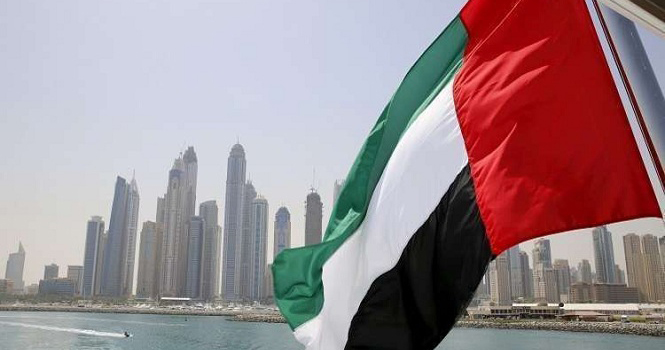
United Arab Emiratesflag
The United Arab Emirates announced today its decision to withdraw from the Organisation of the Petroleum Exporting Countries (OPEC) and OPEC+, effective May 1, 2026. 
This decision is in line with the UAE’s long-term strategic and economic vision and the development of its energy sector, including accelerating investment in domestic energy production, and reinforces its commitment to its role as a responsible and reliable producer that looks to the future of global energy markets.
This decision came after a thorough review of the UAE’s production policy and its current and future capacity, and in view of what the national interest requires and the state’s commitment to contribute effectively to meeting the urgent needs of the market, while geopolitical fluctuations continue in the near term through the disturbances in the Arabian Gulf and the Strait of Hormuz, which affect supply dynamics, as the basic trends indicate continued growth in global energy demand in the medium and long term.
The stability of the global energy system depends on the availability of flexible, reliable and affordable supplies, and the UAE has invested to meet the changing demands efficiently and responsibly, prioritising supply stability, cost, and sustainability.
This decision comes after decades of constructive cooperation, as the UAE joined OPEC in 1967 through the Emirate of Abu Dhabi, and its membership continued after the establishment of the UAE in 1971. During this period, the country played an active role in supporting the stability of the global oil market and promoting dialogue between producing countries.
After leaving OPEC, the UAE will continue its responsible role by gradually and thoughtfully increasing production, in line with demand and market conditions.
With a large and competitive resource base, the UAE will continue to work with partners to develop resources, supporting economic growth and diversification.
It is worth noting that this decision does not change the UAE’s commitment to the stability of global markets or its approach based on cooperation with producers and consumers, but rather enhances its ability to respond to changing market demands.
While the nation emphasised its appreciation for both OPEC and the OPEC+ alliance, it said that it “made significant contributions and even greater sacrifices for the benefit of all”.
It added that the time has come to focus efforts on what national interest dictates and “our commitment to our investors, customers, partners and global energy markets.”
According to data from Argaam, the UAE’s production increased by 18,000 barrels per day (bpd) on April 1, 2026, reaching 3.429 million bpd.
Previous announcements indicate that the UAE’s production capacity is 5 million bpd.
United Arab Emiratesflag
The United Arab Emirates announced today its decision to withdraw from the Organisation of the Petroleum Exporting Countries (OPEC) and OPEC+, effective May 1, 2026.
This decision is in line with the UAE’s long-term strategic and economic vision and the development of its energy sector, including accelerating investment in domestic energy production, and reinforces its commitment to its role as a responsible and reliable producer that looks to the future of global energy markets.
This decision came after a thorough review of the UAE’s production policy and its current and future capacity, and in view of what the national interest requires and the state’s commitment to contribute effectively to meeting the urgent needs of the market, while geopolitical fluctuations continue in the near term through the disturbances in the Arabian Gulf and the Strait of Hormuz, which affect supply dynamics, as the basic trends indicate continued growth in global energy demand in the medium and long term.
The stability of the global energy system depends on the availability of flexible, reliable and affordable supplies, and the UAE has invested to meet the changing demands efficiently and responsibly, prioritising supply stability, cost, and sustainability.
This decision comes after decades of constructive cooperation, as the UAE joined OPEC in 1967 through the Emirate of Abu Dhabi, and its membership continued after the establishment of the UAE in 1971. During this period, the country played an active role in supporting the stability of the global oil market and promoting dialogue between producing countries.
After leaving OPEC, the UAE will continue its responsible role by gradually and thoughtfully increasing production, in line with demand and market conditions.
With a large and competitive resource base, the UAE will continue to work with partners to develop resources, supporting economic growth and diversification.
It is worth noting that this decision does not change the UAE’s commitment to the stability of global markets or its approach based on cooperation with producers and consumers, but rather enhances its ability to respond to changing market demands.
While the nation emphasised its appreciation for both OPEC and the OPEC+ alliance, it said that it “made significant contributions and even greater sacrifices for the benefit of all”.
It added that the time has come to focus efforts on what national interest dictates and “our commitment to our investors, customers, partners and global energy markets.”
According to data from Argaam, the UAE’s production increased by 18,000 barrels per day (bpd) on April 1, 2026, reaching 3.429 million bpd.
Previous announcements indicate that the UAE’s production capacity is 5 million bpd.