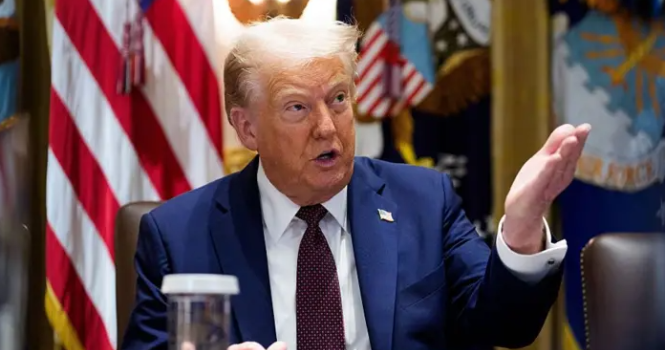
President Donald Trump
A US federal appeals court in Washington ruled, on Aug. 30, that most of the tariffs imposed by President Donald Trump were illegal, in a decision that dealt a blow to one of his key tools in international economic policy. 
The ruling addressed the so-called “reciprocal tariffs” imposed by Trump as part of his “trade war” since last April, in addition to other tariffs targeting China, Canada and Mexico in February.
The court confirmed that the International Emergency Economic Powers Act of 1977, which Trump relied on, does not authorize the imposition of tariffs.
The law had traditionally been used to freeze the assets of adversaries or impose sanctions, while Trump was the first president to invoke it to impose trade tariffs, justifying his move by citing risks of trade deficits, declining US manufacturing, and drug inflows across the border.
The ruling came in response to lawsuits filed by small businesses and several Democrat-led states on the basis that the constitution grants Congress alone the power to levy taxes and tariffs. Lower courts had already ruled that Trump exceeded his authority.
President Donald Trump
A US federal appeals court in Washington ruled, on Aug. 30, that most of the tariffs imposed by President Donald Trump were illegal, in a decision that dealt a blow to one of his key tools in international economic policy.
The ruling addressed the so-called “reciprocal tariffs” imposed by Trump as part of his “trade war” since last April, in addition to other tariffs targeting China, Canada and Mexico in February.
The court confirmed that the International Emergency Economic Powers Act of 1977, which Trump relied on, does not authorize the imposition of tariffs.
The law had traditionally been used to freeze the assets of adversaries or impose sanctions, while Trump was the first president to invoke it to impose trade tariffs, justifying his move by citing risks of trade deficits, declining US manufacturing, and drug inflows across the border.
The ruling came in response to lawsuits filed by small businesses and several Democrat-led states on the basis that the constitution grants Congress alone the power to levy taxes and tariffs. Lower courts had already ruled that Trump exceeded his authority.