Key Takeaways
Most startups fail quietly, long before anyone sees the signs.
What feels like momentum can hide the risks that sink a company.
We live in what I call a unicorn economy — a culture that tells founders that if they’re not scaling at breakneck speed, raising massive rounds or landing headlines, they’re falling behind.
Silicon Valley is one of the most powerful startup ecosystems ever built. But its dominant narrative has a downside: it trains founders to chase outcomes that work for very few. 
Roughly 75% of venture-backed companies fail, and only a small subset of businesses are suited for the traditional venture model. For everyone else, chasing unicorn status doesn’t increase the odds of success — it quietly reduces them.
If your goal is to build real wealth, freedom and a company that survives the realities of entrepreneurship, forget unicorns. Build a foundation. That means focus, systems, and the discipline to scale one zero at a time.
Unicorns are rare by definition. What’s far more common — and far less celebrated — are founders who build profitable, durable businesses without headlines. Strip away the hype, and you’ll find a silent majority creating meaningful wealth for themselves and their families without ever making TechCrunch.
Unicorns aren’t magical — they’re pressurized
From the outside, unicorns look inevitable: massive valuations, viral growth, constant attention. Inside, they’re fragile.
Most are venture-backed, and that capital comes with expectations that can break a business the moment growth slows. The pursuit of speed often crowds out what actually matters: customers, revenue discipline, hiring well and building systems that hold under stress.
I’ve seen this play out repeatedly. The belief that funding, hype and velocity can substitute for accountability and fundamentals. It shows up as reckless spending, weak controls and founders who confuse attention with progress.
WeWork is the most visible example, but it’s not unique. For every unicorn that survives, there are hundreds of venture-backed companies that collapse quietly under the weight of expectations they were never built to meet.
The existence of successful billion-dollar companies doesn’t make this a formula. It makes it an exception.
The foundation formula
After more than 30 years of building companies, I’ve learned that sustainable success isn’t driven by hype. It’s driven by discipline.
Here’s what actually works.
1. Solve a real problem
Start with a clear, painful need. Capital won’t save a product people don’t genuinely care about.
2. Prove it before you scale it
Ideas don’t build businesses — traction does. Early-stage work is about validation, not polish. Kill weak ideas quickly. Invest in what customers prove they want.
3. Protect your edge
Defensibility matters. At Hostopia and .CLUB, patents, partnerships, trademarks and domain strategy created leverage that marketing never could.
4. Scale in zeros
Don’t leap from $100,000 to $100 million. Go from $100,000 to $1 million, then $1 million to $10 million. Each stage demands different systems, processes and leadership. Research shows why this matters: Premature scaling — growing too fast before systems are ready — is the second most common cause of startup failure, cited by 70% of failed startups. Anecdotally, companies like WeWork and Theranos illustrate the dangers of trying to scale beyond operational readiness, while startups like HubSpot and Atlassian succeeded by building infrastructure and leadership step by step. Scaling in zeros isn’t just advice — it’s a survival strategy.
5. Track your stage gates
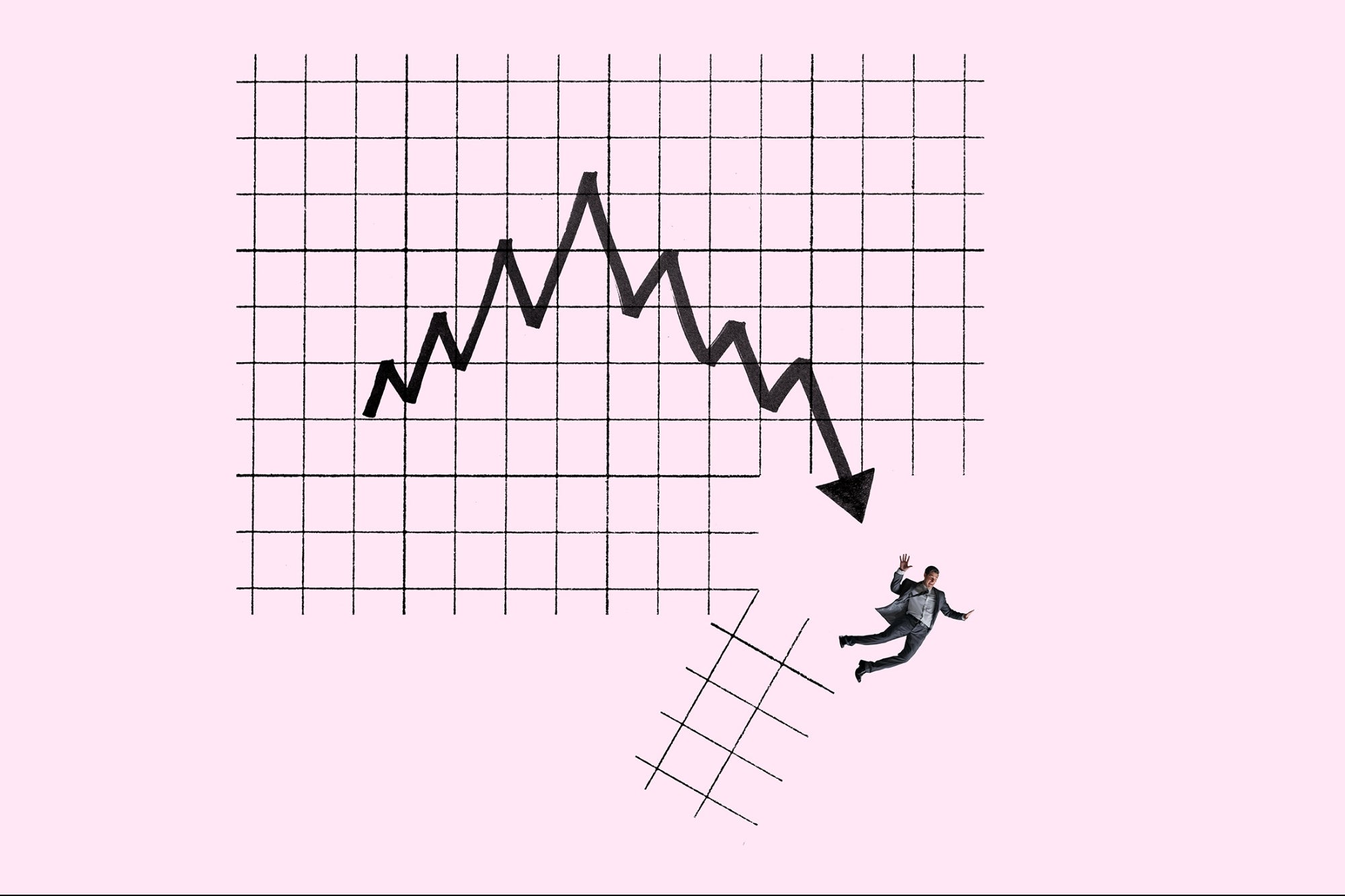
Know your metrics. Know your thresholds. Scaling without checkpoints is how founders run full speed off cliffs. Stage gates let you measure whether a system, team, or process is ready for the next zero. Without them, growth looks like progress — but it’s just risk in disguise.
Quiet builders win
The founders who win aren’t flashy — they’re focused.
The best exits rarely come from the loudest voices. They come from founders who master a niche and execute relentlessly. Sometimes that means creating a new category. More often, it means dominating a small one.
I recently met a retired entrepreneur who built a manufacturing business installing backyard bug screens. You’ve never heard of him. He sold the company for life-changing money.
There are millions like him. Founders who sell businesses for $5 million, $20 million, even $100 million. These outcomes don’t make headlines — but they create freedom. And they’re far more achievable than unicorns.
The real opportunity
The unicorn narrative teaches founders that success lives somewhere else — one viral moment away.
In reality, the opportunity is right under your feet. It’s in building something that works before trying to make it big. It’s in discipline, patience, and execution. It’s in foundations, not fantasies.
Brick by brick. Customer by customer. Zero by zero.
Sign up for the Entrepreneur Daily newsletter to get the news and resources you need to know today to help you run your business better. Get it in your inbox.