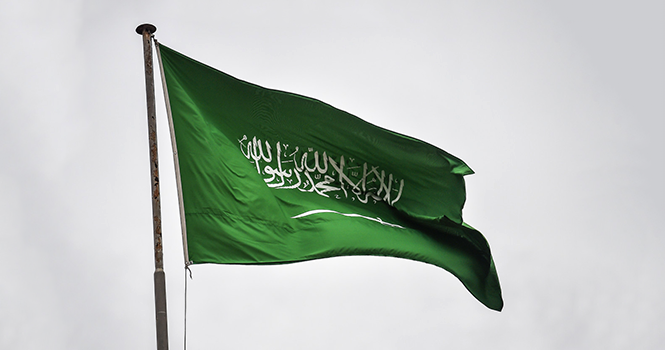
The Kingdom of Saudi Arabia’s flag
The seasonally adjusted Riyad Bank Saudi Arabia Purchasing Managers’ Index (PMI), formerly SP Global Saudi Arabia PMI, dropped to 56.3 points in January 2026, marking its lowest level in six months. 
According to the report, operating conditions across the non-oil private sector saw a strong improvement, though it was slightly below its long-term average of 56.9 points. The non-oil private sector recorded an improvement in business conditions at the start of the year, driven by stronger market demand, higher employment levels, and increased purchasing activity.
New orders continued to rise, with surveyed companies highlighting positive domestic conditions and increased customer activity. This led to further increases in both employment and purchasing levels, although cost pressures also accelerated amid higher input prices and rising wages.
Business activity continued to expand at a strong pace at the start of 2026, as companies reported growth in output in response to improved market demand, new projects, and increased customer activity. Around 23% of surveyed firms indicated that their output rose in January, while 2% reported a contraction.
New orders increased and recorded a notable overall growth rate, with many participating companies citing favorable domestic market conditions as a key driver of higher new business levels. Export sales also improved, at a stronger pace compared with the end of last year. While some firms noted that foreign competition hindered efforts to attract customers abroad, others reported an increase in international demand, particularly from GCC countries and Asian markets.
Saudi Arabia PMI since 2023*
Month
Index (Points)
Change (Points)
Change (%)
Jan. 2023
58.2
+1.3
+2.3%
February
59.8
+1.6
+2.7%
March
58.7
(1.1)
(1.8%)
April
59.6
+0.9
+1.5%
May
58.5
(1.1)
(1.8%)
June
59.6
+1.1
+1.9%
July
57.7
(1.9)
(3.2% )
August
56.6
(1.1)
(1.9%)
September
57.2
+0.6
+1.1%
October
58.4
+1.2
+2.1%
November
57.5
(0.9)
(1.5%)
December
57.5
—
—
Jan. 2024
55.4
(2.1)
(3.7%)
February
57.2
+1.8
+3.2%
March
57
(0.2)
(0.3%)
April
57
—
—
May
56.4
(0.6)
(1.1%)
June
55
(1.4)
(2.5%)
July
54.4
(0.6)
(1.1%)
August
54.8
+0.4
+0.7%
September
56.3
+1.5
+2.7%
October
56.9
+0.6
+1.1%
November
59
+2.1
+3.7%
December
58.4
(0.6)
(1.0%)
Jan. 2025
60.5
+2.1
+3.6%
February
58.4
(2.1)
(3.5%)
March
58.1
(0.3)
(0.5%)
April
55.6
(2.5)
(4.3%)
May
55.8
+0.2
+0.4%
June
57.2
+1.4
+2.5%
July
56.3
(0.9)
(1.6%)
August
56.4
+0.1
(0.2%)
September
57.8
+1.4
+2.5%
October
60.2
+2.4
+4.2%
November
58.5
(1.7)
(2.8%)
December
57.4
(1.1)
(1.9%)
January 2026
56.3
(1.1)
(1.9%)
*Change on a monthly basis.
The PMI is a weighted average of the following five indices:
Riyad Bank PMI Details
Sub-index
Percentage (%)
New orders
30%
Production
25%
Employment
20%
Suppliers’ delivery times
15%
Stocks of purchases
10%
Total
100%
The Kingdom of Saudi Arabia’s flag
The seasonally adjusted Riyad Bank Saudi Arabia Purchasing Managers’ Index (PMI), formerly SP Global Saudi Arabia PMI, dropped to 56.3 points in January 2026, marking its lowest level in six months.
According to the report, operating conditions across the non-oil private sector saw a strong improvement, though it was slightly below its long-term average of 56.9 points. The non-oil private sector recorded an improvement in business conditions at the start of the year, driven by stronger market demand, higher employment levels, and increased purchasing activity.
New orders continued to rise, with surveyed companies highlighting positive domestic conditions and increased customer activity. This led to further increases in both employment and purchasing levels, although cost pressures also accelerated amid higher input prices and rising wages.
Business activity continued to expand at a strong pace at the start of 2026, as companies reported growth in output in response to improved market demand, new projects, and increased customer activity. Around 23% of surveyed firms indicated that their output rose in January, while 2% reported a contraction.
New orders increased and recorded a notable overall growth rate, with many participating companies citing favorable domestic market conditions as a key driver of higher new business levels. Export sales also improved, at a stronger pace compared with the end of last year. While some firms noted that foreign competition hindered efforts to attract customers abroad, others reported an increase in international demand, particularly from GCC countries and Asian markets.
Saudi Arabia PMI since 2023*
Month
Index (Points)
Change (Points)
Change (%)
Jan. 2023
58.2
+1.3
+2.3%
February
59.8
+1.6
+2.7%
March
58.7
(1.1)
(1.8%)
April
59.6
+0.9
+1.5%
May
58.5
(1.1)
(1.8%)
June
59.6
+1.1
+1.9%
July
57.7
(1.9)
(3.2% )
August
56.6
(1.1)
(1.9%)
September
57.2
+0.6
+1.1%
October
58.4
+1.2
+2.1%
November
57.5
(0.9)
(1.5%)
December
57.5
—
—
Jan. 2024
55.4
(2.1)
(3.7%)
February
57.2
+1.8
+3.2%
March
57
(0.2)
(0.3%)
April
57
—
—
May
56.4
(0.6)
(1.1%)
June
55
(1.4)
(2.5%)
July
54.4
(0.6)
(1.1%)
August
54.8
+0.4
+0.7%
September
56.3
+1.5
+2.7%
October
56.9
+0.6
+1.1%
November
59
+2.1
+3.7%
December
58.4
(0.6)
(1.0%)
Jan. 2025
60.5
+2.1
+3.6%
February
58.4
(2.1)
(3.5%)
March
58.1
(0.3)
(0.5%)
April
55.6
(2.5)
(4.3%)
May
55.8
+0.2
+0.4%
June
57.2
+1.4
+2.5%
July
56.3
(0.9)
(1.6%)
August
56.4
+0.1
(0.2%)
September
57.8
+1.4
+2.5%
October
60.2
+2.4
+4.2%
November
58.5
(1.7)
(2.8%)
December
57.4
(1.1)
(1.9%)
January 2026
56.3
(1.1)
(1.9%)
*Change on a monthly basis.
The PMI is a weighted average of the following five indices:
Riyad Bank PMI Details
Sub-index
Percentage (%)
New orders
30%
Production
25%
Employment
20%
Suppliers’ delivery times
15%
Stocks of purchases
10%
Total
100%