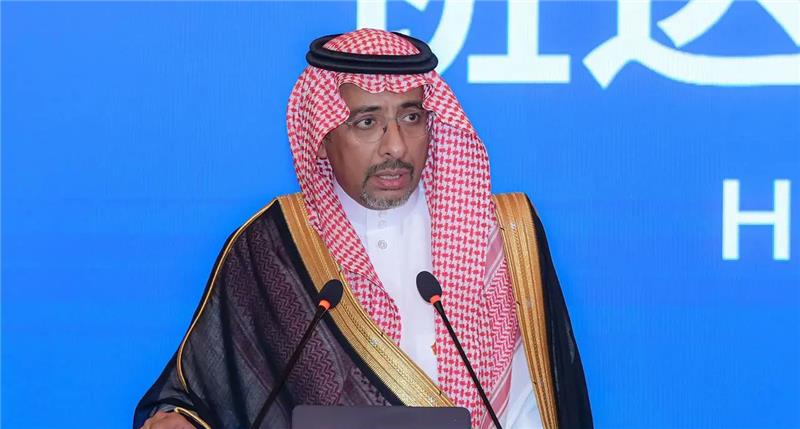
Bandar Alkhorayef,Saudi Minister of Industry and Mineral Resources
SP Global expects Saudi Arabia’s assets under management (AUM) sector to maintain strong momentum, exceeding $500 billion by the end of 2030, subject to market conditions. 
The sector has been expanding in step with the robust performance of the Kingdom’s capital markets.
In a recent report, the agency said Saudi AUM grew at an average annual rate of around 12% between 2015 and 2024, reaching nearly $295 billion by the end of Q1 2025.
Saudi Arabia, it added, continues to enhance the appeal of its asset management industry to local and global investors through a range of initiatives. Ongoing reforms, favorable macroeconomic trends, and the positive outlook for capital markets are expected to support this growth trajectory.
The report highlighted that developing deep, diverse, and transparent capital markets is a key factor in strengthening sovereign creditworthiness, given their role in funding and economic diversification.
Local capital markets, SP Global noted, will benefit from a strong base of institutional investors, rising domestic and international inflows, and higher liquidity. A growing asset management sector will also broaden access for Saudi Arabia’s expanding youth population to a wider range of savings and investment products, potentially lifting long-term savings rates.
Saudi Arabia is also working to position itself as a regional hub for capital inflows by attracting international fund managers, global capital market institutions, and asset managers.
The Kingdom has been collaborating with domestic and international partners to develop exchange-traded funds (ETFs) and real estate investment trusts (REITs), offering investors greater exposure to Saudi assets. In recent years, major institutions have already launched several ETFs to facilitate investment in local securities.
Looking ahead, SP Global expects the increasing number of Saudi ETFs listed abroad to bolster liquidity in secondary markets for core Saudi asset classes, as these funds attract more institutional and retail investors from overseas.
Bandar Alkhorayef,Saudi Minister of Industry and Mineral Resources
SP Global expects Saudi Arabia’s assets under management (AUM) sector to maintain strong momentum, exceeding $500 billion by the end of 2030, subject to market conditions.
The sector has been expanding in step with the robust performance of the Kingdom’s capital markets.
In a recent report, the agency said Saudi AUM grew at an average annual rate of around 12% between 2015 and 2024, reaching nearly $295 billion by the end of Q1 2025.
Saudi Arabia, it added, continues to enhance the appeal of its asset management industry to local and global investors through a range of initiatives. Ongoing reforms, favorable macroeconomic trends, and the positive outlook for capital markets are expected to support this growth trajectory.
The report highlighted that developing deep, diverse, and transparent capital markets is a key factor in strengthening sovereign creditworthiness, given their role in funding and economic diversification.
Local capital markets, SP Global noted, will benefit from a strong base of institutional investors, rising domestic and international inflows, and higher liquidity. A growing asset management sector will also broaden access for Saudi Arabia’s expanding youth population to a wider range of savings and investment products, potentially lifting long-term savings rates.
Saudi Arabia is also working to position itself as a regional hub for capital inflows by attracting international fund managers, global capital market institutions, and asset managers.
The Kingdom has been collaborating with domestic and international partners to develop exchange-traded funds (ETFs) and real estate investment trusts (REITs), offering investors greater exposure to Saudi assets. In recent years, major institutions have already launched several ETFs to facilitate investment in local securities.
Looking ahead, SP Global expects the increasing number of Saudi ETFs listed abroad to bolster liquidity in secondary markets for core Saudi asset classes, as these funds attract more institutional and retail investors from overseas.