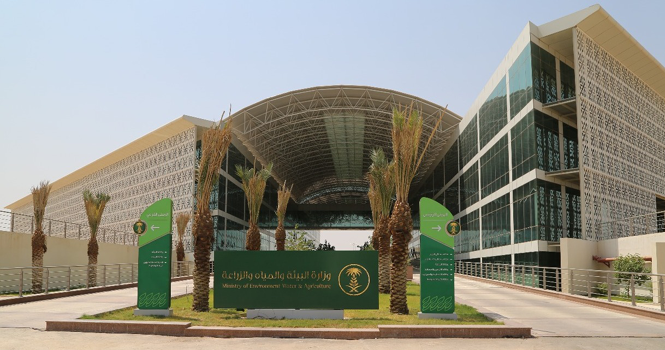
Saudi Arabia’s Ministry of Environment, Water and Agriculture (MEWA) said total agricultural and food production exceeded 16 million tons in 2024, lifting the sector’s contribution to GDP to about $31.5 billion (SAR 118.1 billion).
Speaking at the Saudi Agriculture Exhibition 2025 (Oct. 20–23), Ali Al-Zahrani, Head of National Agriculture Strategy implementation, said the ministry has launched 38 national initiatives under the strategy. The sector has delivered strong gains, with a five-year CAGR of more than 7% in agricultural GDP. Efficient irrigation systems cut the use of non-renewable water in farming by 52% versus 2016, while concessional loans from the Agricultural Development Fund increased by over $1.9 billion.
Al-Zahrani highlighted private-sector opportunities across crop and livestock production, including integrated seedling and seed projects; fruit and vegetable production and processing; intensive livestock farming; aquaculture; and large-scale poultry production for cuts.
He added that domestic fruit output surpassed 2.9 million tons (including dates), with 64% self-sufficiency, relying mainly on open-field systems alongside notable expansion in shaded-house farming. Local vegetable production exceeded 3.5 million tons, achieving 78% self-sufficiency.
Saudi Arabia’s Ministry of Environment, Water and Agriculture (MEWA) said total agricultural and food production exceeded 16 million tons in 2024, lifting the sector’s contribution to GDP to about $31.5 billion (SAR 118.1 billion).
Speaking at the Saudi Agriculture Exhibition 2025 (Oct. 20–23), Ali Al-Zahrani, Head of National Agriculture Strategy implementation, said the ministry has launched 38 national initiatives under the strategy. The sector has delivered strong gains, with a five-year CAGR of more than 7% in agricultural GDP. Efficient irrigation systems cut the use of non-renewable water in farming by 52% versus 2016, while concessional loans from the Agricultural Development Fund increased by over $1.9 billion.
Al-Zahrani highlighted private-sector opportunities across crop and livestock production, including integrated seedling and seed projects; fruit and vegetable production and processing; intensive livestock farming; aquaculture; and large-scale poultry production for cuts.
He added that domestic fruit output surpassed 2.9 million tons (including dates), with 64% self-sufficiency, relying mainly on open-field systems alongside notable expansion in shaded-house farming. Local vegetable production exceeded 3.5 million tons, achieving 78% self-sufficiency.