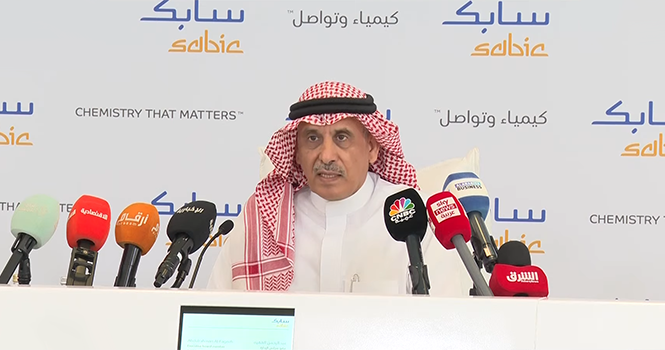
Abdulrahman Al-Fageeh, CEO ofSaudi Basic Industries Corp. (SABIC)
Saudi Basic Industries Corp.’s (SABIC) CEO Abdulrahman Al-Fageeh said the company’s industrial complex in Teesside, UK, includes two facilities, an ethylene cracker and a polyethylene plant, clarifying that the shutdown decision applies only to the cracker unit. 
Speaking to Argaamduring the Q2 2025 earnings conference, Al-Fageeh confirmed that the polyethylene plant in Teesside will remain operational, continuing to serve customers in the UK and Europe, adding that the site’s financial performance will remain positive thanks to ongoing operations.
He noted that SABIC’s petrochemical sales reached 9.9 million metric tons in the second quarter, reflecting a 3% increase from Q1 2025, while total sales volumes stood at 11.8 million metric tons for the same quarter.
Looking ahead, he said SABIC expects demand for end products to remain stable in Q3 2025 across most industrial sectors, while pointing to a notable recovery in demand for industrial solutions, electronics, and electricals, as well as personal care and healthcare segments.
Al-Fageeh revealed that SABIC is currently evaluating strategic options for its subsidiary, National Industrial Gases Company (GAS), including a potential initial public offering. The review forms part of a broader strategy to focus on core operations and enhance value and competitiveness.
As part of its innovation push, SABIC launched over 58 new products in the first half of 2025, reflecting its commitment to offering new industrial solutions.
He added that the Petrochem expansion in Jubail is 95% complete, with a planned annual capacity of 1 million metric tons, and trial operations are set to begin in Q3 2025.
Meanwhile, the SABIC Fujian project in China is progressing according to schedule, with trial operations anticipated in the second half of 2026.
SABIC posted a net loss of SAR 5.28 billion in H1 2025, against a profit of SAR 2.43 billion in the prior-year period. Losses in Q2 alone amounted to SAR 4.1 billion, largely due to exceptional expenses and provisions.
The company said it booked SAR 3.78 billion in impairments and asset write-downs related to the Teesside cracker closure, as part of a broader portfolio review to cut costs and enhance profitability.
Abdulrahman Al-Fageeh, CEO ofSaudi Basic Industries Corp. (SABIC)
Saudi Basic Industries Corp.’s (SABIC) CEO Abdulrahman Al-Fageeh said the company’s industrial complex in Teesside, UK, includes two facilities, an ethylene cracker and a polyethylene plant, clarifying that the shutdown decision applies only to the cracker unit.
Speaking to Argaamduring the Q2 2025 earnings conference, Al-Fageeh confirmed that the polyethylene plant in Teesside will remain operational, continuing to serve customers in the UK and Europe, adding that the site’s financial performance will remain positive thanks to ongoing operations.
He noted that SABIC’s petrochemical sales reached 9.9 million metric tons in the second quarter, reflecting a 3% increase from Q1 2025, while total sales volumes stood at 11.8 million metric tons for the same quarter.
Looking ahead, he said SABIC expects demand for end products to remain stable in Q3 2025 across most industrial sectors, while pointing to a notable recovery in demand for industrial solutions, electronics, and electricals, as well as personal care and healthcare segments.
Al-Fageeh revealed that SABIC is currently evaluating strategic options for its subsidiary, National Industrial Gases Company (GAS), including a potential initial public offering. The review forms part of a broader strategy to focus on core operations and enhance value and competitiveness.
As part of its innovation push, SABIC launched over 58 new products in the first half of 2025, reflecting its commitment to offering new industrial solutions.
He added that the Petrochem expansion in Jubail is 95% complete, with a planned annual capacity of 1 million metric tons, and trial operations are set to begin in Q3 2025.
Meanwhile, the SABIC Fujian project in China is progressing according to schedule, with trial operations anticipated in the second half of 2026.
SABIC posted a net loss of SAR 5.28 billion in H1 2025, against a profit of SAR 2.43 billion in the prior-year period. Losses in Q2 alone amounted to SAR 4.1 billion, largely due to exceptional expenses and provisions.
The company said it booked SAR 3.78 billion in impairments and asset write-downs related to the Teesside cracker closure, as part of a broader portfolio review to cut costs and enhance profitability.