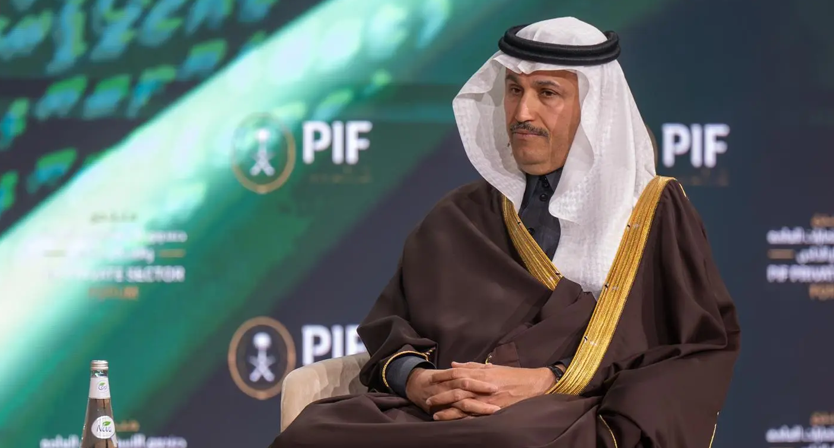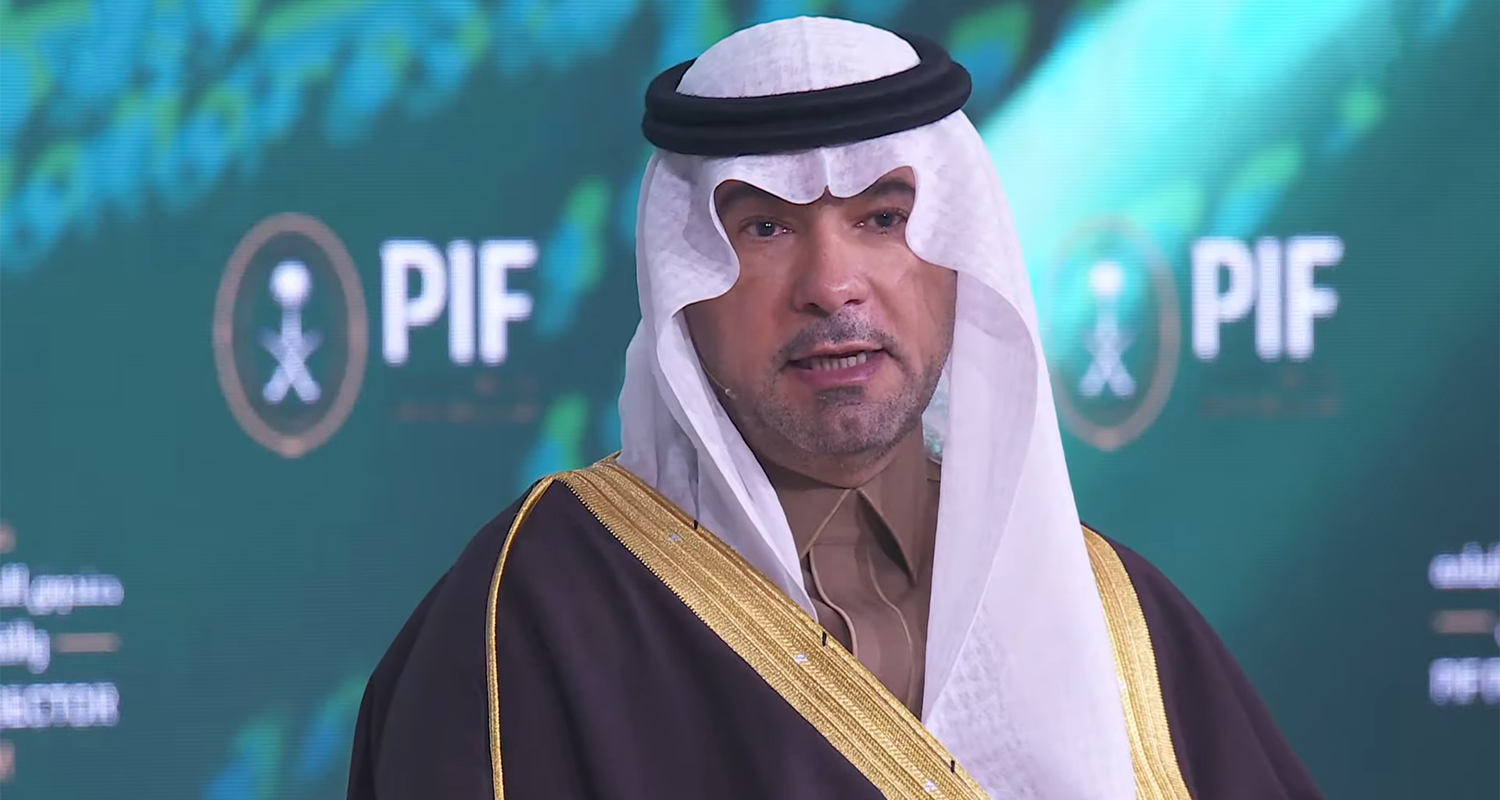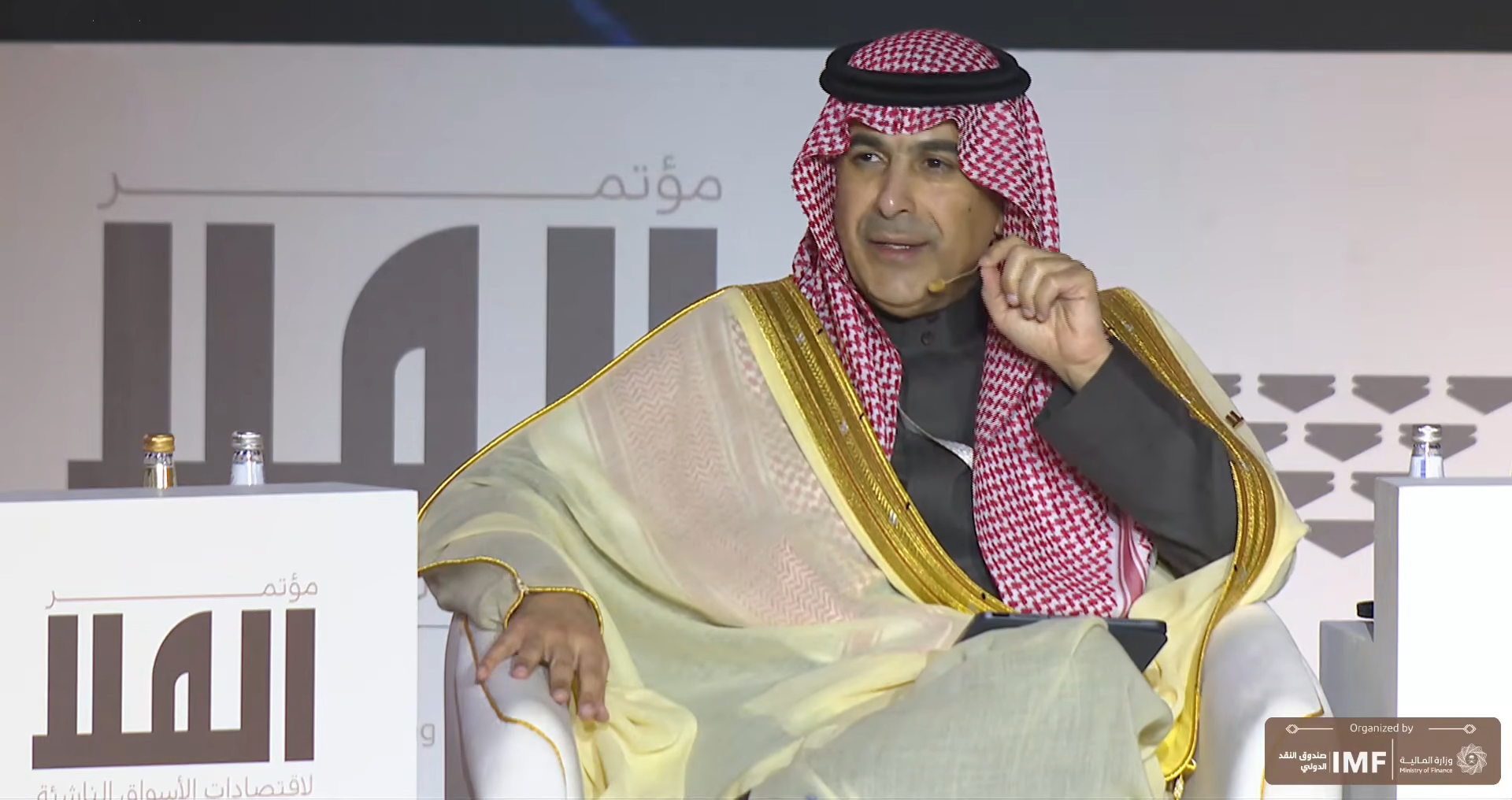
Ayman Al-Sayari, Saudi Central Bank’s (SAMA) Governor
Maintaining the peg of the Saudi riyal to the US dollar—backed by substantial foreign currency reserves—has helped preserve domestic price stability, with average annual inflation in the Kingdom remaining below 3% over the past five years, said Ayman Al-Sayari, Saudi Central Bank’s (SAMA) Governor. 
These remarks came during Al-Sayari’s participation at a panel discussion titled “Implications of Global Uncertainty on International Monetary and Financial Systems” as part of the AlUla Conference for Emerging Market Economies 2026.
Al-Sayari also pointed out that rising global uncertainty has become structural rather than temporary, driven by geopolitical fragmentation, rapid technological shifts, commodity price volatility, and the expansion of non-banking financial brokerage whose assets now account for more than 50% of global financial assets.
He added that geopolitical tensions, trade fragmentation, and high debt levels are among the most significant and influential challenges facing policymakers in emerging markets.
Moreover, Saudi Arabia’s experience underscores the importance of maintaining adequate reserves and integrated monetary and fiscal policy frameworks to safeguard monetary and financial stability. Policymakers should prioritize enhancing the quality of data-driven supervisory reporting, reinforcing unified standards, ensuring interoperability when prudently adopting emerging technologies, and accelerating knowledge and expertise exchange across regulatory systems to strengthen effective cross-border cooperation, said Al-Sayari.
The Saudi riyal has been pegged at a fixed exchange rate of SAR 3.75 per US dollar since 1986.
According to Argaam’s data, the average annual consumer inflation rate in Saudi Arabia rose to 2% in 2025, compared to the annual average in 2024.
Ayman Al-Sayari, Saudi Central Bank’s (SAMA) Governor
Maintaining the peg of the Saudi riyal to the US dollar—backed by substantial foreign currency reserves—has helped preserve domestic price stability, with average annual inflation in the Kingdom remaining below 3% over the past five years, said Ayman Al-Sayari, Saudi Central Bank’s (SAMA) Governor.
These remarks came during Al-Sayari’s participation at a panel discussion titled “Implications of Global Uncertainty on International Monetary and Financial Systems” as part of the AlUla Conference for Emerging Market Economies 2026.
Al-Sayari also pointed out that rising global uncertainty has become structural rather than temporary, driven by geopolitical fragmentation, rapid technological shifts, commodity price volatility, and the expansion of non-banking financial brokerage whose assets now account for more than 50% of global financial assets.
He added that geopolitical tensions, trade fragmentation, and high debt levels are among the most significant and influential challenges facing policymakers in emerging markets.
Moreover, Saudi Arabia’s experience underscores the importance of maintaining adequate reserves and integrated monetary and fiscal policy frameworks to safeguard monetary and financial stability. Policymakers should prioritize enhancing the quality of data-driven supervisory reporting, reinforcing unified standards, ensuring interoperability when prudently adopting emerging technologies, and accelerating knowledge and expertise exchange across regulatory systems to strengthen effective cross-border cooperation, said Al-Sayari.
The Saudi riyal has been pegged at a fixed exchange rate of SAR 3.75 per US dollar since 1986.
According to Argaam’s data, the average annual consumer inflation rate in Saudi Arabia rose to 2% in 2025, compared to the annual average in 2024.