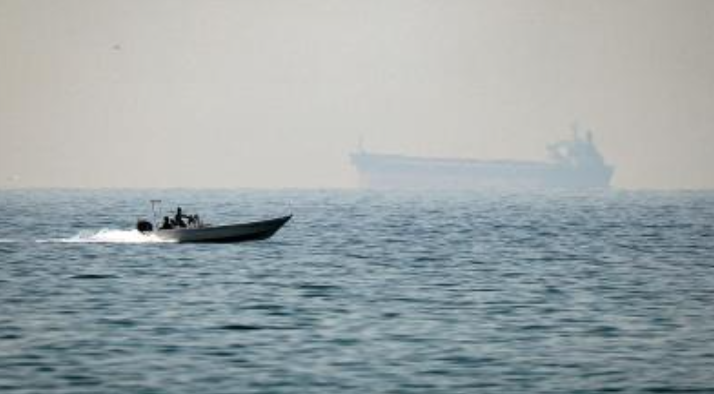
At least three oil tankers were targeted near the Strait of Hormuz on March 1, as Iranian attacks continued across the Middle East in response to US and Israeli military operations against Tehran.
The UK Maritime Trade Operations (UKMTO) reported that two vessels were attacked, while an “unknown projectile” exploded in close proximity to a third ship, stating that the regional security situation remains volatile amid ongoing military activity and persistent threats to commercial shipping.
According to reports, international navigation nearly came to a halt at the entrance of the strait, with analysts warning that continued escalation could push energy prices higher. Brent crude touched $82 before easing to $78 per barrel.
Moreover, Reuters reported on March 1, citing shipping data, that at least 150 vessels, including tankers carrying crude oil and liquefied natural gas, halted in open waters of the Arabian Gulf outside the Strait of Hormuz.
It added that dozens of additional ships and tankers stopped on the opposite side of the strait as attacks in the region continued.
Bloomberg noted digital tracking signals indicated that oil tanker traffic through the strait, which carries about 20% of global seaborne oil and a similar share of liquefied natural gas, may have come to a complete stop.
In a separate statement, UKMTO said no official closure of the Strait of Hormuz had been announced through formal legal channels, noting that radio communications do not constitute a legally recognized closure, in reference to a message attributed to Iran’s Revolutionary Guard warning vessels against crossing the strait.
At least three oil tankers were targeted near the Strait of Hormuz on March 1, as Iranian attacks continued across the Middle East in response to US and Israeli military operations against Tehran.
The UK Maritime Trade Operations (UKMTO) reported that two vessels were attacked, while an “unknown projectile” exploded in close proximity to a third ship, stating that the regional security situation remains volatile amid ongoing military activity and persistent threats to commercial shipping.
According to reports, international navigation nearly came to a halt at the entrance of the strait, with analysts warning that continued escalation could push energy prices higher. Brent crude touched $82 before easing to $78 per barrel.
Moreover, Reuters reported on March 1, citing shipping data, that at least 150 vessels, including tankers carrying crude oil and liquefied natural gas, halted in open waters of the Arabian Gulf outside the Strait of Hormuz.
It added that dozens of additional ships and tankers stopped on the opposite side of the strait as attacks in the region continued.
Bloomberg noted digital tracking signals indicated that oil tanker traffic through the strait, which carries about 20% of global seaborne oil and a similar share of liquefied natural gas, may have come to a complete stop.
In a separate statement, UKMTO said no official closure of the Strait of Hormuz had been announced through formal legal channels, noting that radio communications do not constitute a legally recognized closure, in reference to a message attributed to Iran’s Revolutionary Guard warning vessels against crossing the strait.