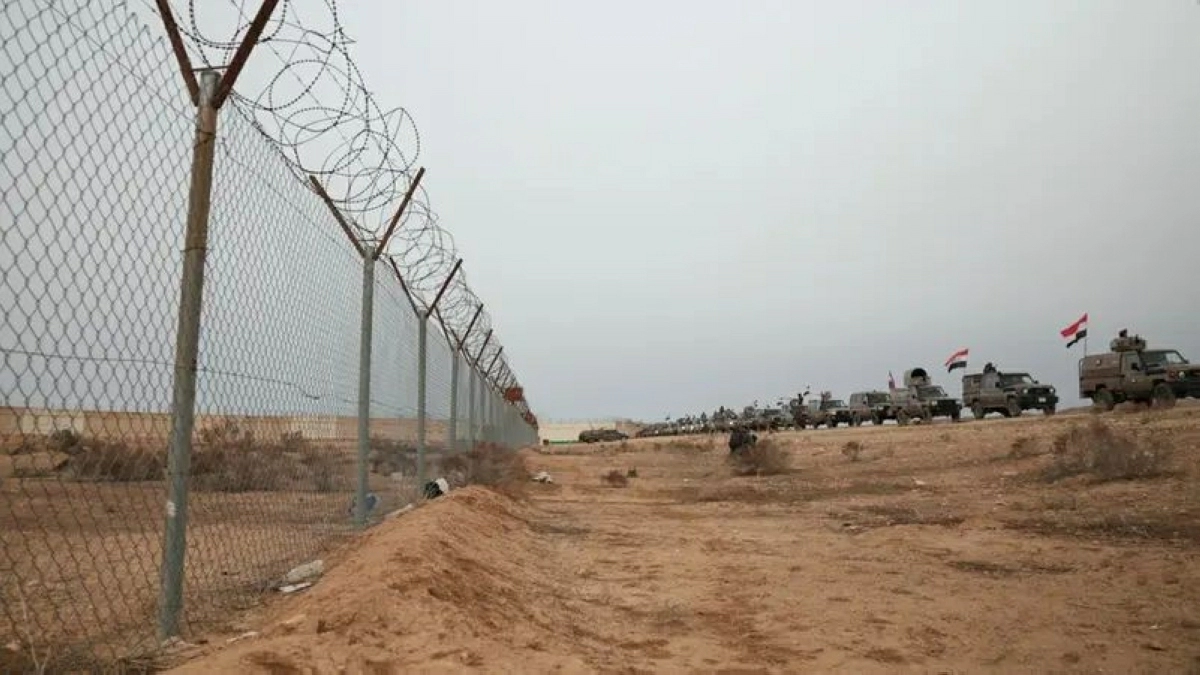
BAGHDAD — Iraq has closed two border crossings with Syria and Iran that had been administered by the Kurdistan Regional Government, state media reported, as Baghdad moves to assert more control over the semi-autonomous region.The Al-Waleed crossing with Syria and the Bashta crossing with Iran have been closed, commander of Iraq’s border forces Lt. Gen. Mohammed Abdul Wahab Sukkar al-Saidi told the Iraqi News Agency.The closures follow a ruling by Iraq’s highest court on Wednesday allowing Baghdad to deploy federal forces along all international borders, including in the Kurdistan region.Prime Minister Ali Al-Zaidi on Tuesday ordered federal authorities to take over crossings run by the KRG, part of a broader push by Baghdad to strengthen central control over strategic assets, including oil fields controlled by Kurdish security forces.Lt. Gen. al-Saidi identified the crossings as Al-Waleed, on the Iraqi-Syrian border north of Rabia, and Sartak Pashta, on the border with Iran in Iraq’s Halabja province.Al-Waleed connects Iraq’s northern Kurdish region with northeastern Syria near the town of Al-Malikiyah in Hasakah province.Sartak Pashta is an unofficial crossing on the Iraqi-Iranian border that had been operated locally by Kurdish regional authorities.Separately, a local source told INA that the Shushmi border crossing between Iran and the Kurdish region could also be closed in the coming days.The source did not specify when the crossing might close. Shushmi is among the crossings not officially recognized by the federal government in Baghdad.Earlier Thursday, the Border Forces Command announced that it had begun implementing al-Zaidi’s directive to close all unofficial border crossings with neighboring countries.Al-Saidi told INA that the command had “begun implementing the directive of the commander-in-chief of the armed forces to close all unofficial crossings.”He initially did not specify how many crossings would be affected.Al-Saidi said the Border Forces Command was “responsible for securing the country’s border areas, while the Border Ports Authority oversees official crossings.”Describing border security measures, he said Iraq had achieved “excellent levels of control” along its borders with Syria, Jordan, Saudi Arabia, Kuwait and Iran.He attributed a decline in infiltration, smuggling and the irregular entry of foreign workers into Iraq to the “use of smart surveillance technologies, increased readiness among border units and stronger coordination with neighboring countries.”Al-Saidi described the results as “unprecedented” in Iraq’s history but provided no figures on the extent of the decline.He said Iraqi border forces were responsible for securing 600 kilometers of the border with Syria and operated across six sectors, with customs police also part of the command.Al-Zaidi ordered the closure of unofficial border crossings after reviewing a report by an investigative committee examining oil-smuggling activities at the state-run North Oil Company, which is affiliated with the federal Oil Ministry.His decisions also included the dismissal or removal of eight security and administrative officials, including the commanders of Kirkuk Operations and Kirkuk Police and the head of the Border Ports Authority. He also ordered that violations be referred to the judiciary.
Keep Up to Date with our Weekly Newsletter