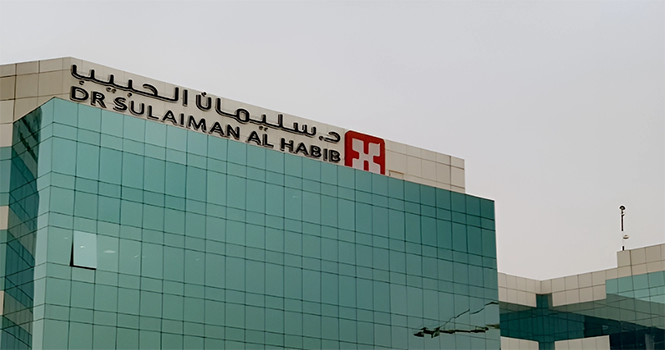
Logo ofDr. Sulaiman Al Habib Medical Services Group
Dr. Sulaiman Al Habib Medical Services Group expects a financial impact from the implementation of the proposed Domestic Minimum Top-up Tax (DMTT), which is scheduled to take effect on Jan. 1, 2027. 
In a statement on Tadawul, the company said its preliminary review of the draft law showed that it meets the criteria for application to multinational corporations (MNCs), under which it would be subject to a minimum effective tax rate of 15%.
The company added that the Zakat it currently pays in Saudi Arabia, along with other qualifying deductions, will be included among the covered taxes when calculating the effective tax rate under the draft law.
The healthcare service provider is currently completing its assessment of the expected financial impact, which has not yet been finalized and depends on several qualifying deductions.
The actual financial impact will depend on the final version of the law and its implementing regulations, the financial results of the group’s entities in Saudi Arabia, the group’s structure, and its effective tax rate in the Kingdom for the relevant fiscal year.
Any material developments will be released in due course, the statement said.
According to Argaam data, the Zakat, Tax and Customs Authority (ZATCA) announced, on Nov. 19, that DMTT will apply to entities belonging to MNCs with annual consolidated revenue of at least €750 million, or approximately SAR 3.1 billion, in at least two of the four fiscal years preceding the year of implementation.
Logo ofDr. Sulaiman Al Habib Medical Services Group
Dr. Sulaiman Al Habib Medical Services Group expects a financial impact from the implementation of the proposed Domestic Minimum Top-up Tax (DMTT), which is scheduled to take effect on Jan. 1, 2027.
In a statement on Tadawul, the company said its preliminary review of the draft law showed that it meets the criteria for application to multinational corporations (MNCs), under which it would be subject to a minimum effective tax rate of 15%.
The company added that the Zakat it currently pays in Saudi Arabia, along with other qualifying deductions, will be included among the covered taxes when calculating the effective tax rate under the draft law.
The healthcare service provider is currently completing its assessment of the expected financial impact, which has not yet been finalized and depends on several qualifying deductions.
The actual financial impact will depend on the final version of the law and its implementing regulations, the financial results of the group’s entities in Saudi Arabia, the group’s structure, and its effective tax rate in the Kingdom for the relevant fiscal year.
Any material developments will be released in due course, the statement said.
According to Argaam data, the Zakat, Tax and Customs Authority (ZATCA) announced, on Nov. 19, that DMTT will apply to entities belonging to MNCs with annual consolidated revenue of at least €750 million, or approximately SAR 3.1 billion, in at least two of the four fiscal years preceding the year of implementation.