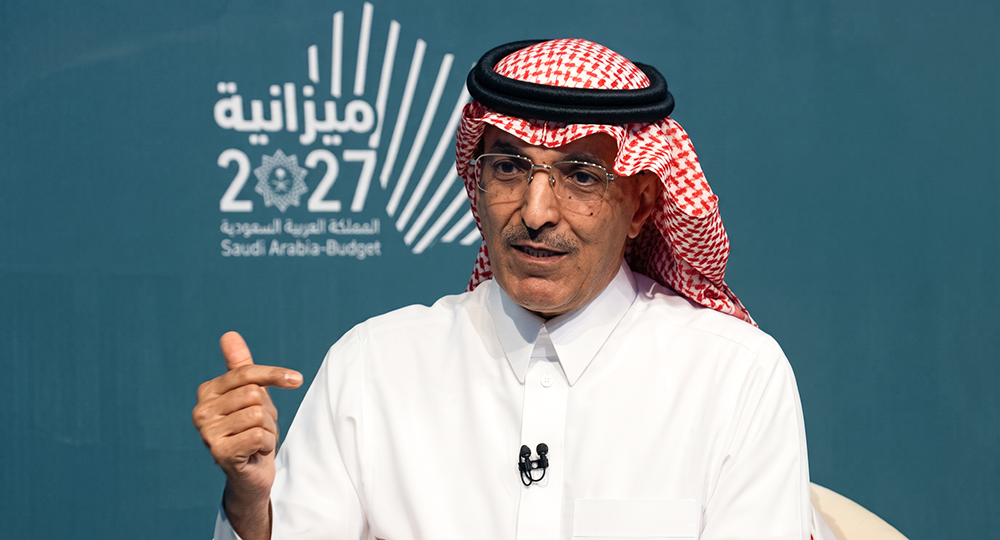
Minister of Finance Mohammed Aljadaan 
Non-oil revenues are a key pillar of public finance stability, accounting for approximately 37% of total government spending, up from 16% in previous years, Minister of Finance Mohammed Aljadaan said.
Speaking at the Budget 2027 Forum, Aljadaan said this helps reduce the impact of fluctuations in oil revenues on government spending, contributing to greater stability in public expenditure and enhancing the government’s ability to plan over the medium term.
He noted that the Saudi economy has faced numerous challenges over the past decades, but the Kingdom has consistently emerged from previous crises stronger than before, thanks to the development of its institutional capabilities, particularly since the launch of Saudi Vision 2030.
Aljadaan stated that the current challenges, whether stemming from geopolitical tensions in the region or disruptions to global supply chains, are not the first of their kind to confront the Kingdom.
Saudi Arabia has previously navigated even greater challenges, including regional wars and the COVID-19 pandemic.
He added that over the past decade, the government has significantly improved its ability to manage crises and changing circumstances, make swift decisions, analyze various scenarios, and leverage available infrastructure.
The Kingdom has also learned lessons from previous crises and developed robust infrastructure capable of withstanding shocks. This is reflected in the continued growth of non-oil Gross Domestic Product (GDP) despite global and regional challenges, he said.
Aljadaan stressed that the non-oil economy, consumption, and private sector investment continue to grow despite these challenges, supported by the government’s ability to manage crises, mitigate their impact, and help the private sector navigate them.
Minister of Finance Mohammed Aljadaan
Non-oil revenues are a key pillar of public finance stability, accounting for approximately 37% of total government spending, up from 16% in previous years, Minister of Finance Mohammed Aljadaan said.
Speaking at the Budget 2027 Forum, Aljadaan said this helps reduce the impact of fluctuations in oil revenues on government spending, contributing to greater stability in public expenditure and enhancing the government’s ability to plan over the medium term.
He noted that the Saudi economy has faced numerous challenges over the past decades, but the Kingdom has consistently emerged from previous crises stronger than before, thanks to the development of its institutional capabilities, particularly since the launch of Saudi Vision 2030.
Aljadaan stated that the current challenges, whether stemming from geopolitical tensions in the region or disruptions to global supply chains, are not the first of their kind to confront the Kingdom.
Saudi Arabia has previously navigated even greater challenges, including regional wars and the COVID-19 pandemic.
He added that over the past decade, the government has significantly improved its ability to manage crises and changing circumstances, make swift decisions, analyze various scenarios, and leverage available infrastructure.
The Kingdom has also learned lessons from previous crises and developed robust infrastructure capable of withstanding shocks. This is reflected in the continued growth of non-oil Gross Domestic Product (GDP) despite global and regional challenges, he said.
Aljadaan stressed that the non-oil economy, consumption, and private sector investment continue to grow despite these challenges, supported by the government’s ability to manage crises, mitigate their impact, and help the private sector navigate them.