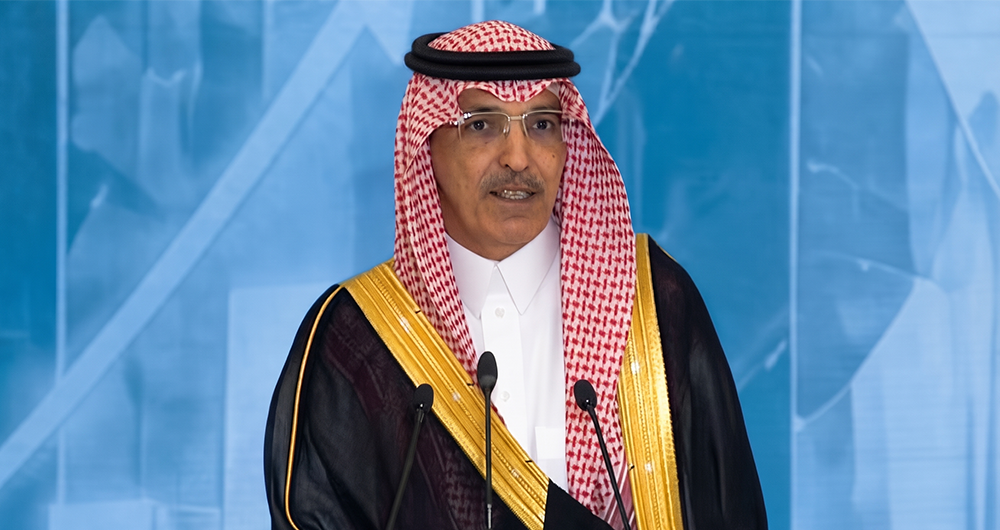
Saudi Finance Minister Mohammed Al-Jadaan
Saudi Finance Minister Mohammed Al-Jadaan said the Domestic Minimum Top-up Tax (DMTT) will generate no revenue in 2027, when it comes into effect, as companies will file their tax returns in 2028. 
In an interview with Al Arabiya, Al-Jadaan said the tax applies to a very limited number of companies in Saudi Arabia, estimated at between 40 and 50, with revenues exceeding EUR 750 million and operations in more than one country.
He said companies subject to the tax would have to pay it in the countries where they operate outside Saudi Arabia if they did not pay it in the Kingdom.
Al-Jadaan said the tax was not primarily intended to generate revenue and that its proceeds would be limited.
He added that Saudi Arabia did not want companies to pay more tax than necessary in other countries instead of paying it in the Kingdom. The tax burden would be very limited and would have no significant impact on government revenues, even in 2028.
Saudi Finance Minister Mohammed Al-Jadaan
Saudi Finance Minister Mohammed Al-Jadaan said the Domestic Minimum Top-up Tax (DMTT) will generate no revenue in 2027, when it comes into effect, as companies will file their tax returns in 2028.
In an interview with Al Arabiya, Al-Jadaan said the tax applies to a very limited number of companies in Saudi Arabia, estimated at between 40 and 50, with revenues exceeding EUR 750 million and operations in more than one country.
He said companies subject to the tax would have to pay it in the countries where they operate outside Saudi Arabia if they did not pay it in the Kingdom.
Al-Jadaan said the tax was not primarily intended to generate revenue and that its proceeds would be limited.
He added that Saudi Arabia did not want companies to pay more tax than necessary in other countries instead of paying it in the Kingdom. The tax burden would be very limited and would have no significant impact on government revenues, even in 2028.