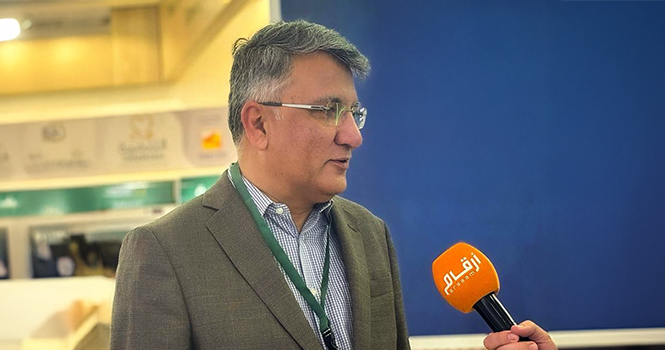
Logo ofZulfiqar Hamadani, CEO of Tanmiah Food Company
Zulfiqar Hamadani, CEO of Tanmiah Food Company, said the company expects to reach near-full processing capacity at its Al-Majmaah 2 plant in 2027, as assets across the value chain become fully operational. 
In an interview with Argaam, he noted that higher capacity utilization rates will help reduce production costs per bird and support profit margins.
He added that the company aims to break even in its Popeyes restaurant segment in 2027, focusing on increasing in-store sales, which generate higher profit margins than orders placed through delivery platforms.
Q3 Results and Cost Pressures
Hamadani said higher production, diesel, feed, logistics and insurance costs, amid pressure on regional supply chains, were the main challenges facing the company in Q3 2026. These factors led to a decline in the gross profit margin from 22.4% to 21.9%, he said.
The CEO explained that Tanmiah offset some cost pressures through commercial gains, including approximately SAR 43 million from higher net selling prices and a better distribution channel mix, plus SAR 29 million from higher sales volumes and an improved product mix.
“We took early measures to protect supplies and mitigate the impact of rising costs. These included purchasing grain in advance and centralizing procurement across the group, as well as signing grain storage and supply agreements with SABIL and National Grain Company (NGC),” said Hamadani.
He added that the company also worked to optimize distribution routes, limiting the increase in selling and distribution expenses to 11% during the quarter, compared with revenue growth of 27%.
Selling and distribution costs, along with administrative expenses, also declined by SAR 6.3 million compared with the second quarter. Financing costs fell by 8.7% quarter-on-quarter (QoQ) following the refinancing of higher-cost debt.
Hamadani expressed satisfaction with the company’s Q3 2026 results, given the operational challenges faced during the quarter. He noted that net profit attributable to shareholders reached SAR 5.4 million, compared to a net loss of SAR 15.8 million in the same period last year.
He explained that the agriculture business segment returned to profitability in Q3 2026, supported by higher sales volumes and prices for fresh poultry, as well as the performance of the animal feed and health products business, whose revenue nearly doubled.
Net profit attributable to shareholders in 9M 2026 increased more than sixfold to SAR 23.2 million, despite the company incurring additional depreciation and financing costs of SAR 34 million related to assets still gradually ramping up toward full production capacity.
Poultry Sales and Domestic Market Prices
Hamadani said the company’s sales volumes of fresh and frozen poultry increased from 42.2 million birds in Q2 2026 to 44.4 million birds in Q3 2026. These figures do not include value-added products, which also recorded strong growth following the launch of the company’s latest product range in December 2025.
He added that the company does not disclose specific selling prices. However, pricing trends came under severe pressure in the second half of 2025 before gradually improving in the first half of 2026. Frozen poultry prices also rose sharply for a limited period as regional developments affected supply chains.
Poultry prices declined in Q3 2026 compared to the previous quarter, in line with normal seasonal trends. Market conditions are expected to improve as winter approaches, although the extent of the recovery will depend partly on a return to regional stability.
The CEO noted that poultry demand in the Kingdom remains stable, with consumption continuing to grow. However, the market has experienced a supply surplus for some time, as domestic producers expanded production capacity to support the Kingdom’s self-sufficiency targets and imports continued, keeping prices under pressure.
Hamadani expects government measures supporting domestic producers’ efforts to achieve food self-sufficiency to help rebalance the market and support prices.
Al-Majmaah 2 Plant and Production Capacity
The Al-Majmaah 2 primary processing plant began operations in Q3 2025 and is one of the last major projects under the company’s investment program. This year, the company has focused on generating greater returns from this investment, Hamadani said.
He added that the group’s average daily production increased by 6.6% to 602,000 birds during the first nine months of the year, up nearly 20% from its level two years ago.
The company deliberately began operating Al-Majmaah 2 on a single-shift basis while transferring production volumes from older, less efficient facilities. The second shift was added in October.
Some other assets across the value chain, which were scheduled to become operational alongside the plant, were delayed due to travel restrictions and geopolitical developments in the region.
Hamadani stressed that once the assets linked to the plant become fully operational, the company will be able to run the production chain at full capacity. It expects to reach levels close to the plant’s full processing capacity during 2027.
Higher capacity utilization will help spread fixed costs, such as depreciation, across more birds, reducing production costs per bird and supporting profit margins, he added.
Plans to Reduce Energy Costs
Hamadani said approximately 90% of the poultry farm incinerators currently operate on liquefied petroleum gas (LPG) instead of diesel. The solar power project in Haradh is expected to begin operations by the end of 2026 under a power purchase agreement that requires no capital expenditure from the company. Four additional sites have also been approved for the project.
He added that, subject to final approvals, the company plans to expand the use of geothermal cooling technology, tested at its Shaqra plant, to include the Al-Majmaah 2 facility in 2027. The expansion will require no capital expenditure and is expected to further reduce energy and water costs.
Exports and Expansion into International Markets
Hamadani said exports are growing rapidly, with revenue from markets outside the Kingdom more than doubling in Q3 2026. Revenue from these markets increased by 71% in the first nine months of 2026 to SAR 243.6 million.
He added that the company signed a memorandum of understanding with Tradewinds last September to explore opportunities in the halal protein market in Malaysia and the Asia-Pacific region.
The partnership is not limited to entering new markets, but also allows the company to benefit from differences in demand patterns for poultry cuts. Certain cuts, such as dark meat, are less in demand in the domestic market but more highly valued in Asian markets. This enables the company to sell different parts of each bird in the markets where they can command the best prices.
Popeyes Restaurants Target Break-Even in 2027
Hamadani said the turnaround in Popeyes restaurants is progressing as planned, with losses from restaurant operations continuing to decline.
The turnaround plan focuses on increasing branch footfall and strengthening customer loyalty to the brand. He added that Q3 2026 saw growth in both transaction volumes and like-for-like sales, supported by a series of promotional campaigns launched since mid-December 2025.
The CEO stated that achieving break-even requires higher in-store sales, which generate better profit margins than orders placed through delivery platforms. These currently account for approximately 57% of the segment’s business.
“We aim to achieve break-even in the restaurant segment during 2027, in line with our previous guidance during the earnings call,” he confirmed. He also noted plans to open four new Popeyes branches over the next two quarters.
Q4 Outlook and Company Priorities
Hamadani explained that Tanmiah does not provide earnings guidance, but expects cost pressures to persist for some time amid continued supply chain challenges and higher energy and other input prices, which are reshaping parts of its cost base.
He noted that Q4 2026 is seasonally stronger than Q3, as lower temperatures support poultry demand and consumers tend to dine out more frequently, benefiting the restaurant segment.
Hamadani said Ramadan will fall in Q1 2027, which is not expected to have a material impact on Q4 results.
He stressed that Tanmiah’s priorities include increasing processing capacity utilization, continuing to improve its product and sales channel mix, strengthening growth in GCC markets and reducing its cost base.
“We are focused on maximizing the use of our existing production capacity, expanding sales through higher-return channels, accelerating the launch of healthier value-added products that better meet market needs, and strengthening partnerships across the region and beyond,” the CEO said.
Hamadani also noted that the company’s recently opened innovation center provides in-house capabilities to develop and test products more quickly. He affirmed that Tanmiah will continue pursuing these priorities without compromising the quality standards customers expect.
He explained that the Al-Dahna feed mill, which began operations toward the end of Q3 2026, is gradually ramping up production.
Input costs and regional conditions remain uncertain, the CEO said, underscoring the company’s continued commitment to disciplined cost management and capital expenditure.
According to Argaam data, Tanmiah’s profit rose to SAR 23.2 million in 9M 2026, up 544% from SAR 3.6 million in the same period a year earlier. Q3 profit amounted to SAR 5.4 million.
Logo ofZulfiqar Hamadani, CEO of Tanmiah Food Company
Zulfiqar Hamadani, CEO of Tanmiah Food Company, said the company expects to reach near-full processing capacity at its Al-Majmaah 2 plant in 2027, as assets across the value chain become fully operational.
In an interview with Argaam, he noted that higher capacity utilization rates will help reduce production costs per bird and support profit margins.
He added that the company aims to break even in its Popeyes restaurant segment in 2027, focusing on increasing in-store sales, which generate higher profit margins than orders placed through delivery platforms.
Q3 Results and Cost Pressures
Hamadani said higher production, diesel, feed, logistics and insurance costs, amid pressure on regional supply chains, were the main challenges facing the company in Q3 2026. These factors led to a decline in the gross profit margin from 22.4% to 21.9%, he said.
The CEO explained that Tanmiah offset some cost pressures through commercial gains, including approximately SAR 43 million from higher net selling prices and a better distribution channel mix, plus SAR 29 million from higher sales volumes and an improved product mix.
“We took early measures to protect supplies and mitigate the impact of rising costs. These included purchasing grain in advance and centralizing procurement across the group, as well as signing grain storage and supply agreements with SABIL and National Grain Company (NGC),” said Hamadani.
He added that the company also worked to optimize distribution routes, limiting the increase in selling and distribution expenses to 11% during the quarter, compared with revenue growth of 27%.
Selling and distribution costs, along with administrative expenses, also declined by SAR 6.3 million compared with the second quarter. Financing costs fell by 8.7% quarter-on-quarter (QoQ) following the refinancing of higher-cost debt.
Hamadani expressed satisfaction with the company’s Q3 2026 results, given the operational challenges faced during the quarter. He noted that net profit attributable to shareholders reached SAR 5.4 million, compared to a net loss of SAR 15.8 million in the same period last year.
He explained that the agriculture business segment returned to profitability in Q3 2026, supported by higher sales volumes and prices for fresh poultry, as well as the performance of the animal feed and health products business, whose revenue nearly doubled.
Net profit attributable to shareholders in 9M 2026 increased more than sixfold to SAR 23.2 million, despite the company incurring additional depreciation and financing costs of SAR 34 million related to assets still gradually ramping up toward full production capacity.
Poultry Sales and Domestic Market Prices
Hamadani said the company’s sales volumes of fresh and frozen poultry increased from 42.2 million birds in Q2 2026 to 44.4 million birds in Q3 2026. These figures do not include value-added products, which also recorded strong growth following the launch of the company’s latest product range in December 2025.
He added that the company does not disclose specific selling prices. However, pricing trends came under severe pressure in the second half of 2025 before gradually improving in the first half of 2026. Frozen poultry prices also rose sharply for a limited period as regional developments affected supply chains.
Poultry prices declined in Q3 2026 compared to the previous quarter, in line with normal seasonal trends. Market conditions are expected to improve as winter approaches, although the extent of the recovery will depend partly on a return to regional stability.
The CEO noted that poultry demand in the Kingdom remains stable, with consumption continuing to grow. However, the market has experienced a supply surplus for some time, as domestic producers expanded production capacity to support the Kingdom’s self-sufficiency targets and imports continued, keeping prices under pressure.
Hamadani expects government measures supporting domestic producers’ efforts to achieve food self-sufficiency to help rebalance the market and support prices.
Al-Majmaah 2 Plant and Production Capacity
The Al-Majmaah 2 primary processing plant began operations in Q3 2025 and is one of the last major projects under the company’s investment program. This year, the company has focused on generating greater returns from this investment, Hamadani said.
He added that the group’s average daily production increased by 6.6% to 602,000 birds during the first nine months of the year, up nearly 20% from its level two years ago.
The company deliberately began operating Al-Majmaah 2 on a single-shift basis while transferring production volumes from older, less efficient facilities. The second shift was added in October.
Some other assets across the value chain, which were scheduled to become operational alongside the plant, were delayed due to travel restrictions and geopolitical developments in the region.
Hamadani stressed that once the assets linked to the plant become fully operational, the company will be able to run the production chain at full capacity. It expects to reach levels close to the plant’s full processing capacity during 2027.
Higher capacity utilization will help spread fixed costs, such as depreciation, across more birds, reducing production costs per bird and supporting profit margins, he added.
Plans to Reduce Energy Costs
Hamadani said approximately 90% of the poultry farm incinerators currently operate on liquefied petroleum gas (LPG) instead of diesel. The solar power project in Haradh is expected to begin operations by the end of 2026 under a power purchase agreement that requires no capital expenditure from the company. Four additional sites have also been approved for the project.
He added that, subject to final approvals, the company plans to expand the use of geothermal cooling technology, tested at its Shaqra plant, to include the Al-Majmaah 2 facility in 2027. The expansion will require no capital expenditure and is expected to further reduce energy and water costs.
Exports and Expansion into International Markets
Hamadani said exports are growing rapidly, with revenue from markets outside the Kingdom more than doubling in Q3 2026. Revenue from these markets increased by 71% in the first nine months of 2026 to SAR 243.6 million.
He added that the company signed a memorandum of understanding with Tradewinds last September to explore opportunities in the halal protein market in Malaysia and the Asia-Pacific region.
The partnership is not limited to entering new markets, but also allows the company to benefit from differences in demand patterns for poultry cuts. Certain cuts, such as dark meat, are less in demand in the domestic market but more highly valued in Asian markets. This enables the company to sell different parts of each bird in the markets where they can command the best prices.
Popeyes Restaurants Target Break-Even in 2027
Hamadani said the turnaround in Popeyes restaurants is progressing as planned, with losses from restaurant operations continuing to decline.
The turnaround plan focuses on increasing branch footfall and strengthening customer loyalty to the brand. He added that Q3 2026 saw growth in both transaction volumes and like-for-like sales, supported by a series of promotional campaigns launched since mid-December 2025.
The CEO stated that achieving break-even requires higher in-store sales, which generate better profit margins than orders placed through delivery platforms. These currently account for approximately 57% of the segment’s business.
“We aim to achieve break-even in the restaurant segment during 2027, in line with our previous guidance during the earnings call,” he confirmed. He also noted plans to open four new Popeyes branches over the next two quarters.
Q4 Outlook and Company Priorities
Hamadani explained that Tanmiah does not provide earnings guidance, but expects cost pressures to persist for some time amid continued supply chain challenges and higher energy and other input prices, which are reshaping parts of its cost base.
He noted that Q4 2026 is seasonally stronger than Q3, as lower temperatures support poultry demand and consumers tend to dine out more frequently, benefiting the restaurant segment.
Hamadani said Ramadan will fall in Q1 2027, which is not expected to have a material impact on Q4 results.
He stressed that Tanmiah’s priorities include increasing processing capacity utilization, continuing to improve its product and sales channel mix, strengthening growth in GCC markets and reducing its cost base.
“We are focused on maximizing the use of our existing production capacity, expanding sales through higher-return channels, accelerating the launch of healthier value-added products that better meet market needs, and strengthening partnerships across the region and beyond,” the CEO said.
Hamadani also noted that the company’s recently opened innovation center provides in-house capabilities to develop and test products more quickly. He affirmed that Tanmiah will continue pursuing these priorities without compromising the quality standards customers expect.
He explained that the Al-Dahna feed mill, which began operations toward the end of Q3 2026, is gradually ramping up production.
Input costs and regional conditions remain uncertain, the CEO said, underscoring the company’s continued commitment to disciplined cost management and capital expenditure.
According to Argaam data, Tanmiah’s profit rose to SAR 23.2 million in 9M 2026, up 544% from SAR 3.6 million in the same period a year earlier. Q3 profit amounted to SAR 5.4 million.